
Your Historic Eastmoreland Home Deserves a Contractor Who Values Craftsmanship
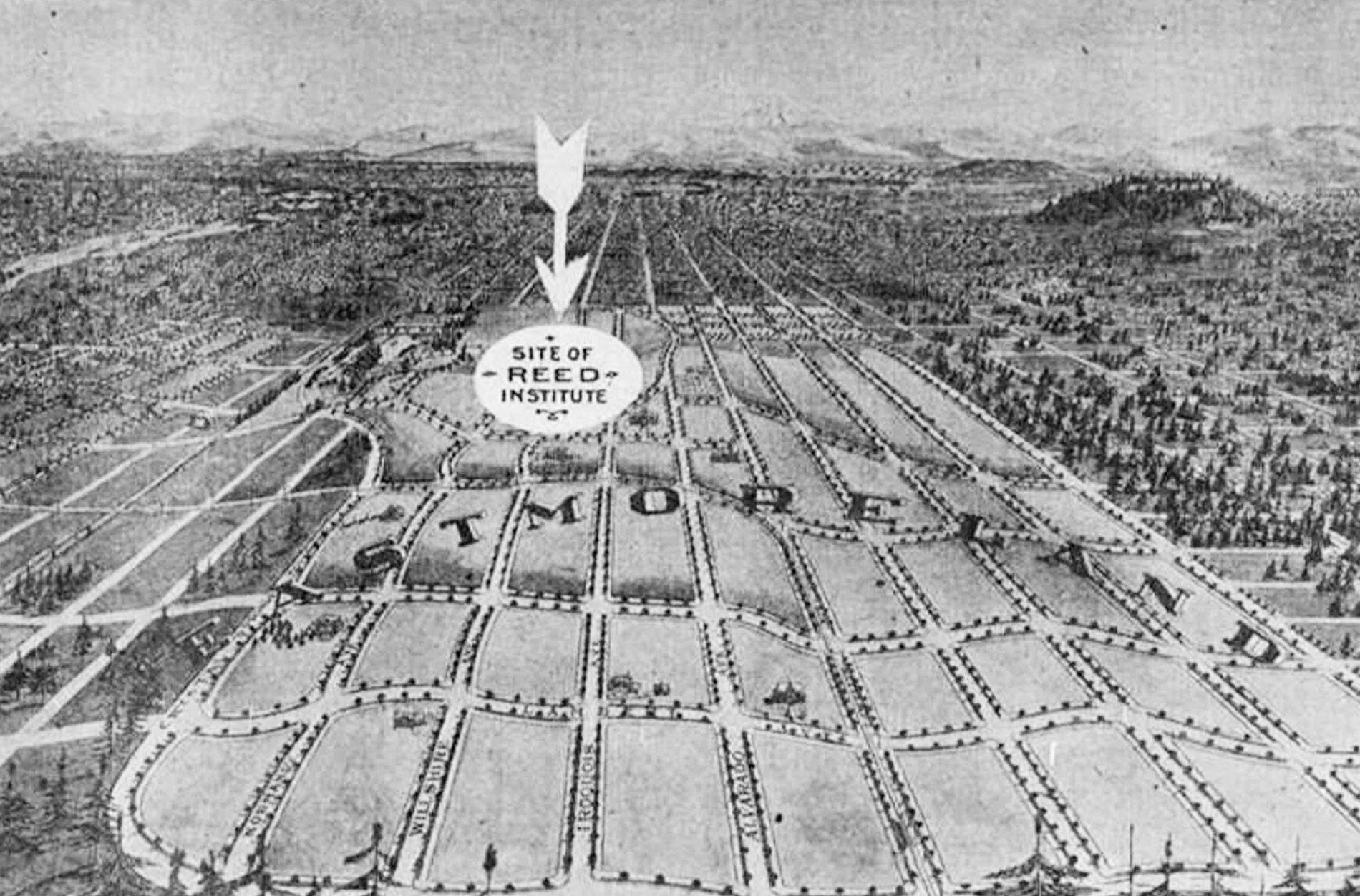
Eastmoreland Home Remodeling: Preserving Portland's City Beautiful Legacy
Eastmoreland is one of Portland’s most intentional neighborhoods. Designed around early 20th-century City Beautiful planning principles, its curved streets follow the natural terrain, homes are set back on generous lawns, and a mature canopy of trees creates a sense of permanence that’s hard to replicate. These homes were built to impress, and a century later, they still do.
With that legacy comes a different kind of remodeling challenge. Many Eastmoreland homes—particularly Tudor Revival and Colonial Revival—were constructed using materials and methods that require a thoughtful, experienced approach. Details matter. Proportions matter. The way spaces connect, and just as importantly, the way they don’t, matters.
In December 2022, Eastmoreland was designated a National Register Historic District, recognizing the architectural and cultural significance of the neighborhood. It also reinforces what homeowners here already understand: these are not ordinary homes.
At Arciform, we’ve been renovating Portland’s historic homes since 1997. We understand how to update them for modern living while preserving what makes them special.
Working with Tudor Revival and Colonial Revival Homes in Eastmoreland
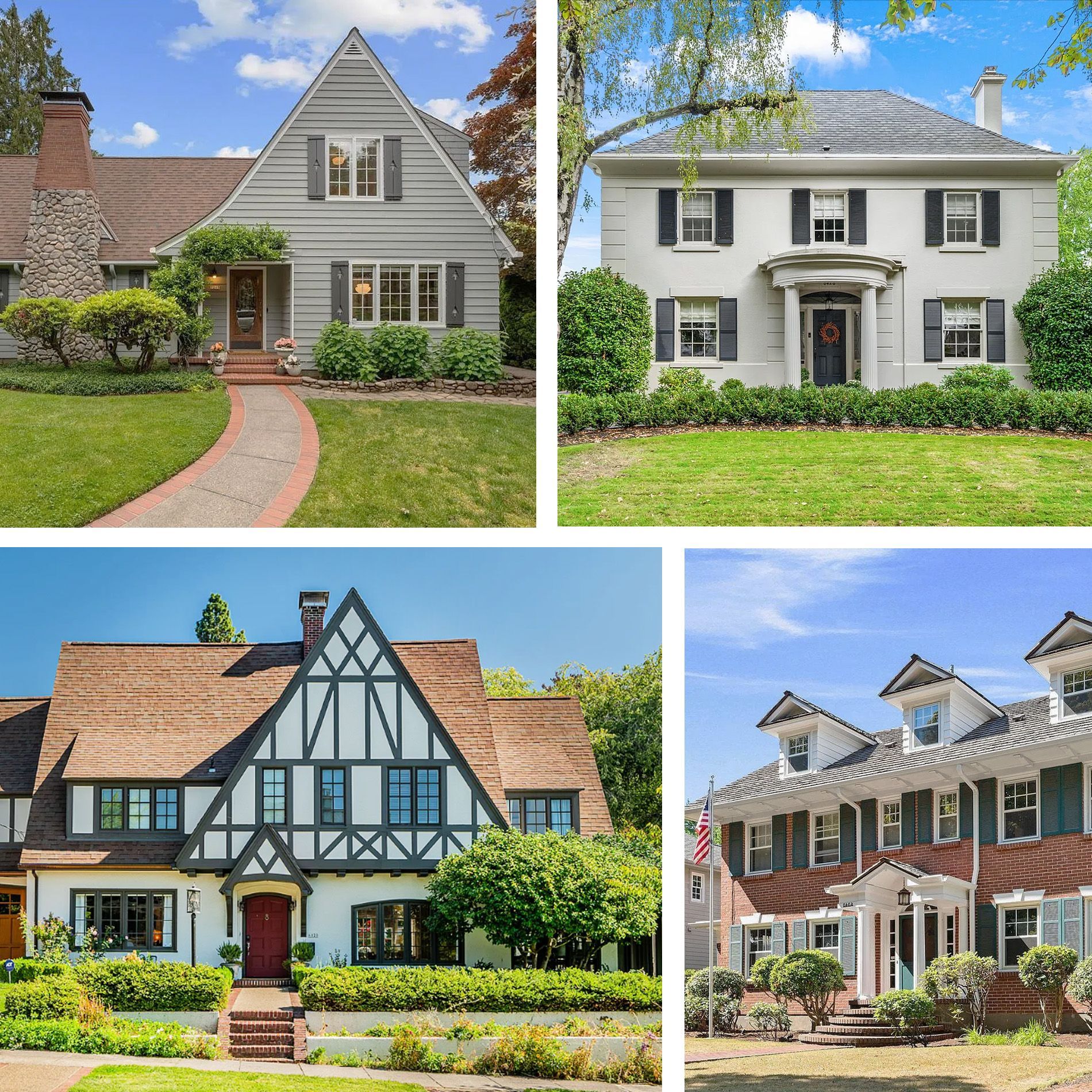
Eastmoreland’s homes are unified in quality, but diverse in architectural expression. Tudor Revival and Colonial Revival homes dominate, and each brings its own set of construction methods, materials, and expectations.
Tudor homes often feature stucco cladding with half-timber detailing, steeply pitched rooflines, and irregular, storybook-like forms. Restoring exterior finishes requires careful attention to original materials and assembly. Inside, layouts tend to be more compartmentalized, with thick walls and defined transitions between rooms.
Colonial Revival homes, by contrast, are more symmetrical and formal. Brick exteriors are common, which introduces the need for proper repointing techniques to maintain both structural integrity and appearance. Interiors often follow a more predictable layout, but still reflect an earlier way of living.
Understanding these differences is essential. A kitchen solution that feels natural in a Craftsman bungalow can feel out of place in a Tudor. Opening walls without regard for structure or proportion can disrupt the balance that defines a Colonial home. We’ve also seen well-intentioned updates where modern materials clash with original finishes, or where exterior repairs fail prematurely because they weren’t executed with the right techniques.
Each of these homes asks for a tailored approach. The work begins with understanding the architecture.
Kitchen Remodeling in Eastmoreland's Period Homes
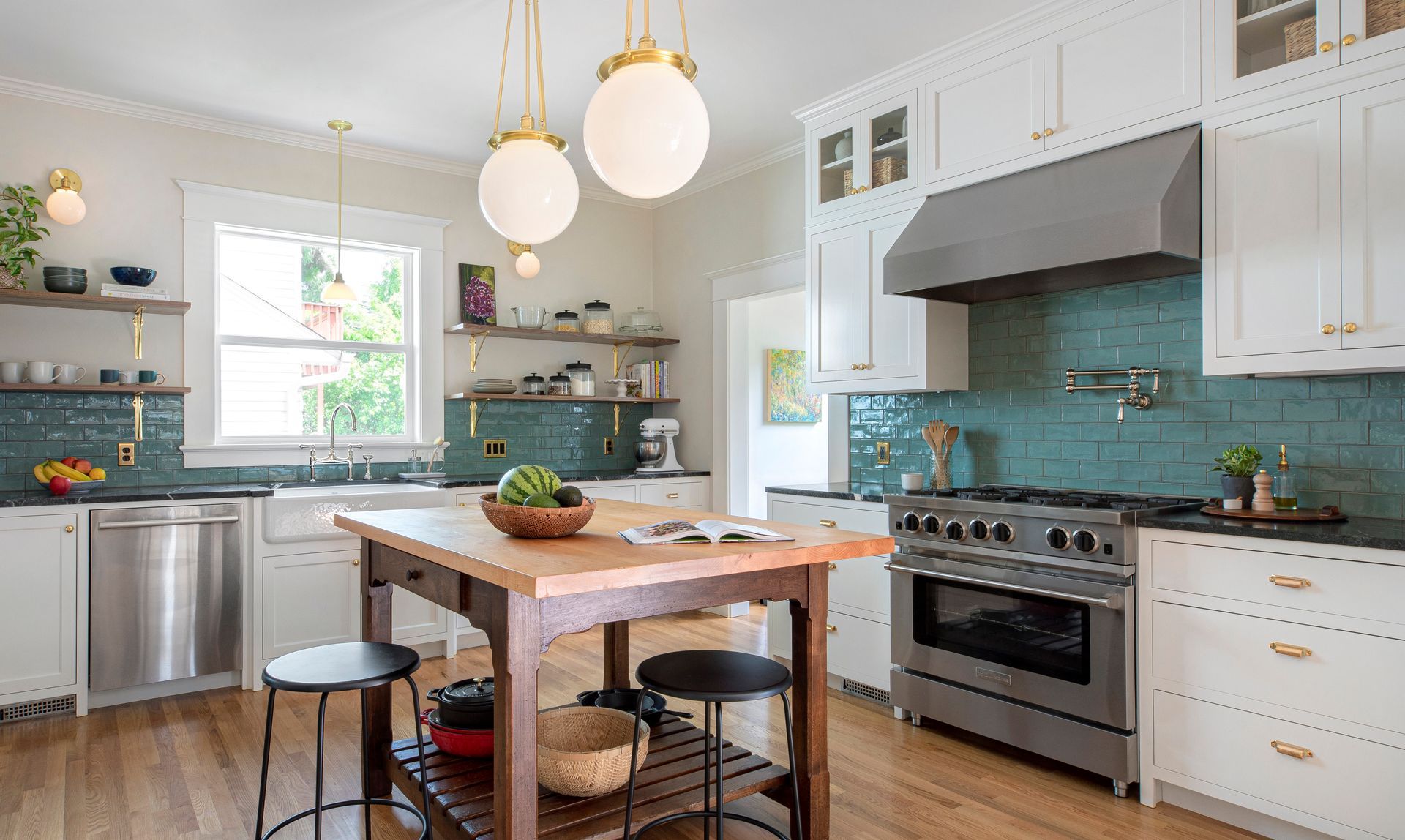
Kitchens in Eastmoreland homes were not designed for how we live today. In many Tudor homes, they are small, enclosed spaces, often separated from formal dining rooms by thick walls or arched openings. Colonial Revival homes may offer slightly more room, but still reflect a more formal, closed-off layout.
The goal isn’t simply to make the kitchen larger. It’s to make it function better while maintaining the character of the home.
Our approach starts with identifying where openness makes sense—and where it doesn’t. In some cases, widening an opening preserves the original rhythm of the home more effectively than removing a wall entirely. In others, careful structural work allows for a more connected layout without losing the sense of separation that defines these interiors.
Material choices play an equally important role. Cabinetry, hardware, and finishes are selected to feel appropriate to the home’s era, not just current trends. Sight lines to adjacent formal rooms are considered, so the kitchen feels integrated rather than inserted.
We also work around immovable elements, such as masonry chimneys, which are often central to these homes and not easily relocated. These constraints become part of the design, not obstacles to work around.
Bathroom Renovations and Whole-Home Remodeling for Pre-War Homes
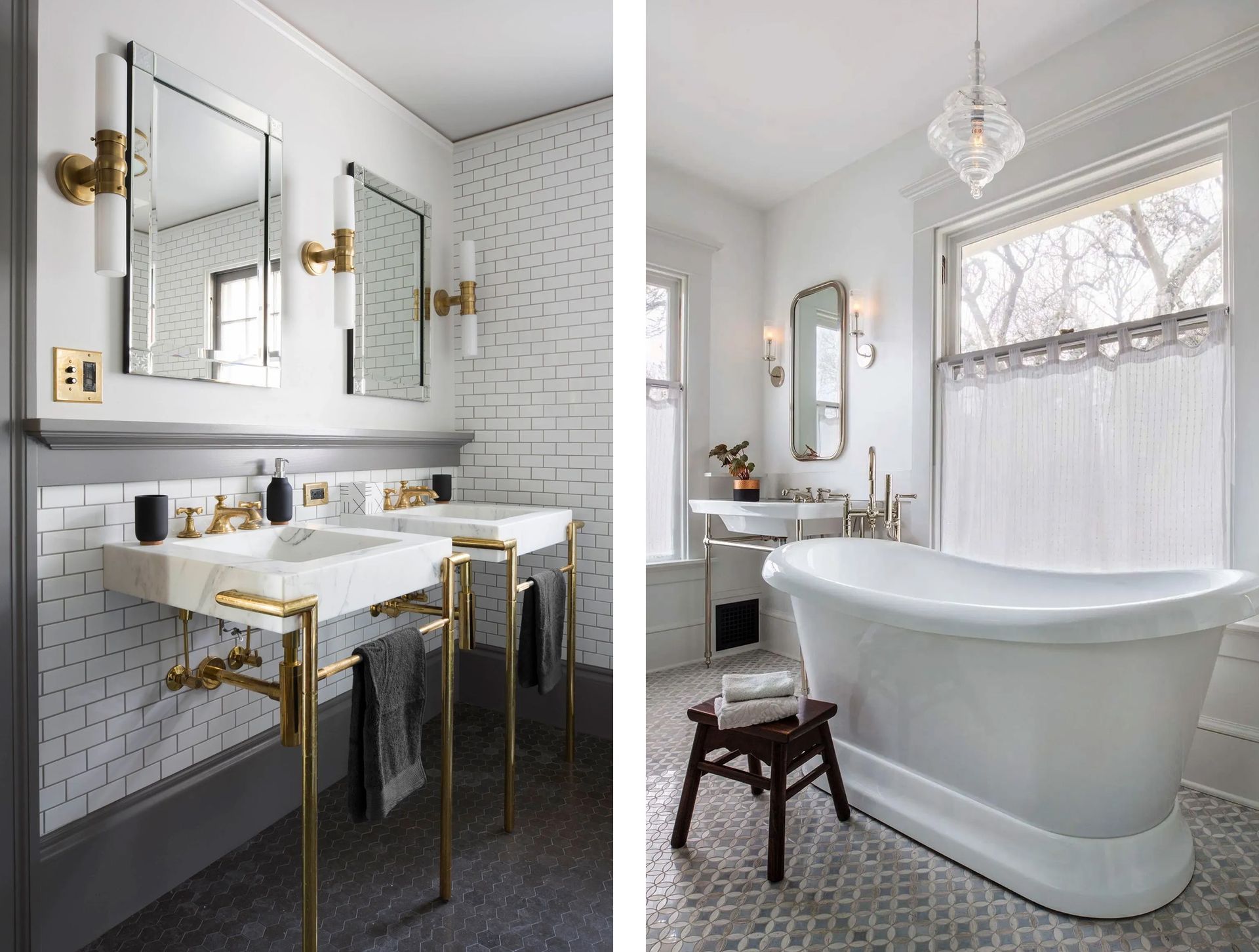
Bathrooms in Eastmoreland homes often reflect a different set of priorities than today’s standards. Original tilework, compact layouts, and decorative details give them character, but they rarely offer the function or comfort that clients are looking for now.
Renovating these spaces means finding ways to improve usability while respecting what’s already there. In some cases, that means reworking an existing footprint. In others, it involves carving out space for a new ensuite in a home that was never designed to accommodate one. These solutions rely on careful planning and a clear understanding of the home’s structure.
Whole-home renovations bring a different set of considerations. Many Eastmoreland homes still have knob-and-tube wiring, aging plumbing systems, and minimal insulation. Addressing these issues is essential for safety, performance, and long-term livability.
Seismic upgrades are also an important part of the conversation. Portland’s earthquake risk makes foundation bolting and cripple wall bracing worthwhile improvements, particularly in pre-1940 homes that were not built with seismic forces in mind.
Energy performance can be improved without compromising historic character. Insulation strategies, thoughtful window restoration or replacement, and HVAC modernization all contribute to a more comfortable home. The key is integrating these updates in a way that aligns with the original construction, rather than working against it.
How Eastmoreland's Historic District Affects Your Remodel
Eastmoreland’s designation as a historic district in 2022 often raises questions for homeowners considering a remodel. In practice, the impact is more limited than many expect.
The designation introduces a demolition review process, not a design review. This means that interior renovations, additions, and exterior updates can move forward without historic approval.
Only the full demolition of a contributing structure triggers review, and more than 80% of properties in the neighborhood fall into that category. For most homeowners, this provides reassurance rather than restriction.
You can update and adapt your home to meet your needs. The designation simply adds a layer of consideration when it comes to removing these historic structures entirely.
Why Choose Arciform for Your Eastmoreland Renovation?
We work as a unified design-build team, so every phase of your project is connected from the start.
Our designers and project managers bring direct experience navigating historic district guidelines and review processes. We know how to shape solutions that respect Eastmoreland's character while supporting the way you live today.
Since 1997, we’ve focused on renovating Portland’s historic homes. That experience gives us a steady, well-tested process—and a thoughtful approach to the details that matter most.
We’re here to help you move forward with clarity and confidence in your Eastmoreland renovation.