
Choosing a Renovation Contractor in Ladd's Addition: Portland's Oldest Planned Neighborhood
What it Takes to Renovate in Portland's First Historic District
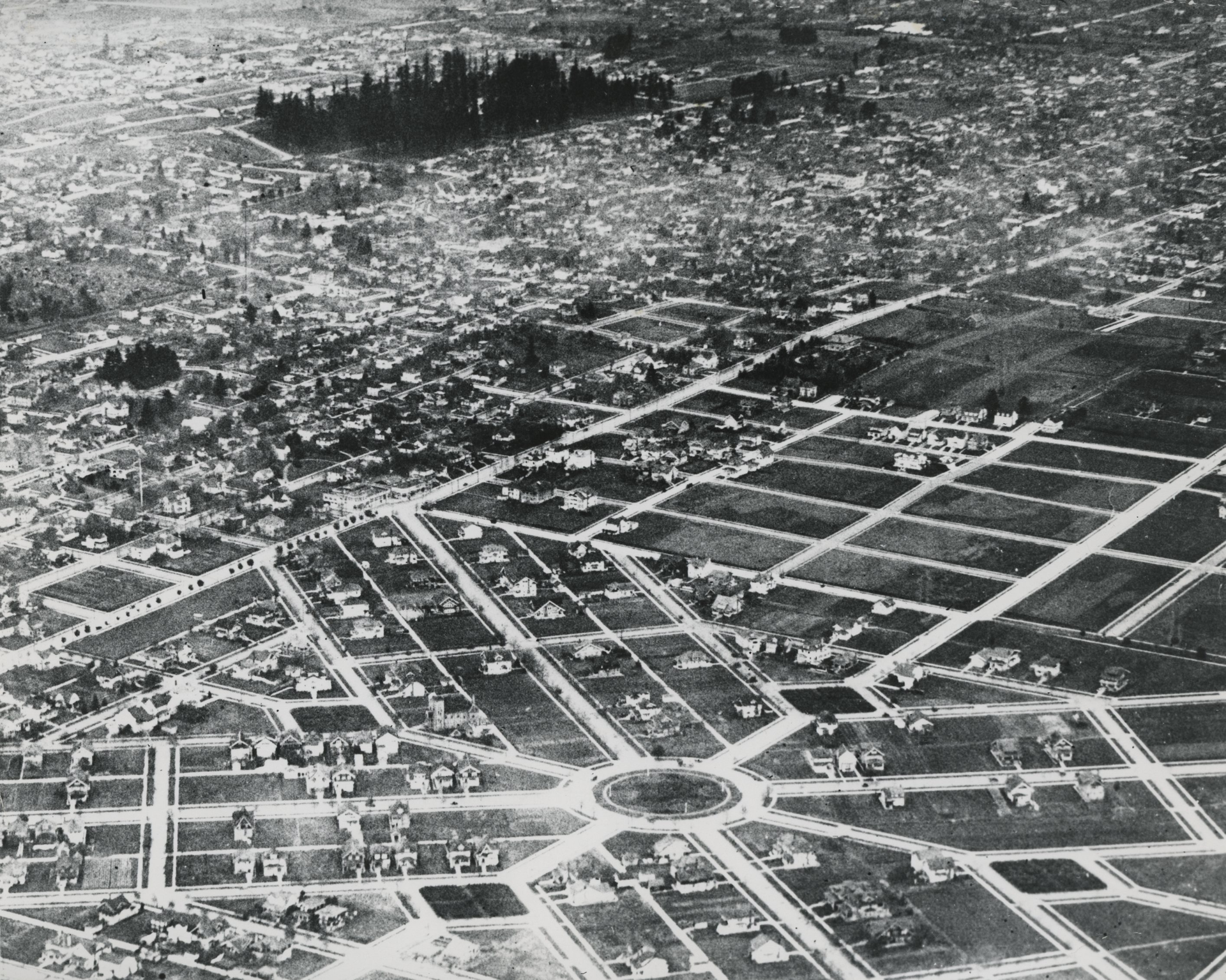
Ladd’s Addition feels unlike anywhere else in Portland. Its diagonal “wagon wheel” street pattern creates a rhythm that’s immediately recognizable. Five formal rose gardens anchor the neighborhood, while a canopy of mature elm trees forms a vaulted ceiling over the streets. Nearly every home was built between 1905 and 1930, creating a rare sense of continuity.
This isn’t just a historic district. It’s Portland’s first Historic Conservation District, designated locally in 1977 and listed on the National Register of Historic Places in 1988.
Renovating here means working within established conservation guidelines that shape how homes evolve over time. Materials, massing, and exterior changes are all part of the conversation.
At Arciform, we’ve been working within these kinds of parameters since 1997—balancing the needs of the home with the expectations of the neighborhood.
Inside Ladd's Addition: Portland's Wagon Wheel Neighborhood
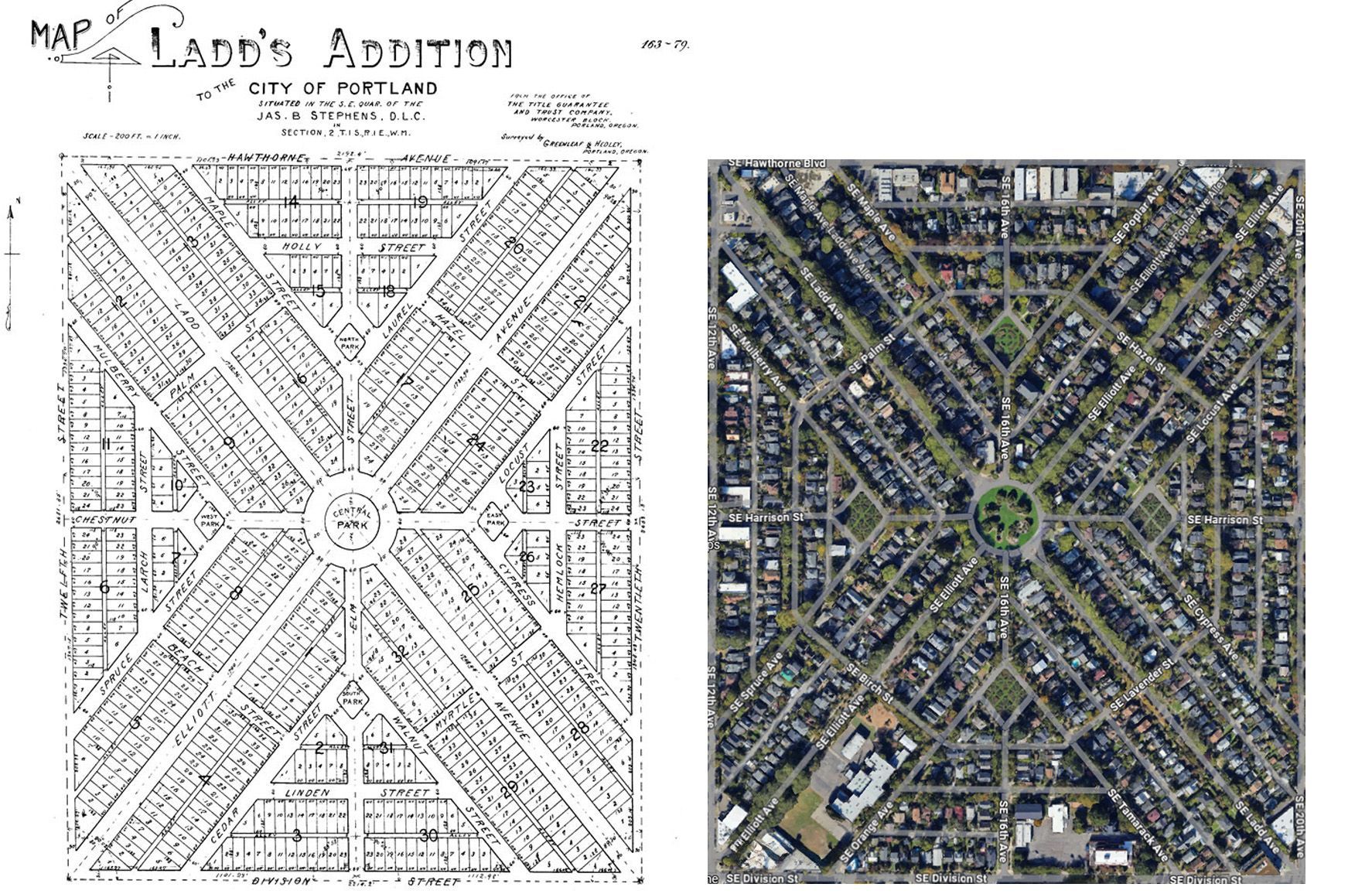
Ladd’s Addition sits in Southeast Portland, bounded by SE Hawthorne Boulevard to the north, SE Division Street to the south, SE 12th Avenue to the west, and SE 20th Avenue to the east.
Platted in 1891 by Mayor William S. Ladd, it is Oregon’s oldest planned residential community. The neighborhood’s distinctive diagonal layout was inspired by Pierre L’Enfant’s plan for Washington, D.C., creating a series of radiating streets centered around five formal rose gardens.
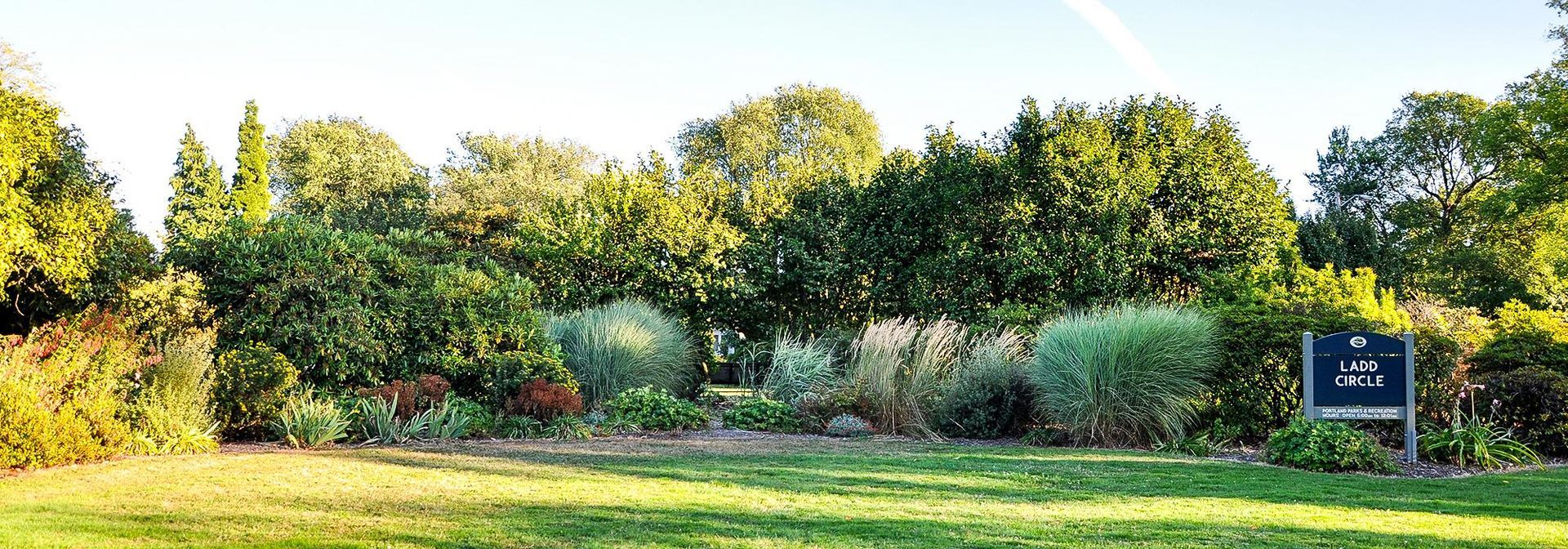
Those gardens remain a defining feature today, with more than 60 varieties of roses that are legally protected. The streets themselves are named after trees, reinforcing the neighborhood’s connection to its landscape. Approximately 1,600 original street trees—American elms, Norway maples, and littleleaf lindens—form a continuous canopy that gives the area its recognizable character.
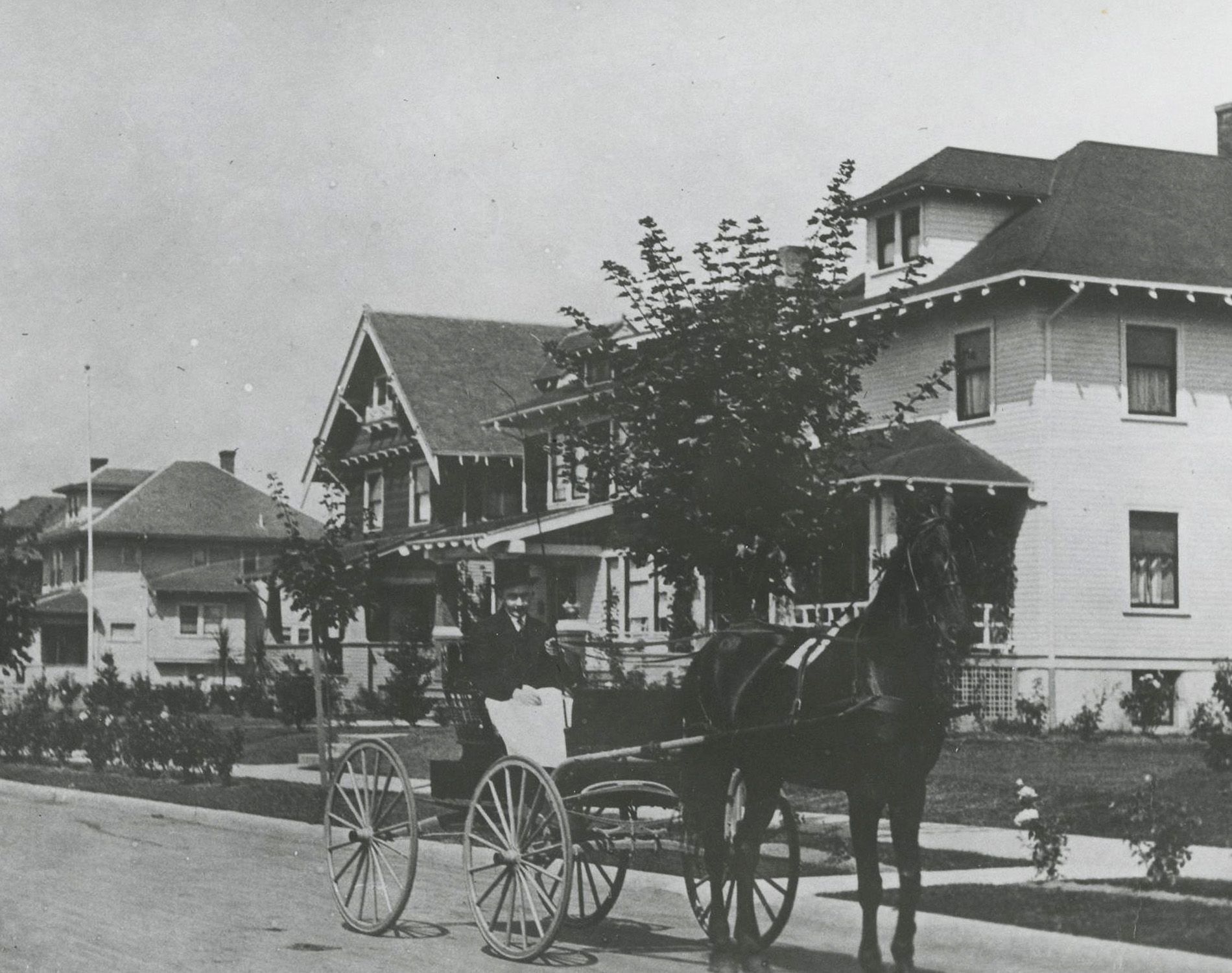
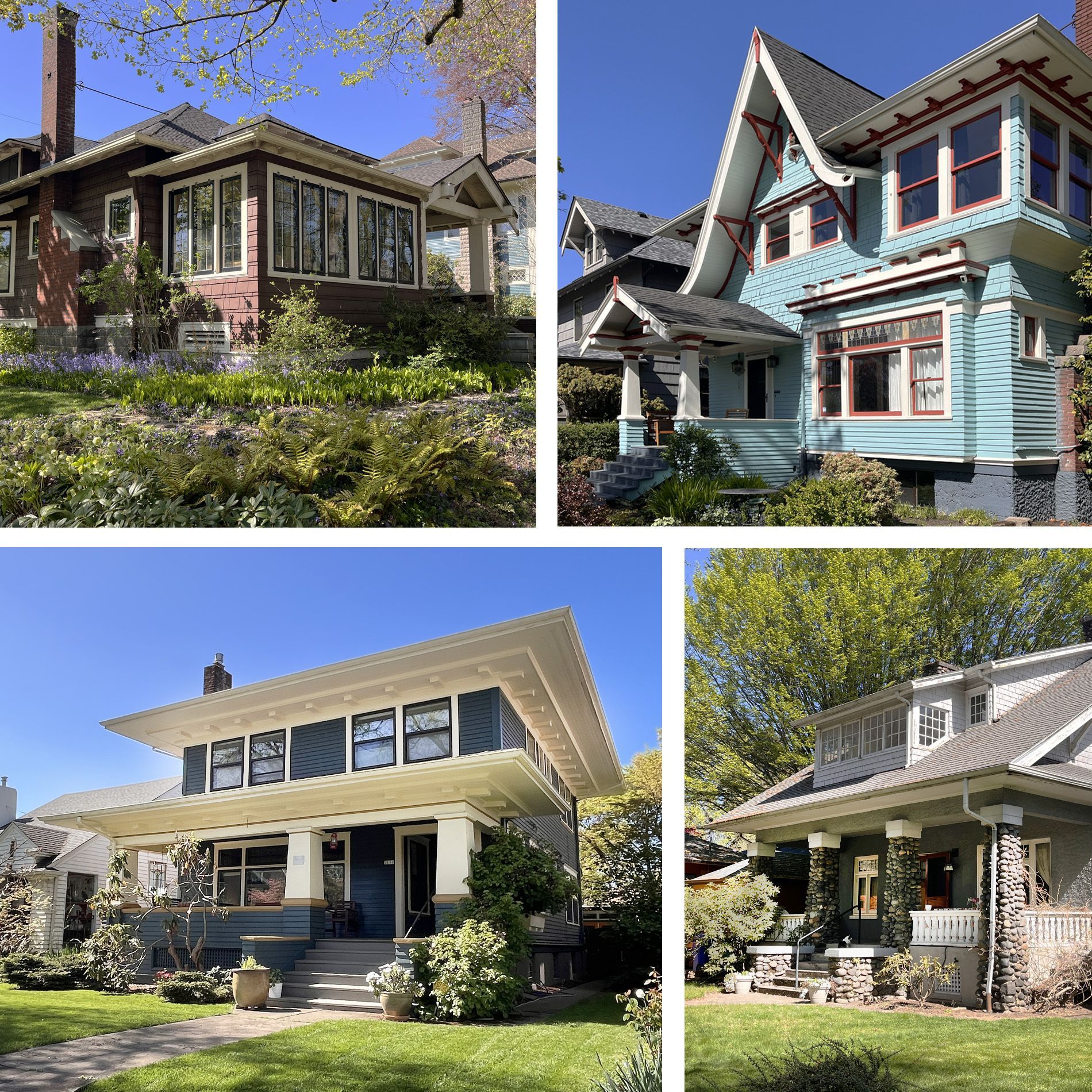
Architecturally, the neighborhood is grounded in early 20th-century styles. Craftsman bungalows and American Foursquares are most common, with examples of Mission, Tudor, and Colonial Revival homes woven throughout.
With 87% of buildings constructed between 1905 and 1939, Ladd’s Addition maintains a strong sense of cohesion. It feels less like a collection of individual homes and more like a complete, intentional environment—a neighborhood that functions as a village within the city.
How Ladd's Addition Historic District Guidelines Affect Your Renovation
Ladd’s Addition stands apart from many of Portland’s historic districts because it has active conservation district guidelines that govern exterior changes.
Adopted in 1988, these guidelines apply to both building alterations and the broader street and open space system. Unlike neighborhoods with demolition review only, Ladd’s Addition requires historic design review for exterior rehabilitation and new construction on contributing structures.
In practice, this means that proposed changes must be compatible with the district’s established character. Height, scale, massing, materials, and setbacks are all considered as part of the review process.
Interior renovations are generally not subject to review, which allows for flexibility in how homes are updated for modern living. Exterior work, however, requires a thoughtful and informed approach from the outset.
A contractor who understands these guidelines can anticipate how they will be applied and develop solutions that align with them. This reduces revisions, shortens timelines, and creates a more predictable path through the approval process.
Bungalow and Foursquare Kitchen Remodeling In Ladd's Addition
The homes that define Ladd’s Addition—primarily Craftsman bungalows and American Foursquares—were built with compact, efficient layouts. Most range from 1,200 to 2,200 square feet, with kitchens that are separated from the main living areas.
These kitchens often feel closed off and undersized by today’s standards. Limited counter space, disconnected pantries, and constrained circulation are common challenges.
Updating these spaces requires a measured approach. The goal is to improve function while preserving the architectural details that give these homes their character. In many cases, that means opening a connection to the dining room while retaining defining elements such as colonnades or built-in cabinetry. Structural changes are considered carefully so the home’s proportions and transitions remain intact.
Material choices reinforce that continuity. Cabinetry, hardware, and finishes are selected to feel consistent with the original construction, allowing the updated kitchen to integrate naturally with the rest of the home.
Bathroom Renovations for Portland's 1905-1930 Homes
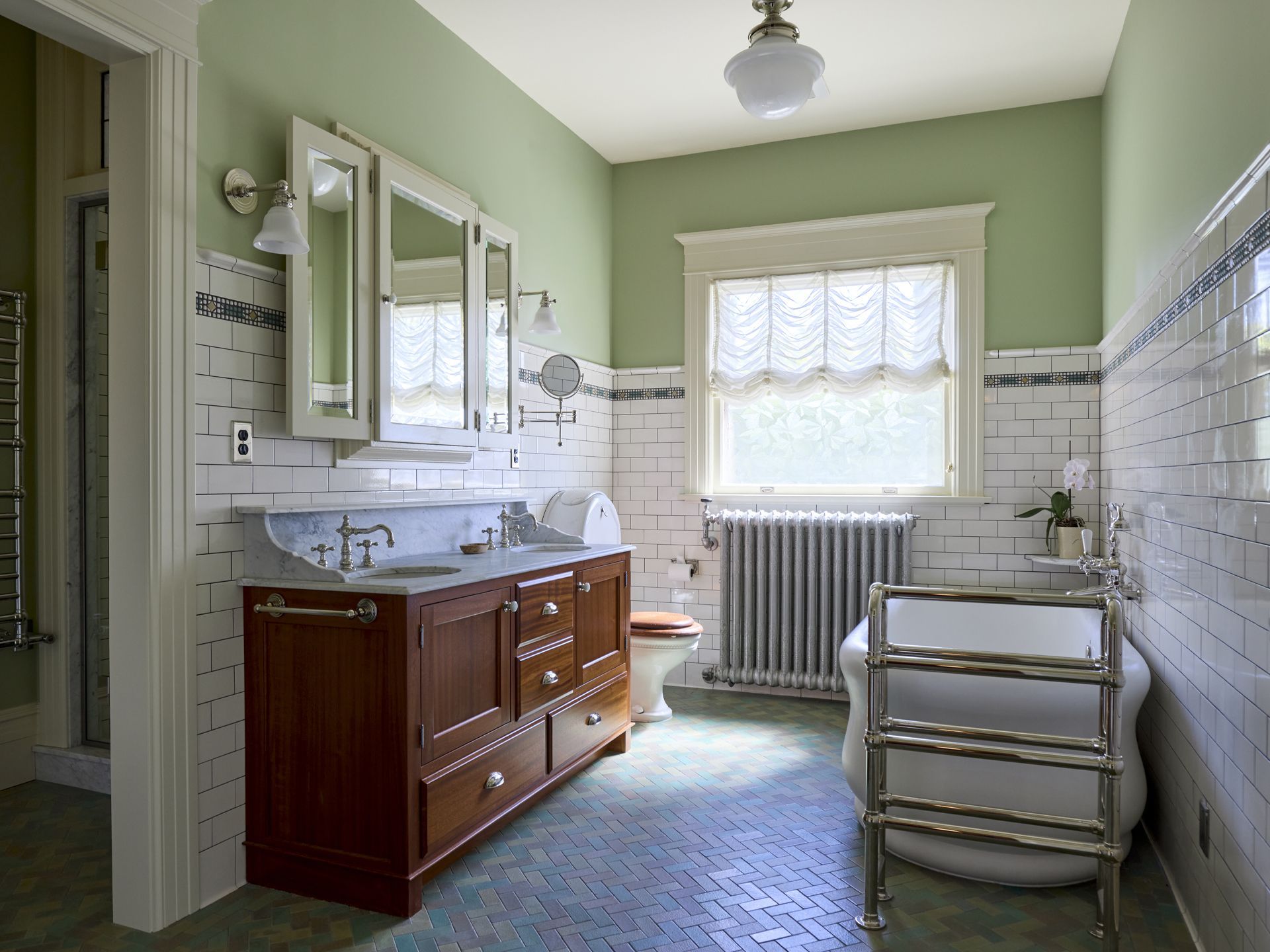
Many homes in Ladd’s Addition were built with a single bathroom, reflecting a different set of expectations than today. Adding a second bathroom often involves rethinking underutilized spaces—converting a closet, repurposing a sleeping porch, or finding room within an existing floor plan that was not designed for modern plumbing systems.
These projects require careful coordination. Routing new plumbing through old-growth framing, working within plaster wall assemblies, and maintaining the integrity of adjacent spaces all factor into the design.
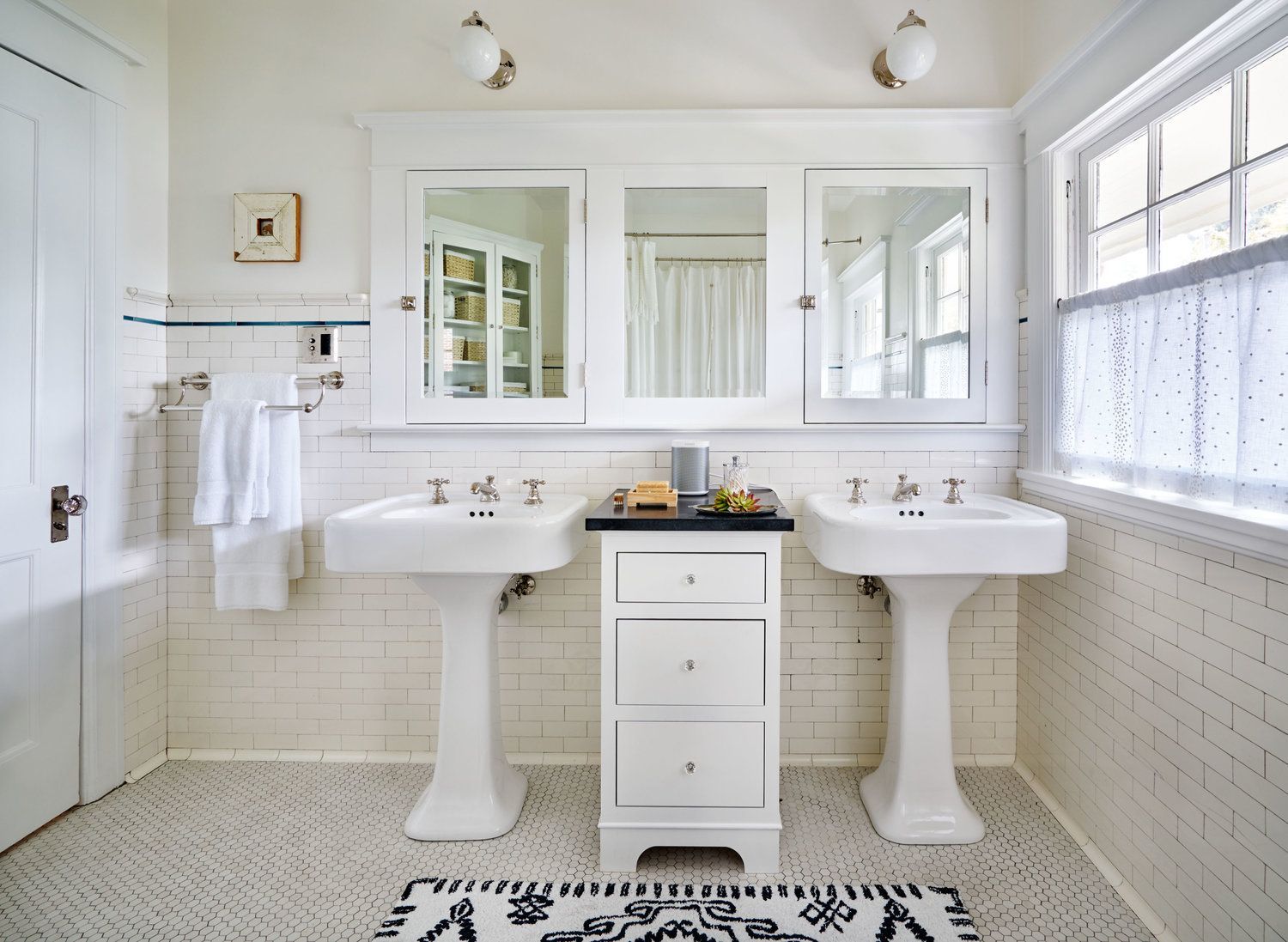
At the same time, the finished space needs to feel appropriate to the home. Material choices such as hex tile floors, subway tile wainscoting, and pedestal sinks help maintain a sense of continuity with the original construction. The result is a bathroom that supports modern use while remaining aligned with the character of the house
Restoring Old-Growth Materials and Protecting Ladd's Elm Canopy
Homes in Ladd’s Addition were built with materials that are difficult to replicate today. Old-growth Douglas fir framing and flooring, plaster over wood lath walls, and original doors and hardware all contribute to their durability and character.
Whenever possible, restoration offers more value than replacement. Refinishing fir floors preserves the integrity of the material. Repairing plaster maintains the texture and depth that drywall cannot replicate. Retaining original doors and hardware reinforces the continuity of the home.
The neighborhood’s landscape requires the same level of care. Ladd’s elm trees are protected and maintained through the Save Our Elms volunteer program, including annual inoculation against Dutch elm disease. Exterior work must account for these trees, particularly their root zones. Protecting them is part of preserving the neighborhood itself.
Why Choose Arciform for Your Ladd's Addition Renovation?
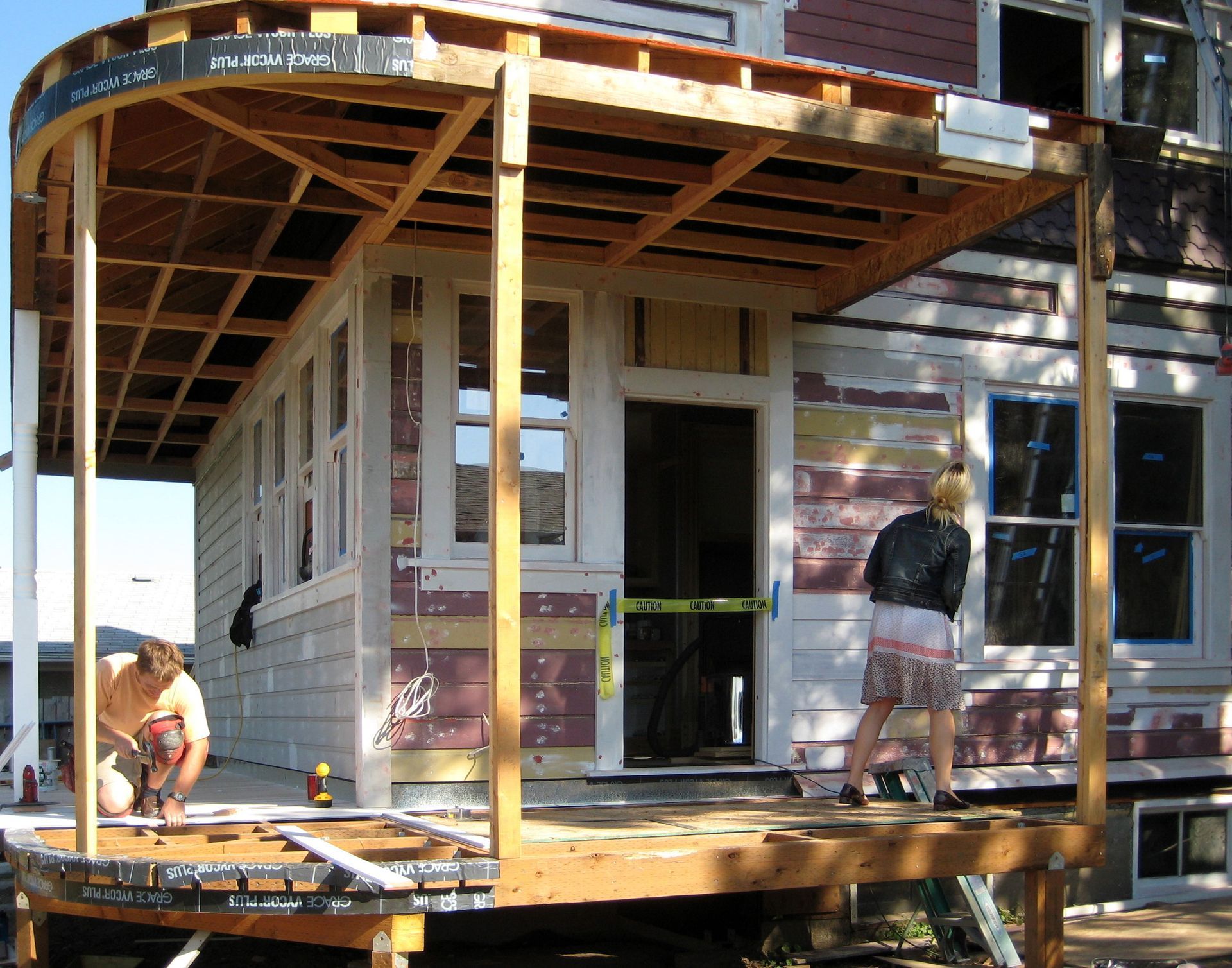
We work as a unified design-build team, so every phase of your project is connected from the start.
Our team brings direct experience navigating historic district guidelines and review processes. We know how to shape solutions that respect Ladd’s Addition’s character while supporting the way you live today.
Since 1997, we’ve focused on renovating Portland’s historic homes. That experience gives us a steady, well-tested process—and a thoughtful approach to the details that matter most.
We’re here to help you move forward with clarity and confidence in your Ladd’s Addition renovation.