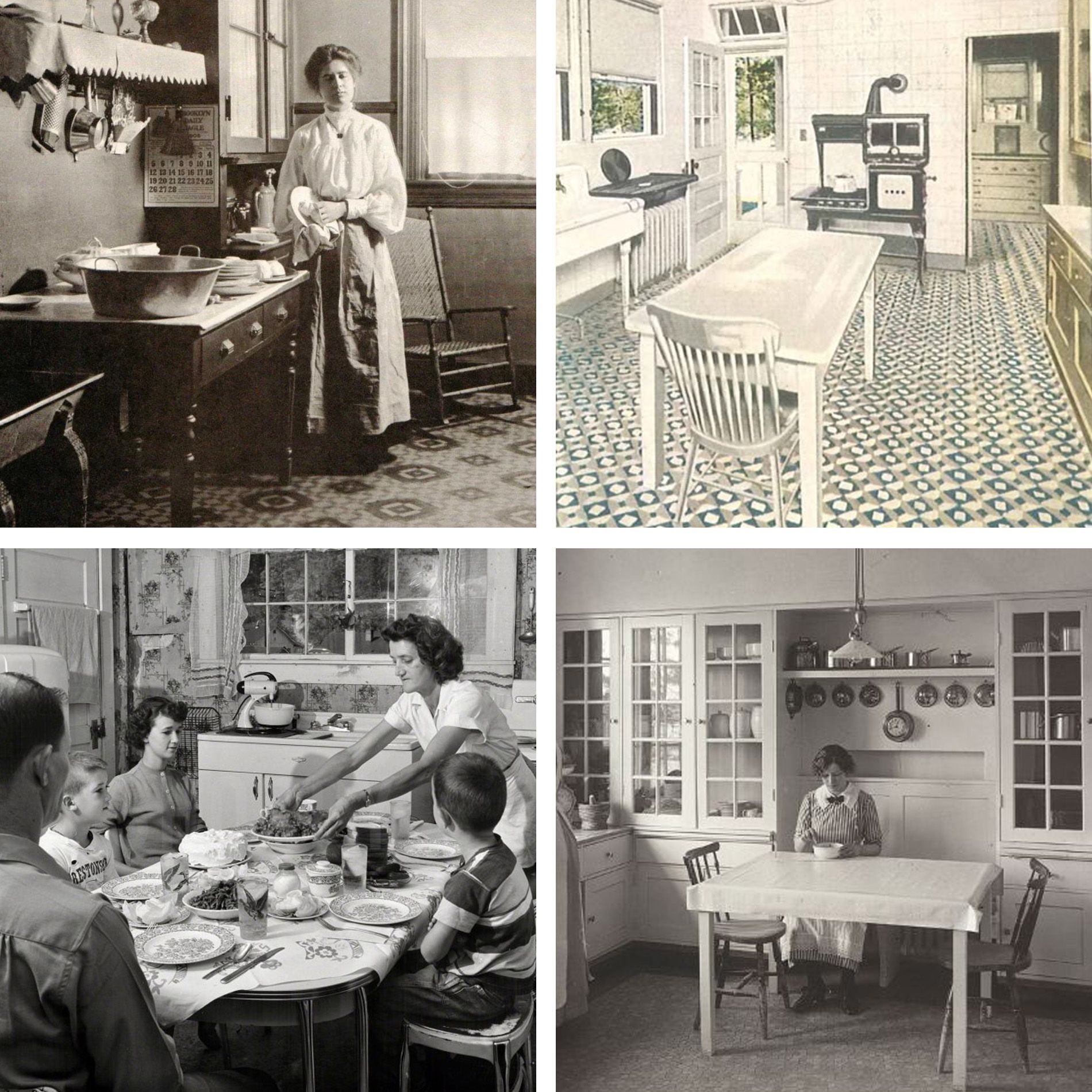
The kitchen has always been the heart of the home. Many vintage kitchens included a table where food was prepared, dinner was served, and laundry was folded. The coziness of a warm stove, the smell of food, and the economy of space made the kitchen table a family favorite.
With the evolution of built-in cabinetry, the kitchen table was gradually replaced by the kitchen island. The raised counter and flexibility of purpose of a kitchen island make it one of the most common features of kitchens today.
At Arciform, we specialize in a period-appropriate approach to design. We look closely at the original architecture of the home we are remodeling. For historic kitchen remodels, we draw inspiration from built-in cabinetry, furniture, and general design trends of the decade in which the home was built.
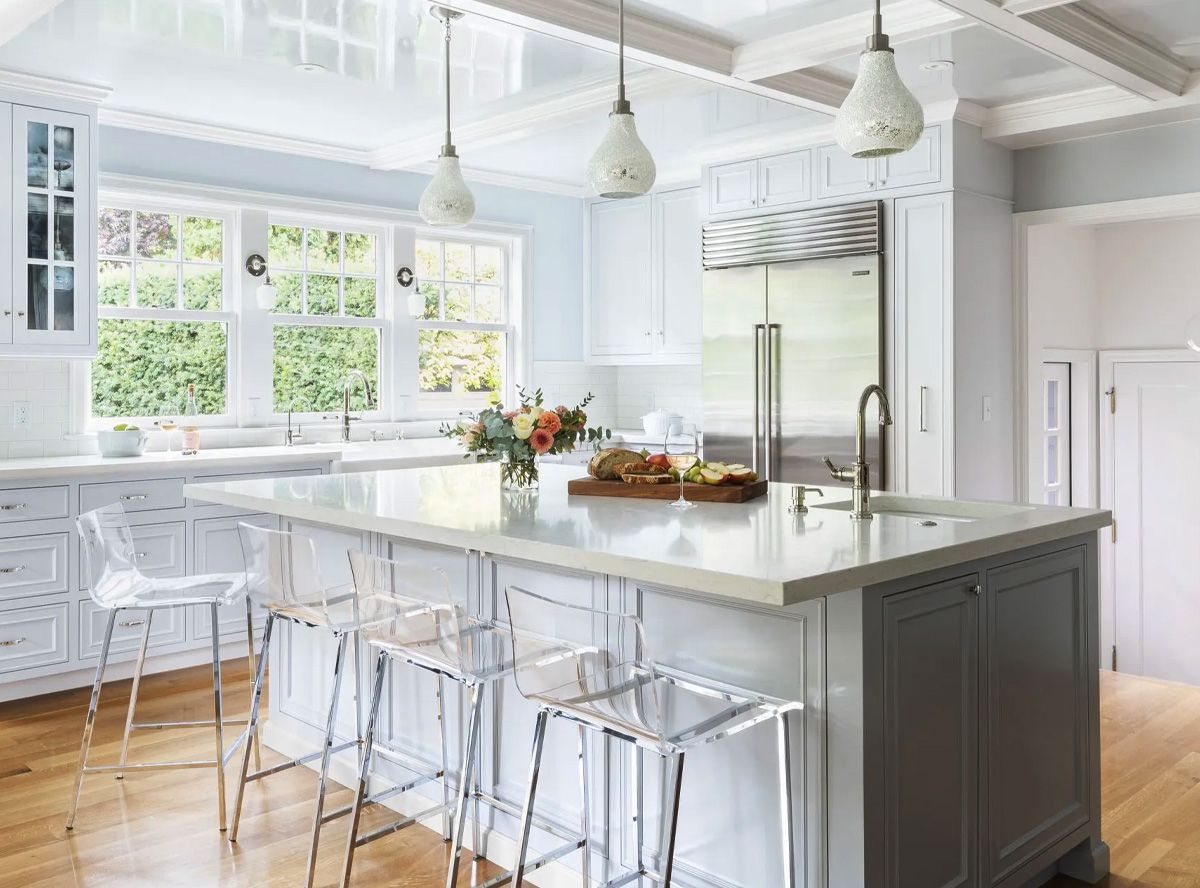
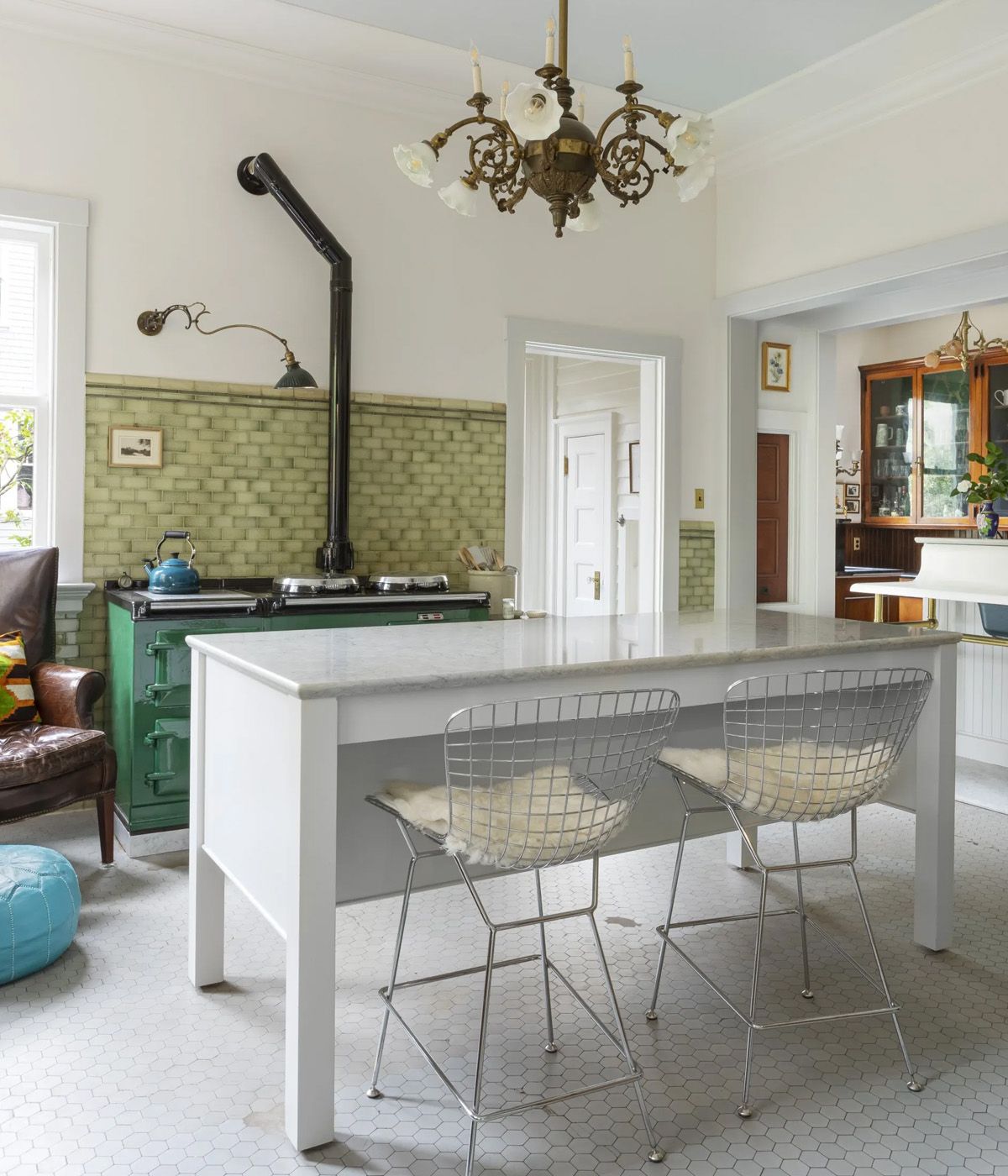
The custom kitchen island can be a wonderful opportunity to add a bit of whimsy, as it can be modeled after furniture rather than built-ins. The finishes of a custom island can complement, rather than match, the rest of the kitchen. An island can echo the spirit of a cozy kitchen table while also hiding a dishwasher, refrigeration, and generous storage.
Why Modern Families Choose Islands Over Yesterday's Worktables
The kitchen has always been the hardest-working space in the home. Changes driven by technology and by how we live are particularly evident in kitchen design. Then and now, we need a space to cook, clean, and store. How we achieve that has evolved.
Modern appliances make our lives easier and free us up to do more socializing and experimenting. Kitchen islands and kitchen tables both create space for friends and family to participate while also directing circulation patterns. When choosing between a kitchen island and a kitchen table, it helps to understand the advantages of an island.
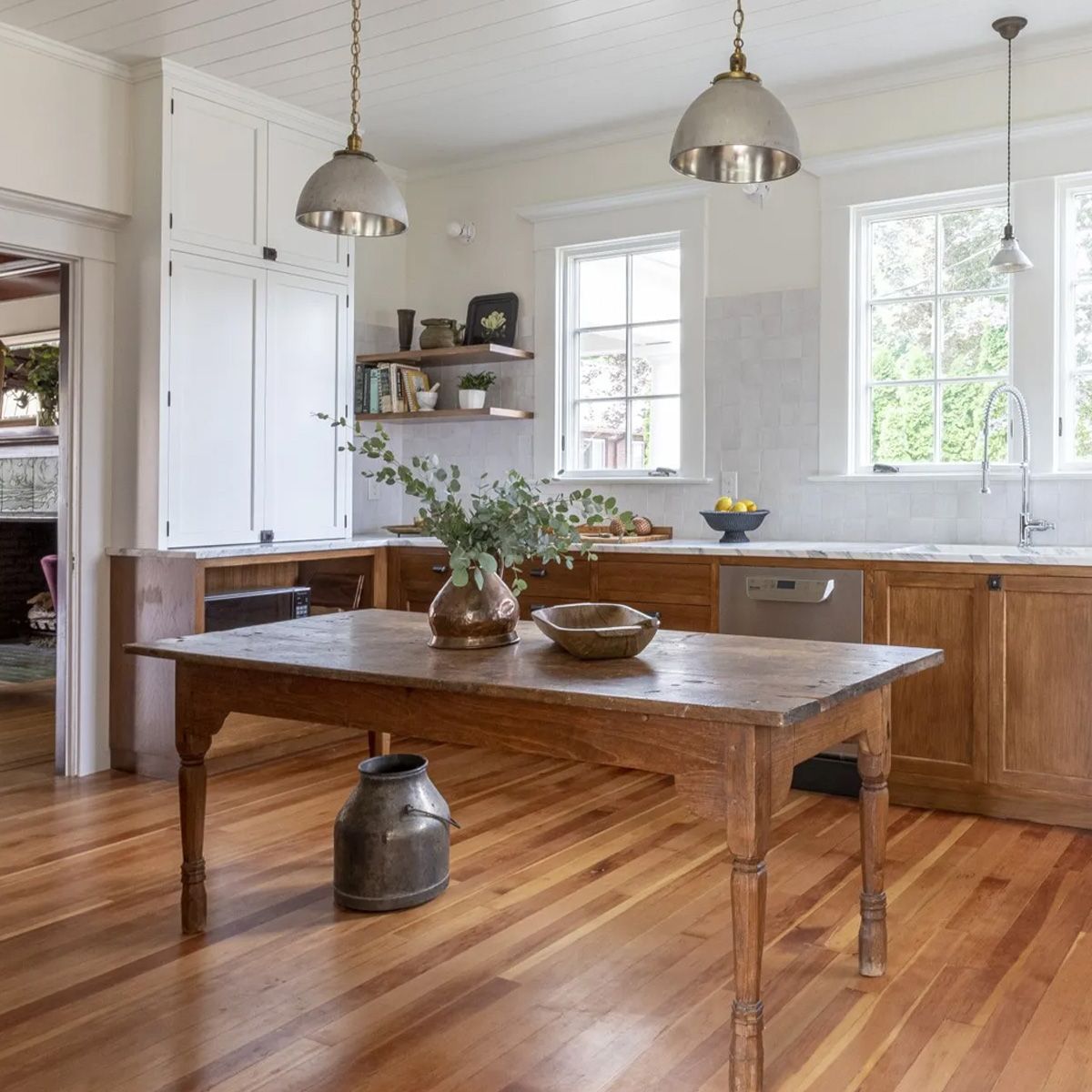
A kitchen table typically has a wood top set 28–30 inches above the floor, allowing you to pull up a chair. The disadvantage is that, to use it well, you need enough space for chairs on all four sides, plus circulation room behind them. If you want to work at the table while standing, you have to bend forward, which can be uncomfortable. Adequate legroom beneath the tabletop is also required, reducing opportunities for easily accessible storage.
Wood tabletops are also not ideal for food preparation or cleaning, as they are prone to staining.
The advantages of a kitchen island over a kitchen table are many. Kitchen islands come in all shapes and sizes. In a small vintage kitchen, an island might be a simple counter-height surface that provides additional workspace. At the other end of the spectrum, it can include a sink, refrigeration, cooking, storage, and seating—sometimes functioning as nearly a full kitchen on its own. Many islands fall somewhere in between.
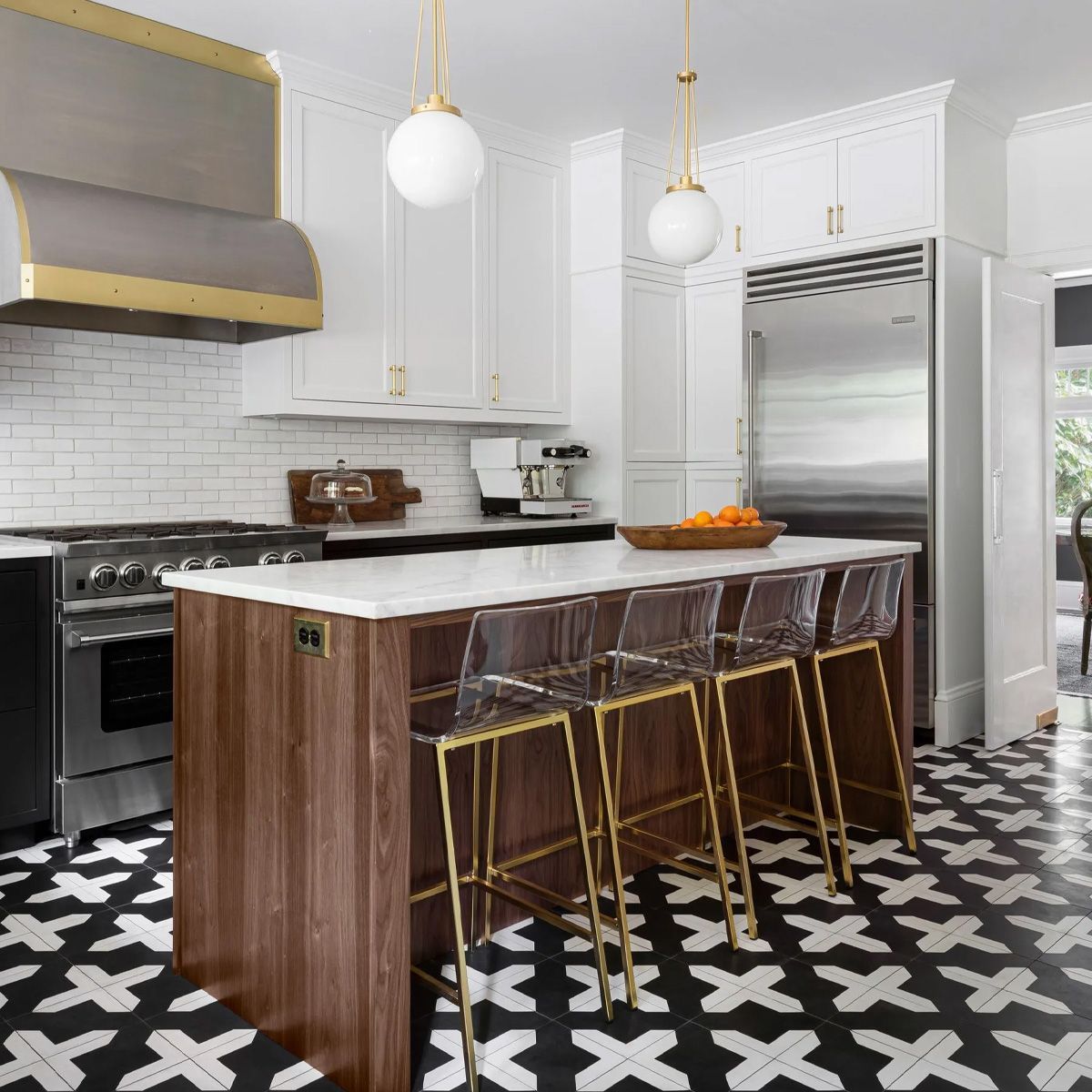
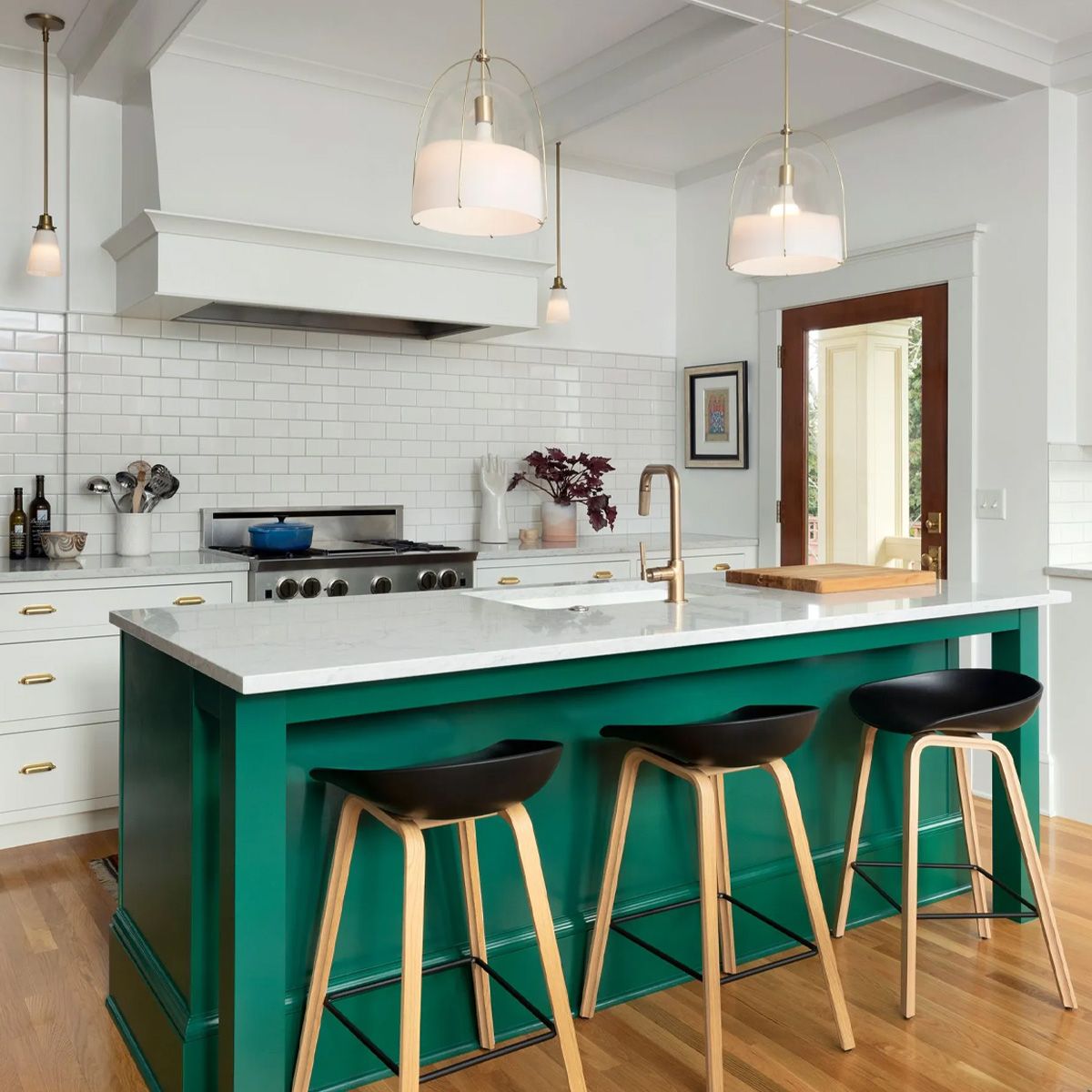
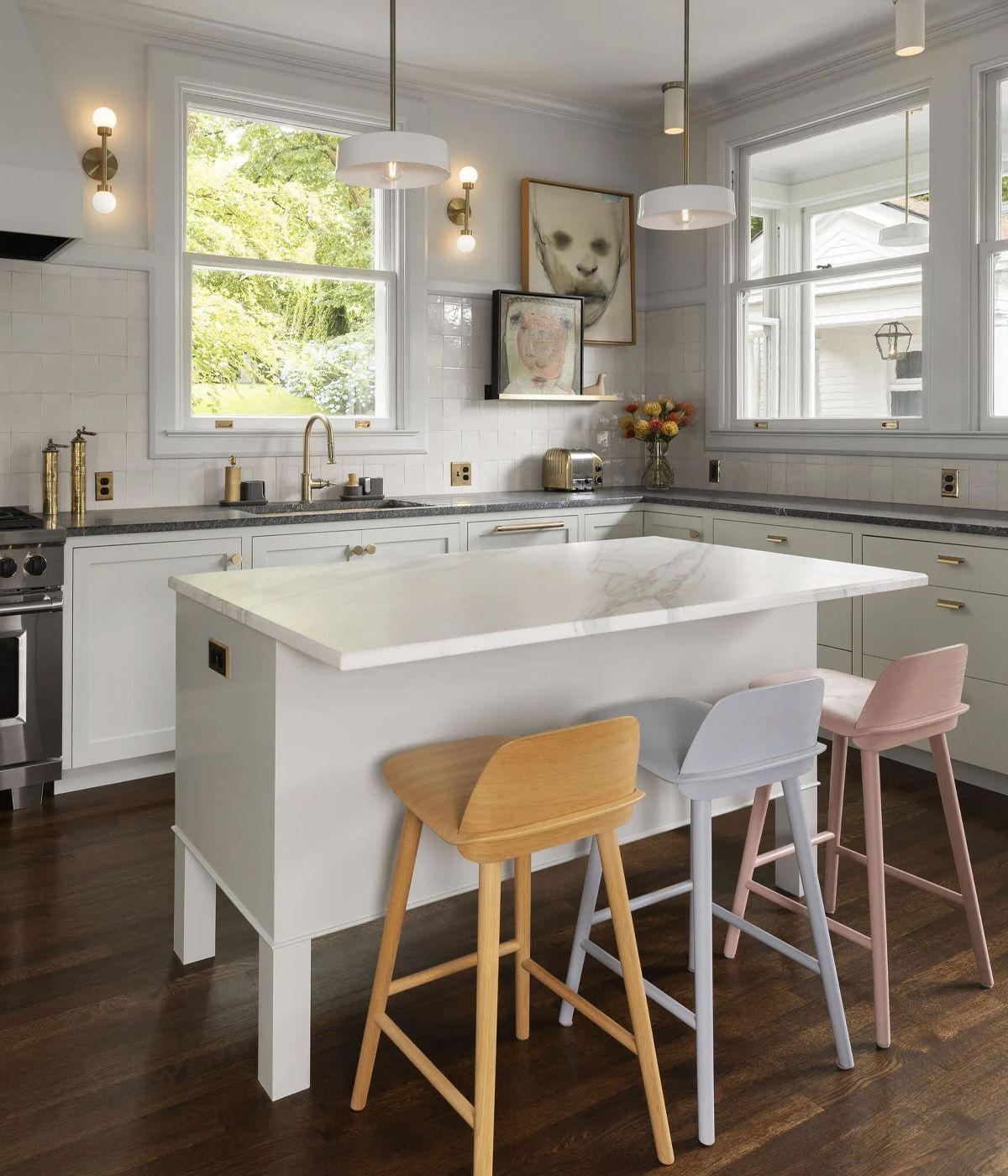
Island Designs that Belong in Portland's Favorite Old-Home Styles
Architectural styles in Portland during the first half of the last century shifted roughly every 10 years. There was overlap, along with transitional styles and substyles, but the main eras included Victorian homes through about 1910; Craftsman homes through roughly 1920; Colonial Revival homes from about 1915 through 1930; Tudor Revival homes from 1925 through 1945; and Midcentury Modern homes from 1945 through 1960. While these styles continue to cycle in and out of popularity, these dates provide a useful framework.
While facades and formal spaces in these homes often featured distinct architectural detailing, kitchens—typically located at the back of the house—were more basic and utilitarian. Interestingly, what was once relegated to the back of the home for its simplicity and focus on function has experienced a revival in the 21st century for its classic beauty.
When Arciform designs an island for one of these homes, we consider typical kitchen layouts from each era, as well as the hardware used throughout the house, popular stone choices for fireplace surrounds, roofing metals that might inform counter material options, stained woods used in staircases or paneling, and any other relevant inspiration. The kitchen island can help pull front-of-house details into the simpler architecture of a vintage kitchen.
Victorian kitchens relied on furniture pieces for storage and counter space. A leggy sink and a wood-burning cast iron stove were often artfully designed, with decorative ornamentation. The kitchen table performed the role we now associate with a kitchen island. The palette in these spaces leaned toward moody colors and deep stains.
Craftsman and Colonial Revival kitchens were quite similar. Built-in cabinetry became common, and cabinets were often painted white as the discovery of germs put cleanliness front of mind. The primary differences between the two styles showed up in hardware and lighting. Kitchens were generally small and tucked into the backs of homes, with many doors leading in and out. It was rare to see a Craftsman kitchen island. A Colonial Revival kitchen island, when present, might have served as a baking counter or grain storage. Tudor homes of the 1930s often featured eating nooks with small round tables and chairs rather than a Tudor kitchen island.
By the mid-1940s, kitchens were no longer considered isolated spaces. Homeowners recognized that the kitchen was where everyone gathered, and kitchens began opening to the rest of the home. Midcentury Modern peninsula islands grew increasingly popular during this time.
Making an Island Work in Small or Narrow Historic Kitchens
When creating a kitchen island for the cozy kitchens of Portland’s vintage homes, prioritization is key. The trick to designing a successful small kitchen island is understanding clearances. At Arciform, we determine appropriate scale by checking clearances to adjacent counters, walls, and appliances. As a general rule, a minimum of 36 inches is needed between counters, and 42 inches in front of appliances.
Standard island counter depth is about 27 inches at minimum. This accommodates off-the-shelf cabinets and undercounter appliances, which are typically 24 inches deep. In Arciform’s custom woodshop, we can build island depths that suit your specific space, without being limited by standard dimensions.
When adding stools at a kitchen island, we allow for a counter overhang of at least 9 inches for legroom. We also account for people pushing stools back while maintaining comfortable circulation. Doors and drawers opening into the space can create pinch points that need to be carefully considered.
While recommended minimum dimensions are a helpful starting point, sometimes the added function of an island outweighs the inconvenience of a tight spot. We also look at how many people cook in the kitchen, whether cleanup is a shared activity, and how the space is typically used. Does a narrow kitchen island provide valuable counter space, or does it become an obstacle?
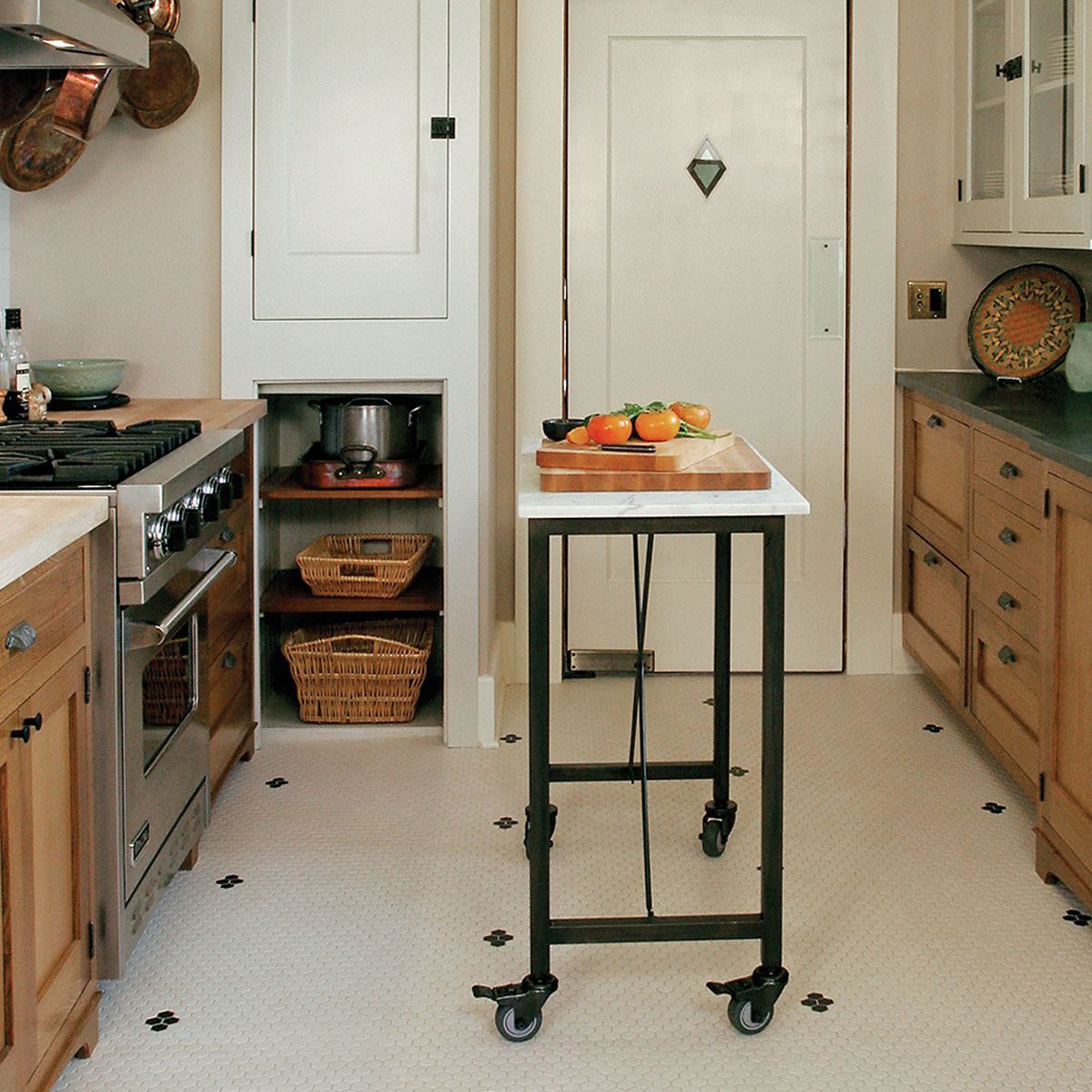
A kitchen island is almost always possible. Even a small rolling island can offer essential counter and storage space and can be moved out of the way when additional elbow room is needed. Narrow kitchen islands can also help direct circulation and create work zones, even in compact kitchens.
Materials and Finishes that Look Like They've Always Been There
For a Victorian kitchen island, we may choose mixed-grain fir. This was the most readily available timber in Portland at the time and was commonly used for cabinetry and millwork. It was often stained dark to mimic more exotic imported woods found in grander homes.
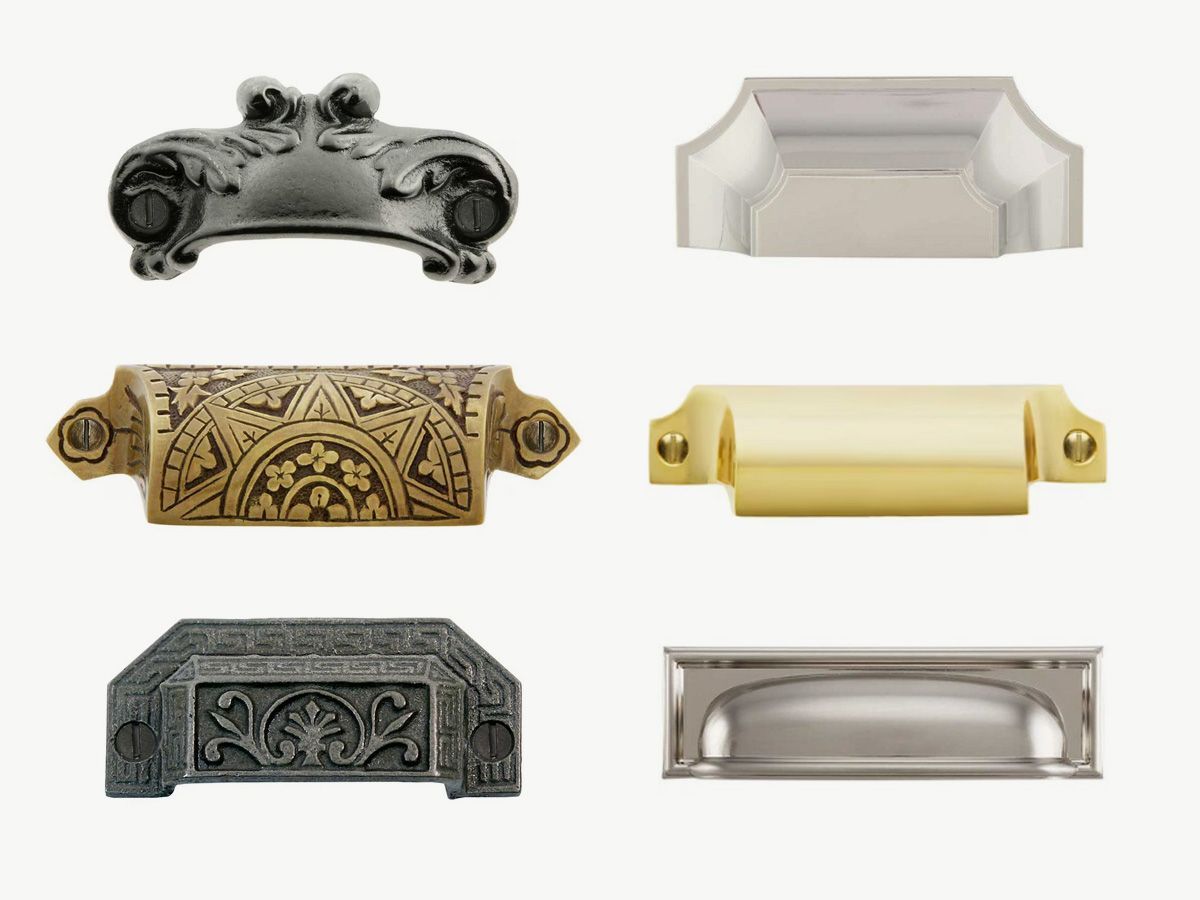
For Victorian kitchen island hardware, ornate options with exotic motifs can add a touch of whimsy. Bin pulls and decorative knobs were often cast in intricate forms, lending elegance and personality.
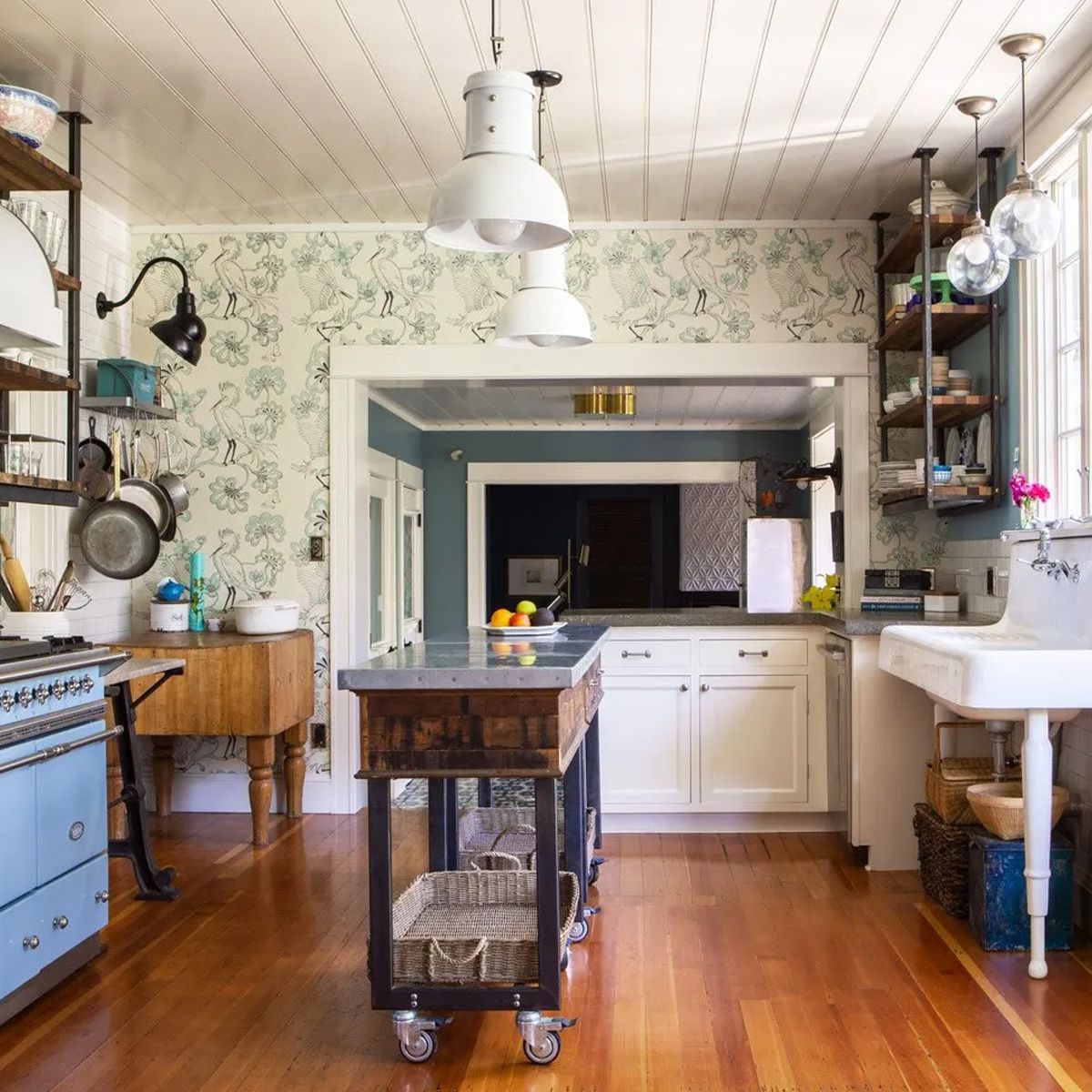
Colorful marble counters can add drama, while turned legs and claw feet enhance a furniture-like appearance. Wrought iron was widely used in Portland at the turn of the century, and an iron frame can be an excellent base for a Victorian kitchen island, blending form and function.
For a Craftsman-style kitchen island, Stickley furniture offers timeless inspiration. Oak cabinetry with square legs and subtle curved brackets fits naturally into a Craftsman kitchen.
Colonial Revival style is lighter and more delicate than Victorian or Craftsman design. Built-in cabinets typically featured full inset doors with full inset or half-overlay drawers, paired with nickel bin pulls and knobs. Details were softer and more curved, finishes lighter, and windows larger. Painted wood cabinetry works well for Colonial kitchen islands, with a turned leg adding refinement. A butcher block counter can introduce warmth.
By the 1930s, trends shifted toward pastel paint and tile colors, along with Art Deco hardware motifs. Solid panel half-overlay doors paired with half-overlay drawers changed the look of built-in cabinetry. Because these kitchens are often small, Arciform typically selects and matches Tudor kitchen island finishes to the surrounding details for cohesion.
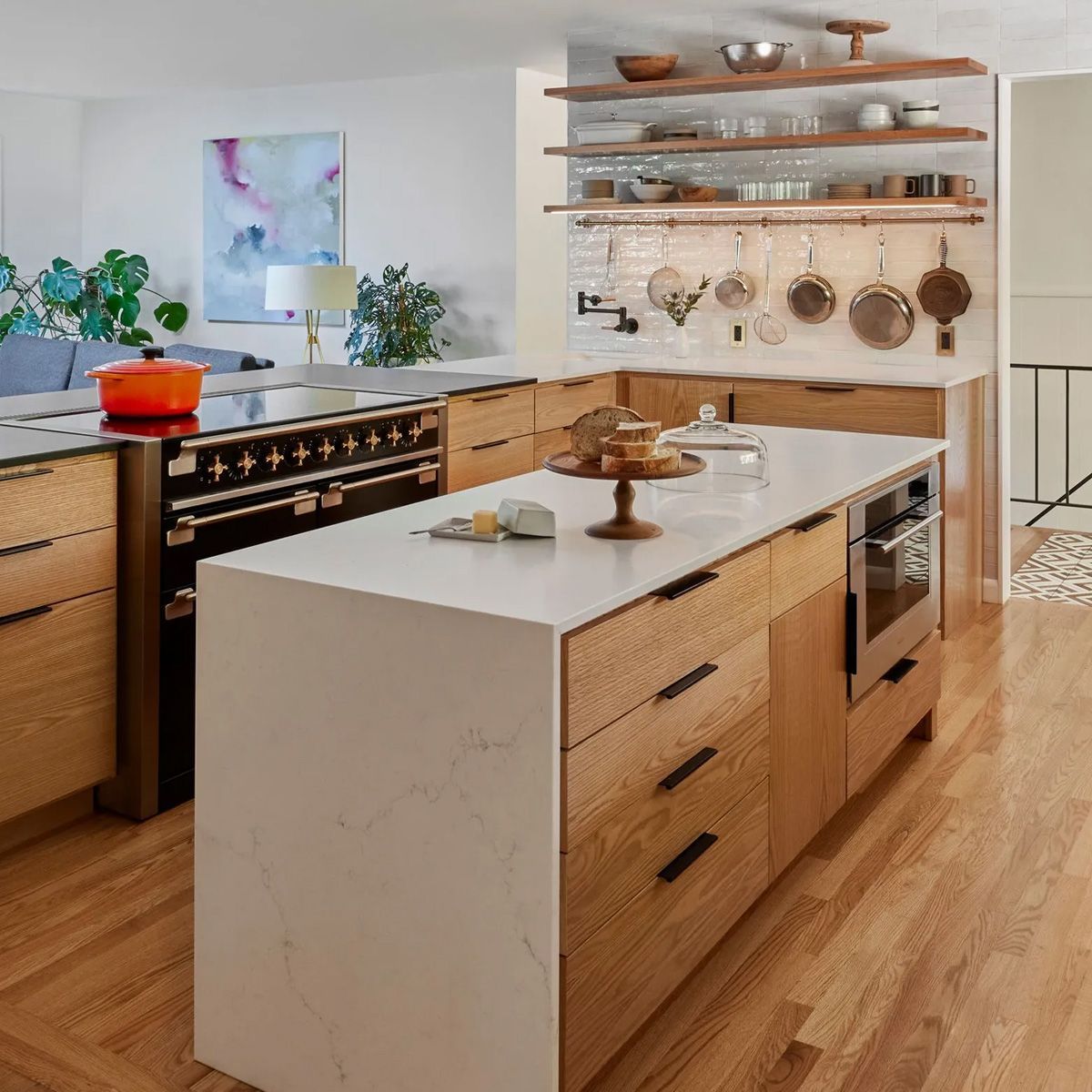
In the mid to late 1940s, home-building philosophies evolved. Architecture became more straightforward, practical, flexible, and family-friendly, with an emphasis on casual entertaining. Kitchens were often open to adjacent spaces, with stained wood millwork and earth-toned finishes. The Midcentury Modern peninsula island frequently served as a transition between kitchen and dining room. Simple cabinetry focused on function, satin brass hardware, and muted counters reflect the style well.
Repurposing Vintage Case Goods as a Kitchen Island
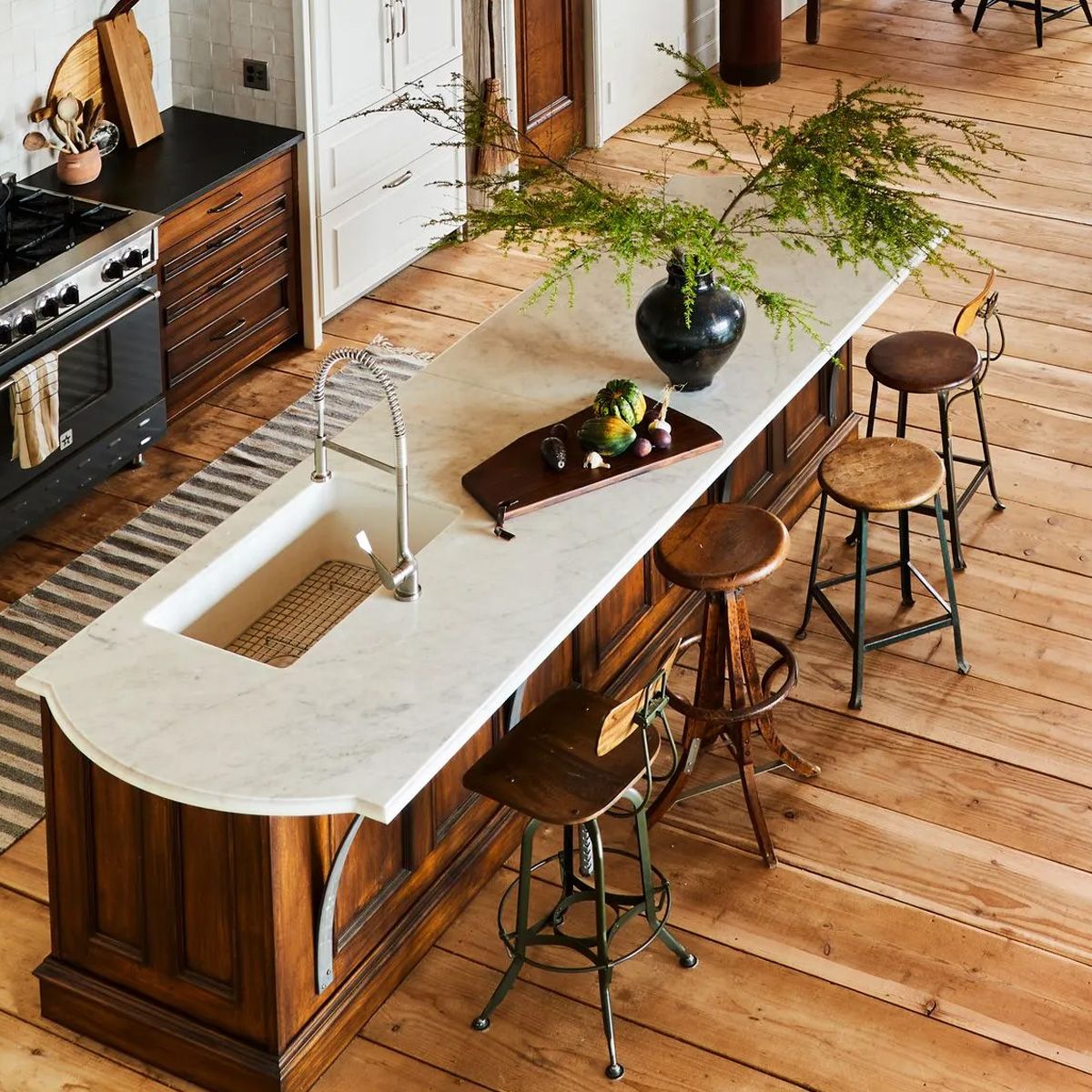
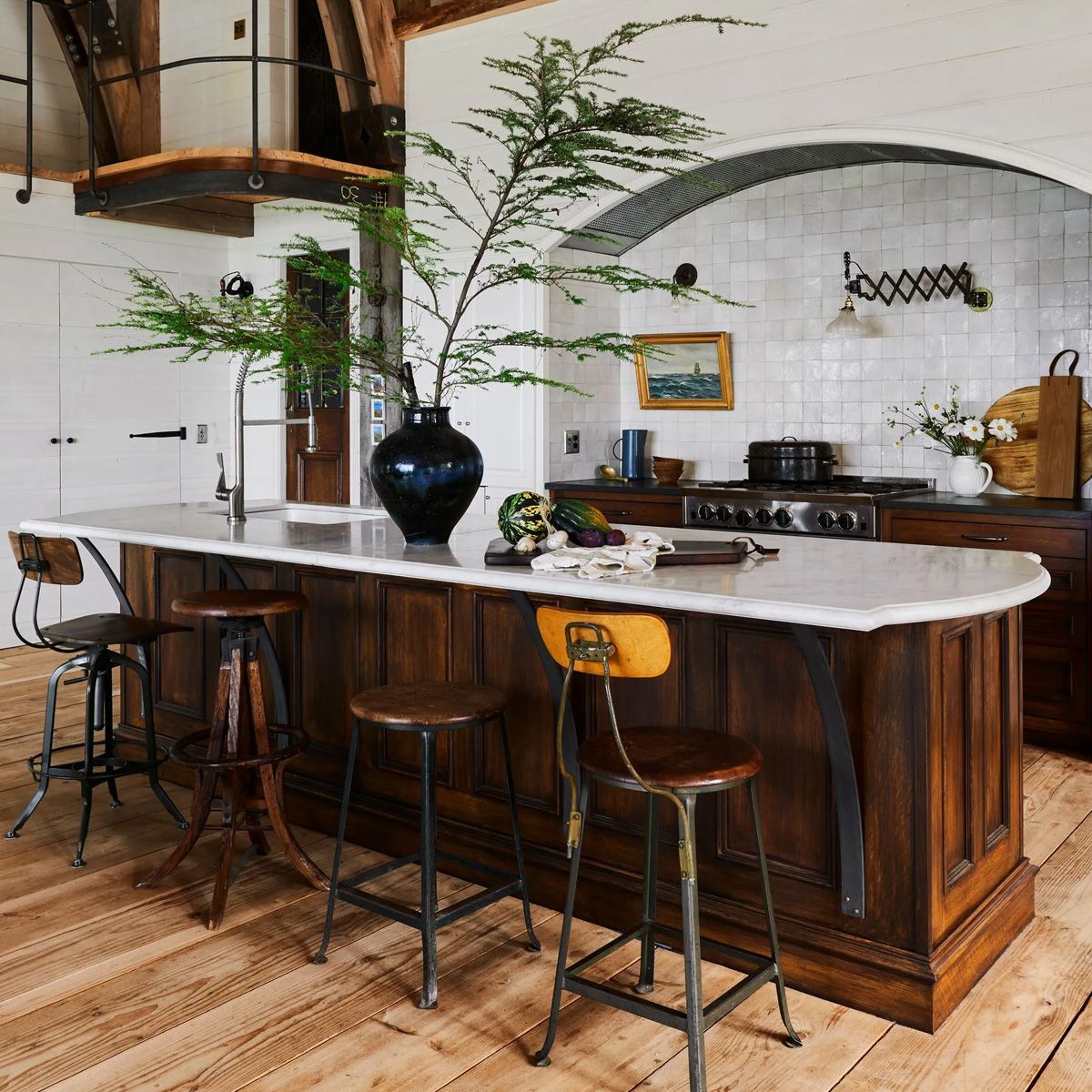
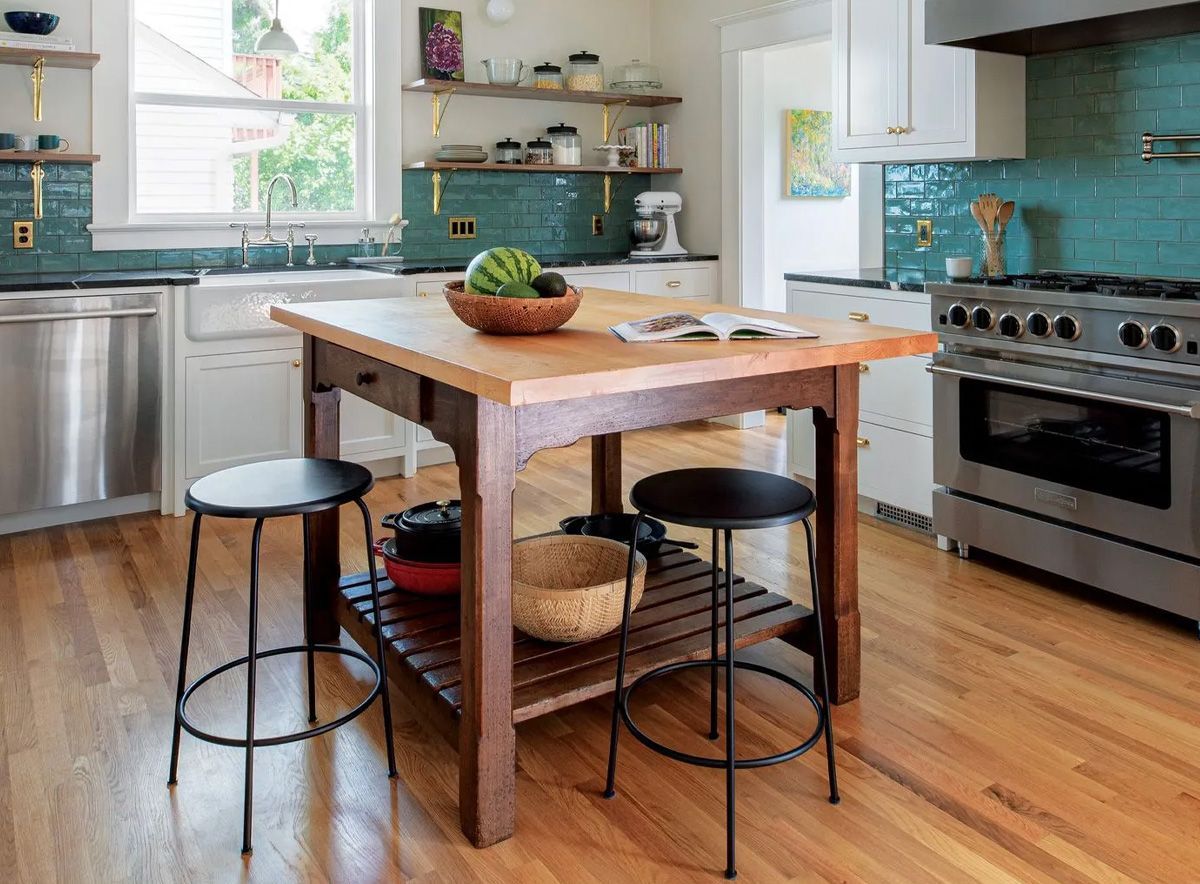
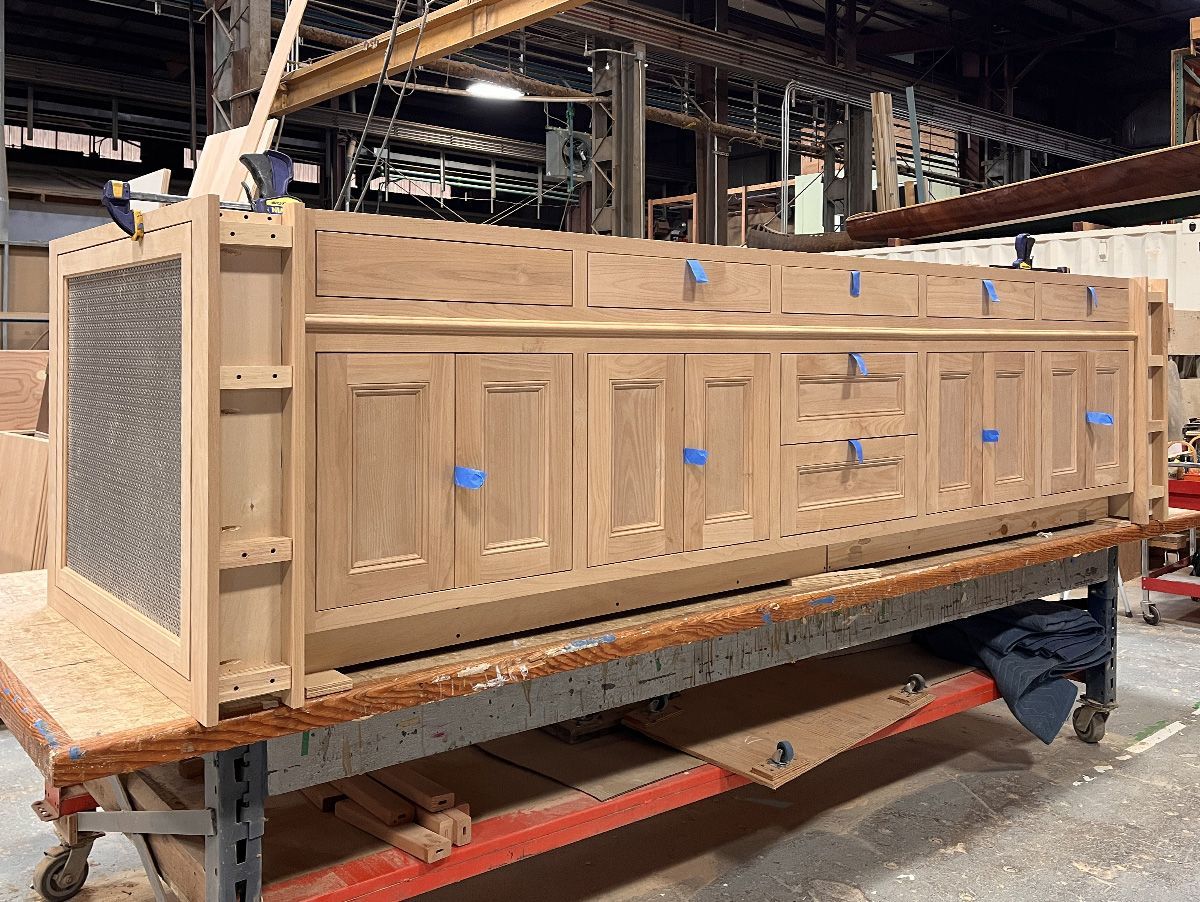
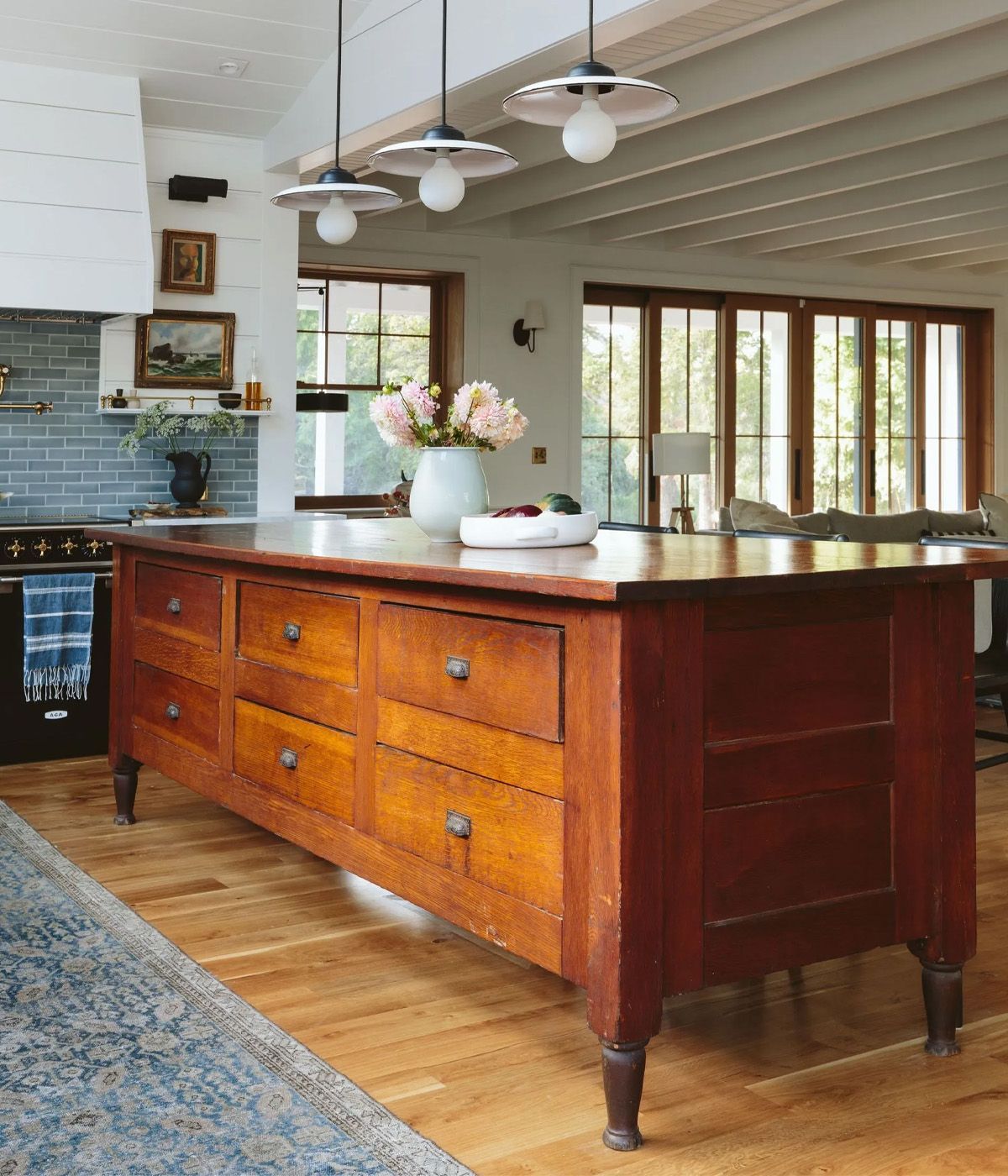
Another approach we sometimes explore is repurposing a vintage or antique piece of furniture as a kitchen island. Large store counters, baker’s tables, or other substantial case goods can bring incredible character, history, and patina into a kitchen. There’s also something deeply satisfying about giving an old piece new life—reusing materials is inherently sustainable and aligns well with the values of many homeowners restoring older homes.
That said, vintage pieces come with both opportunities and limitations. They were not designed to house modern appliances, plumbing, or the kind of storage today’s kitchens demand. Making a vintage piece work often requires thoughtful updates, such as adding a new custom top sized for overhang and seating, integrating a prep sink, or modifying drawers with modern glides to improve functionality. Electrical and plumbing considerations need to be carefully planned so the piece still feels authentic rather than awkwardly retrofitted. When Arciform worked with Emily Henderson on the design of her farmhouse kitchen, we navigated this exact process, balancing inspiration with the practical challenges involved—an experience she documented on her blog (Kitchen Island Ideas; Making Our Farmhouse Vintage Island Functional).
There’s also a balance to strike visually. A vintage piece can feel perfectly at home—or it can feel out of place if its scale, proportions, or detailing don’t relate to the surrounding kitchen. When it works, however, the result is a one-of-a-kind island that anchors the space and tells a story. Done thoughtfully, a repurposed vintage island can bridge past and present in a way that feels intentional, functional, and deeply personal.
Why Some Families Still Choose a Center Table
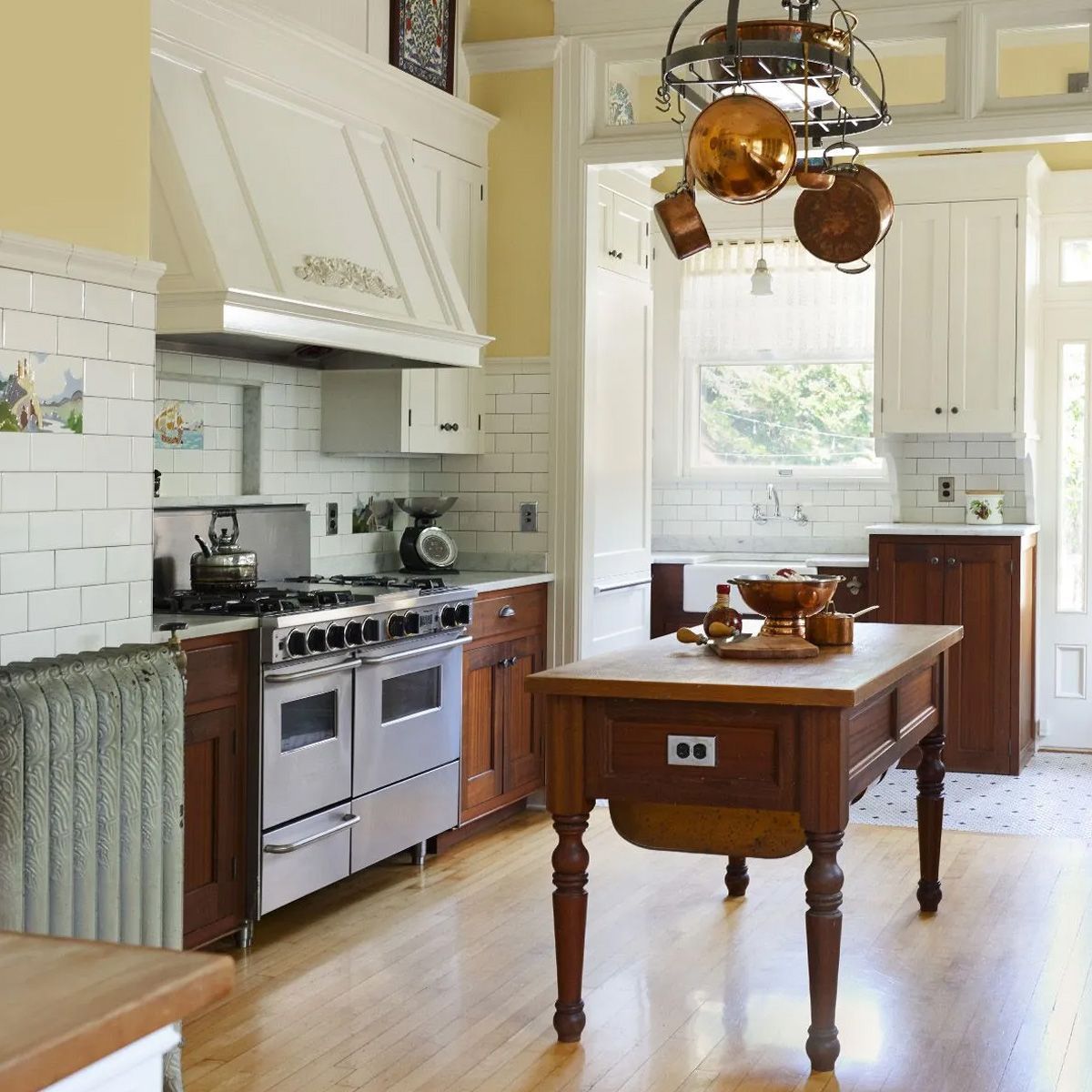
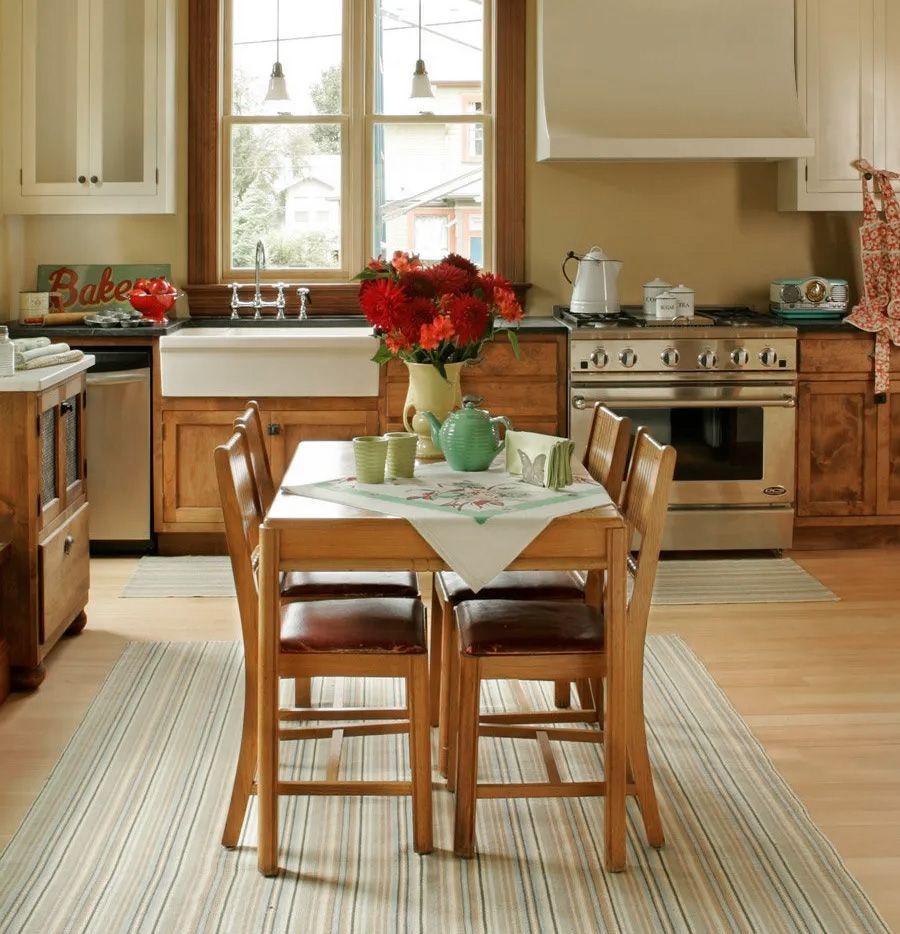
Even with all the advantages of a kitchen island, some families intentionally choose a center table instead. This decision is often driven as much by feeling as by function. A center table has a distinctly old-school presence that feels true to the way historic kitchens once worked, especially in homes where preserving a sense of time and place matters.
Because a table is visually lighter than an island, it can make a small kitchen feel more open and airy. With space all around, it invites movement, conversation, and participation. Sitting together at a centered table in a cozy kitchen feels communal and grounded, whether it’s for casual meals, baking projects, or craft activities that benefit from chairs on all sides.
A kitchen table is also inherently flexible. It can be moved, repurposed, or removed entirely as needs change over time. Its lower height can be a genuine advantage as well, making food prep and everyday tasks more comfortable for shorter cooks and children. For families who value adaptability, togetherness, and a strong connection to historic precedent, a center table isn’t a compromise—it’s a deliberate design choice.
Your House Has Been Waiting a Hundred Years for This Island
When planning your vintage kitchen remodel, the next step is simple: book a complimentary consultation with the Arciform team. We come to your home, listen to how you cook and live, and begin developing options that fit both your house and your life.
With the help of our talented designers, carpenters, and the flexibility of our custom workshop, we can create a period-appropriate kitchen island that works beautifully in your space. We draw inspiration from the past while incorporating innovative solutions to meet modern needs.
Your vintage home deserves a kitchen that feels original and works for real life. Let’s get started!
See More Stories