
Metal Finishes Care Guide
Metal details are found throughout a home, from door, window, and cabinet hardware to faucets, plumbing fittings, light fixtures, switch plates, and other decorative surfaces. In an older house, original brass, bronze, nickel, and other metalwork can be among the small details that give the home so much of its character. Newer metal finishes add another layer, whether chosen to complement what's already there or to bring something distinctly new to a remodeled space.
Caring for these surfaces can be more complicated than identifying the metal alone. Brass, bronze, nickel, chrome, stainless steel, and other metals may be polished, brushed, plated, lacquered, waxed, chemically darkened, or otherwise coated. Two pieces that look similar may therefore require very different care, and an aggressive cleaner or polish can sometimes remove the very finish you're trying to preserve.
For routine cleaning, start with the gentlest method possible: a soft cloth, followed when necessary by mild soap and water. Before using metal polish, abrasive cleaners, acids, or other stronger products, identify both the metal and its finish whenever possible. A polish that restores bare brass, for example, can damage lacquered or plated brass.
Some metal finishes are also meant to change with time and use. Unlacquered brass, bronze, and other
living finishes naturally develop variations in color and sheen as they are exposed to air, moisture, and handling. On both old and new metalwork, these changes can be part of the character of the material rather than something that needs to be polished away.
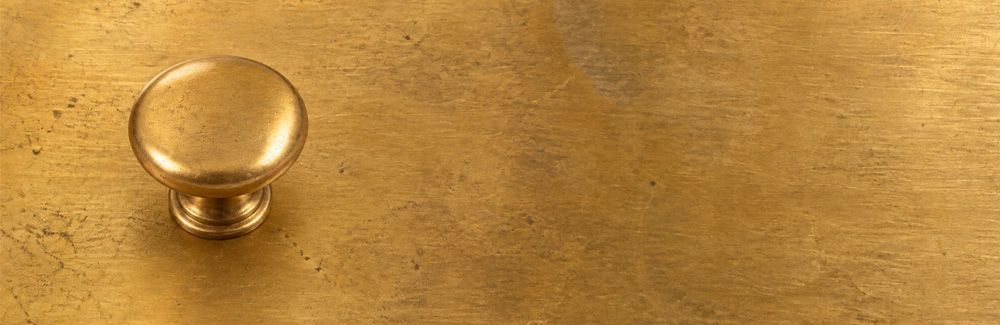
Unlacquered Brass
Unlacquered brass is a living finish. Exposure to air, moisture, skin oils, and handling gradually changes its color and sheen.
That change is intentional.
Everyday Care:
Dust with a soft cloth. Clean with mild soap and water when needed and dry thoroughly.
Patina:
Areas that are handled frequently may become brighter while recessed areas darken. Water and fingerprints can also contribute to variations in color.
If you like the developing patina, no polishing is necessary.
If you prefer bright brass, unlacquered brass can generally be polished with an appropriate brass polish. Understand that polishing removes the existing patina and returns the metal toward a brighter, more uniform appearance.
Before polishing older hardware, however, make sure it is actually solid, unlacquered brass rather than brass-plated or coated hardware.
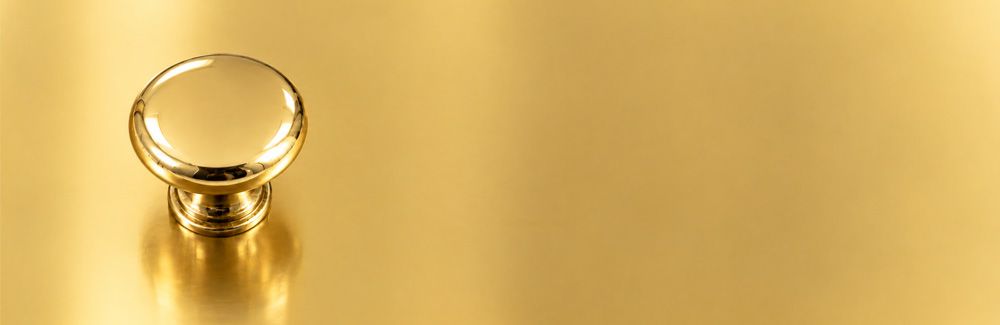
Lacquered & Coated Brass
Lacquered brass has a protective coating intended to preserve a more consistent appearance.
Everyday Care:
Clean gently with a soft cloth and mild soap and water when necessary. Dry thoroughly.
Avoid:
Do not use brass polish on lacquered brass. Metal polish can damage or remove the protective coating.
Also avoid abrasive pads, harsh chemicals, and aggressive rubbing.
If the lacquer begins to fail, dark spots or tarnish may develop beneath or around the coating. At that point, restoring the hardware becomes a refinishing project rather than a cleaning task.
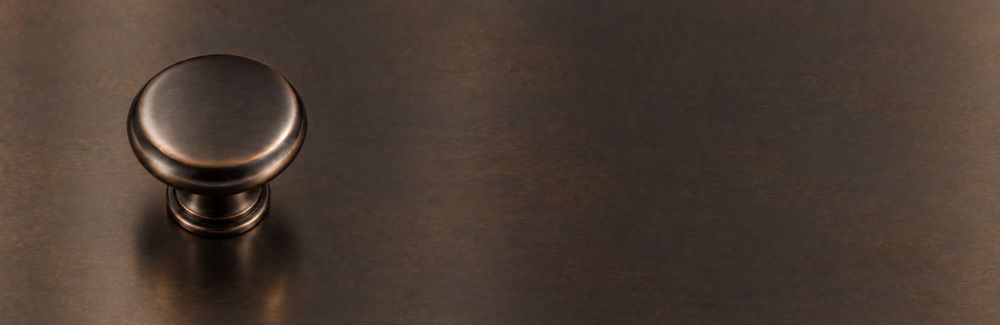
Bronze & Living Bronze Finishes
Bronze and many bronze-colored hardware finishes are intended to develop variation with age and handling.
Oil-rubbed bronze in particular may gradually lighten at edges and frequently touched areas, revealing warmer metal beneath the darker surface.
Everyday Care:
Use a soft cloth and mild soap and water when necessary. Dry thoroughly.
Avoid:
Do not use metal polish, abrasive cleaners, scouring pads, bleach, ammonia, acids, and strong household chemicals unless specifically approved for the finish.
Don't assume that a dark bronze-colored piece is solid bronze. Many contemporary products achieve the appearance through plating, chemical patination, or applied coatings.
Patina:
Changes in color and sheen are often part of the intended appearance of a living bronze finish. Trying to keep it perfectly uniform can result in more damage than simply allowing it to age naturally.
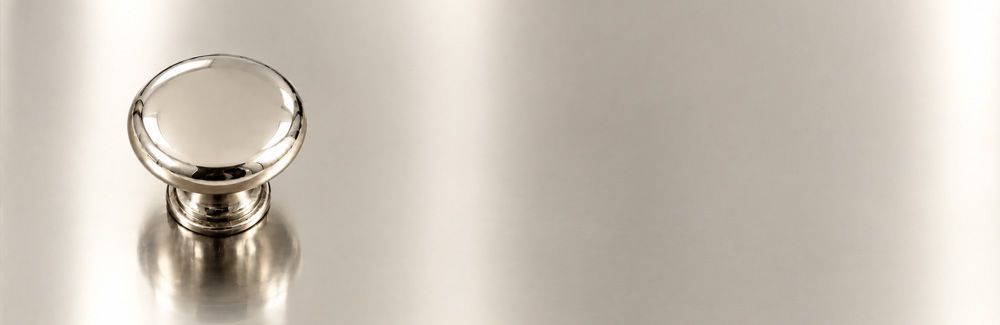
Nickel
Nickel hardware may be polished, satin, brushed, plated, or given an antiqued finish.
Everyday Care:
Clean with a soft cloth and mild soap and water. Rinse away soap residue and dry.
Avoid:
Do not use abrasive pads, scouring powders, bleach, ammonia, and acidic cleaners unless the hardware manufacturer specifically approves them.
Do not automatically use metal polish. Many nickel finishes are plated or coated, and polishing can alter their sheen or remove the finish.
Unlacquered polished nickel in particular can naturally develop subtle changes in appearance with use.
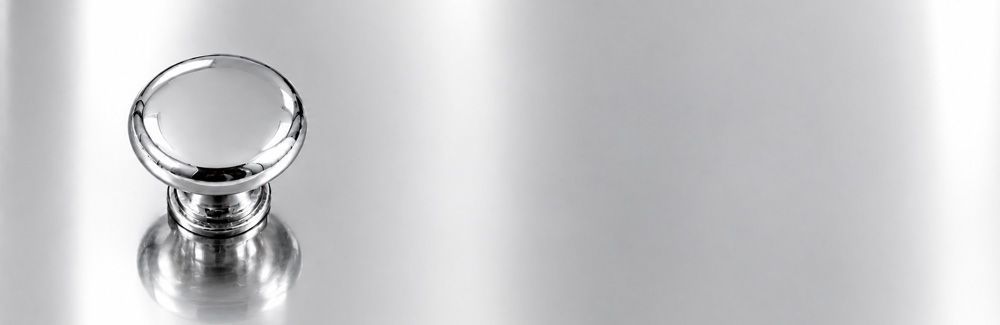
Chrome
Chrome is typically a thin plated finish over another metal. It is durable but can be permanently damaged if the plating is scratched or chemically attacked.
Everyday Care:
Clean with mild soap and water and a soft cloth. Dry to reduce water spotting.
Avoid:
Do not use steel wool, abrasive pads, scouring powders, and aggressive metal polishes.
If chrome begins peeling, blistering, or revealing another metal underneath, the plating has failed. Cleaning will not restore it.
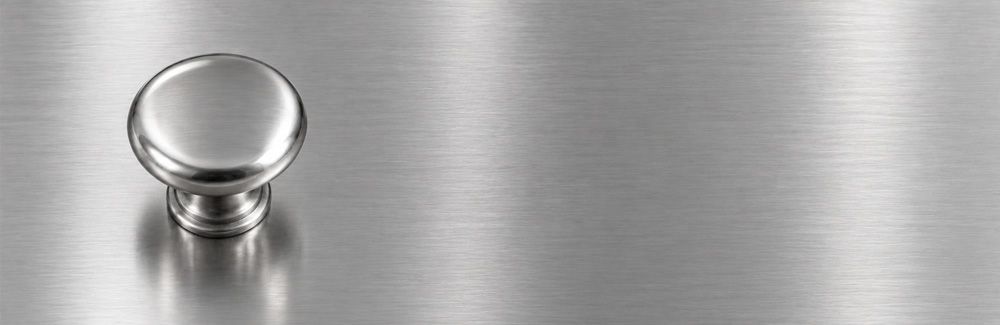
Stainless Steel
Stainless-steel hardware is durable and corrosion resistant, although it can still scratch and develop surface deposits.
Everyday Care:
Clean with mild soap and water and a soft cloth.
Where the hardware has a visible grain or brushed finish, wipe in the direction of the grain.
Dry thoroughly to reduce water spots.
Avoid:
Do not use ordinary steel wool or steel brushes. They can scratch the surface and leave behind iron particles that subsequently rust.
Also avoid prolonged exposure to chlorine bleach, strong acids, and salty substances.
Fine scratches may gradually become part of the surface patina, particularly on frequently handled hardware.
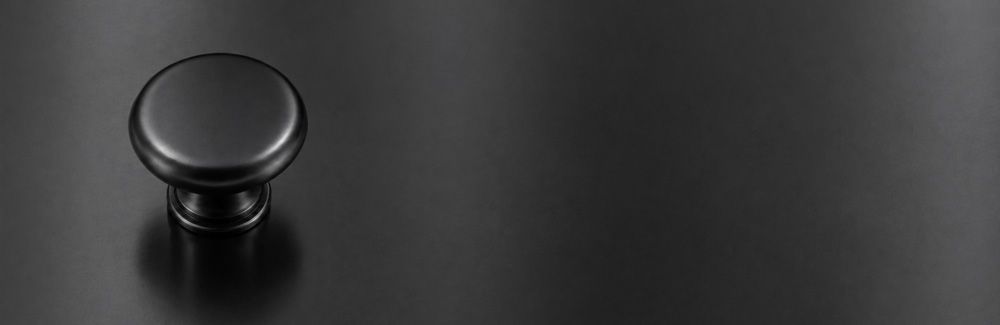
Painted & Powder-Coated Hardware
Black, white, and colored hardware is often protected by paint, powder coating, or another applied finish.
Everyday Care:
Clean with a soft cloth and mild soap and water, then dry.
Avoid:
Do not use abrasive cleaners, scouring pads, metal polish, solvents, and aggressive chemical cleaners.
Wear at corners and frequently touched areas can eventually expose the underlying metal. Once the coating has worn through, cleaning will not restore the original finish.
Touch-up or refinishing options depend on the particular product and coating.
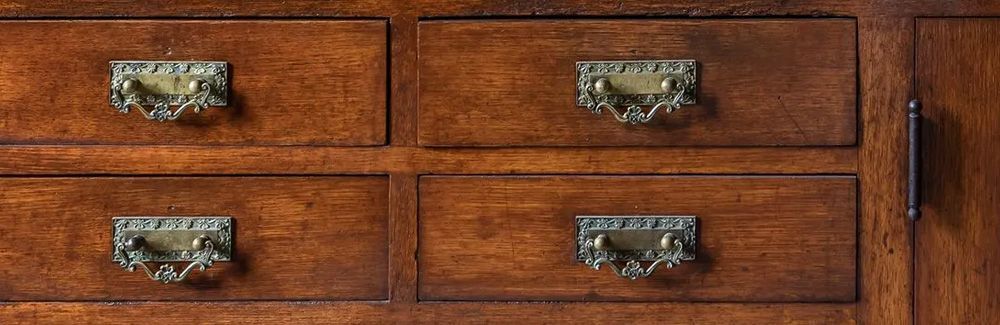
Historic & Antique Hardware
Original hardware is one of the details that can give an older home much of its character. Doorknobs, hinges, sash locks, cabinet latches, escutcheons, and other fittings may also contain materials and finishes that are difficult—or impossible—to replace.
Before polishing, stripping, sanding, or refinishing historic hardware, consider whether the existing surface is worth preserving.
Start with Cleaning, Not Polishing
A dark surface is not necessarily tarnish that needs to be removed.
Older brass and bronze can develop a stable patina over decades. Plated hardware may also have only a thin layer of decorative metal over a different base metal.
Begin with gentle dry cleaning or mild soap and water. If you are considering a more aggressive treatment, first determine what the hardware is made from and whether its finish is original.
Don't Assume a Magnet Tells the Whole Story
A magnet can sometimes help distinguish iron or steel from nonferrous metals, but it cannot reliably tell you whether a piece is solid brass, brass plated, bronze, or another alloy.
Color alone isn't reliable either.
When the hardware is significant or you're unsure what you have, professional evaluation may be preferable to experimenting with polish or stripping products.
Paint Removal
Paint-covered antique hardware can often be restored, but paint removal is a restoration procedure, not ordinary cleaning.
Older hardware may have delicate plating, intentional darkening, or other original finishes beneath the paint.
And, as with painted window hardware, paint on pre-1978 components may contain lead. Appropriate lead-safe practices should be used whenever old paint is disturbed..
Preserve Original Components
When removing historic hardware, keep screws, pins, spindles, escutcheons, and other associated parts together.
Original screws and fasteners may have head shapes, finishes, and dimensions that differ visibly from modern replacements.
If a historic lock, latch, hinge, or window mechanism no longer operates correctly, repair may be possible. Replacement doesn't necessarily need to be the first response.
When Vintage Hardware Needs Maintenance or Repair
Cleaning won't solve every hardware problem. Watch for:
- Loose knobs, pulls, hinges, or escutcheons
- Doors or windows that no longer latch properly
- Grinding, binding, or excessive movement
- Loose or stripped screws
- Broken springs or latch mechanisms
- Corrosion that interferes with operation
- Peeling or failing plated finishes
- Hardware pulling away from the wood
- Cracked porcelain, glass, or ceramic knobs
- Excessive paint buildup around moving components
Repeatedly tightening a loose screw or forcing a sticking mechanism can cause additional damage. The underlying issue may be a stripped screw hole, worn component, alignment problem, movement in the door or window, or deterioration of the surrounding wood.
For original or difficult-to-replace hardware, repair and restoration are often worth considering before replacement.