Here's the long and short of it: pantries are a great asset in any kitchen, and if we can create a pantry as part of a kitchen remodel, it helps us add to the flexibility, function and aesthetic of the space.
We all love a place for everything and everything in its place, and what better way to achieve this than with a pantry. No matter the shape a pantry takes - from an old-fashioned butler’s pantry to a vintage cabinet in a corner - it does heavy lifting. It provides flexible storage and keeps clutter off counters.
The pantry can be at the bottom of the basement stairs within a closet or on open shelves, within custom built in cabinets or a vintage cabinet that we can refurbish. We can restore an original butler’s pantry or take over an original cold storage space off the back porch.
Arciform has remodeled many of Portland’s historic homes with small kitchens that have limited options for long stretches of continuous counters and banks of cabinetry. If we are able to create a pantry, we can delegate one part of the space to storage and leave the rest to preparing food and cleaning dishes.
Another benefit of a pantry is that it can add charm as storage can come in many shapes and forms – we can have an open pantry embracing the esthetic of packaging, bins and cookbooks; or we can have a hidden space by concealing shelving behind pretty doors, hidden doors or even curtains. Let us explore some ideas.
Butler’s Pantry Ideas: Design, Layout & Storage Solutions
Butler Pantry Ideas for Historic Homes
The Arciform team is thrilled when we find a butler’s pantry in a historic home we are remodeling. For a while, trends encouraged homeowners to remove butler’s pantries to achieve open floor plans between kitchens and dining rooms. But that trend was short-lived—for good reasons.
Butler’s pantries originated in the 19th century and were a standard feature in larger houses that served wealthy families. Even in medium-sized homes, spaces were christened “butler’s pantry” that didn’t quite meet all the grand expectations of the original rooms—especially excluding the butler—because, let’s face it, a butler is more of a commitment than opening the door for guests and serving dinner.
Butler’s pantries serve as a dedicated space to store china, silver, glassware, and linens, and they function as a transition between the kitchen and dining room, providing a discreet area for plating dishes and preventing kitchen noise and smells from reaching diners. The additional wall space creates more opportunities for counters, cabinetry, and for screening messy prep areas from view.
Butler Pantry Cabinets: Storage and Style
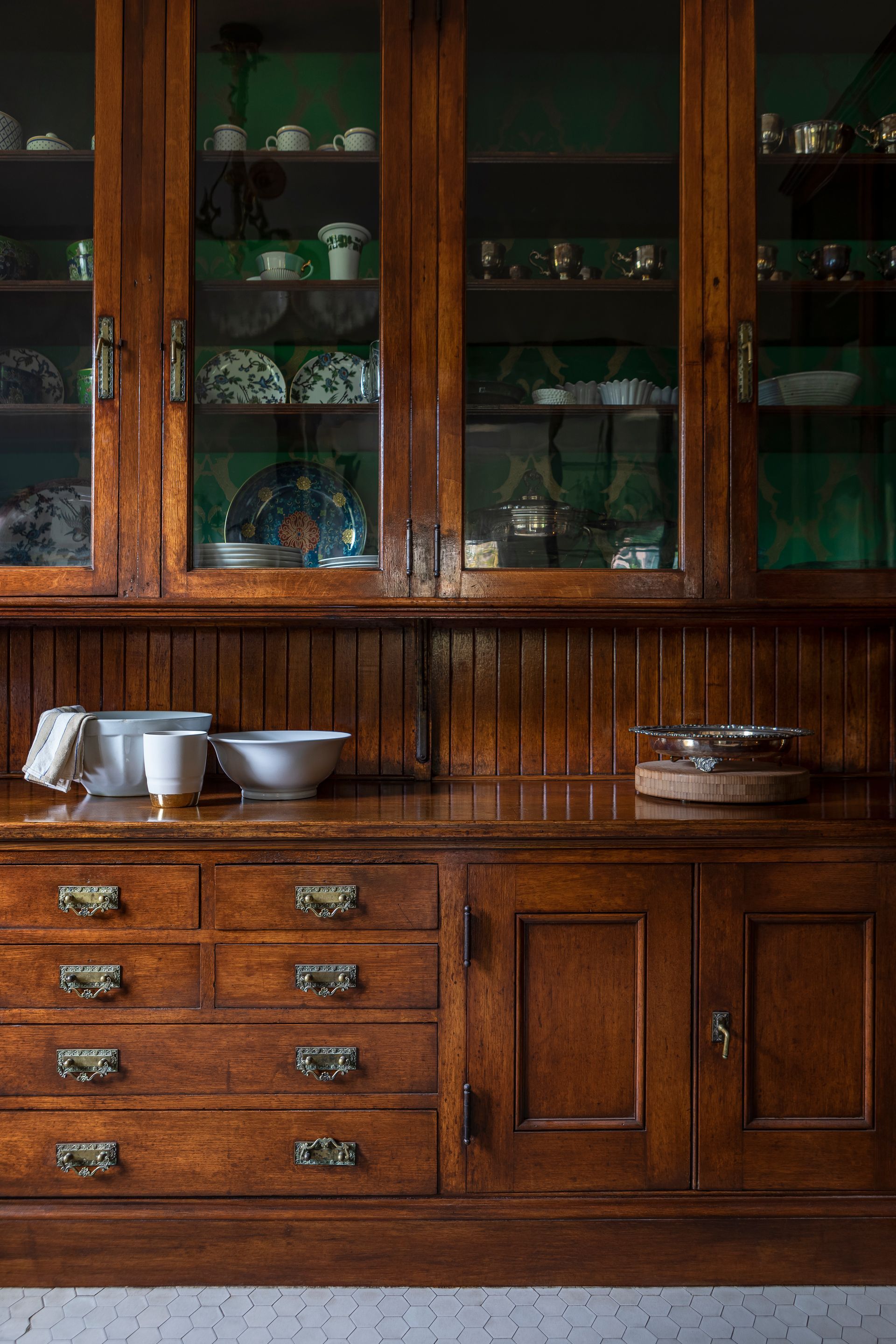
What defines butler’s pantries in Portland’s vintage homes is that they often have beautiful built-in cabinets that tend to still be in great shape. Full-inset glass-paneled upper cabinet doors display glassware and pretty china, and full-inset or half-overlay drawer fronts provide cover for drawers that store silver, linens, bowls, and other serving accoutrements.
What can make the spaces striking—and add more storage—are upper butler’s pantry cabinets that go all the way to the ceiling, sometimes divided by double-high sets of doors.
If the client prefers to have some items stored behind solid doors, we balance those with glass doors. Rarely would we use all solid doors, as glass doors add depth and texture and provide the opportunity to display beautiful things.
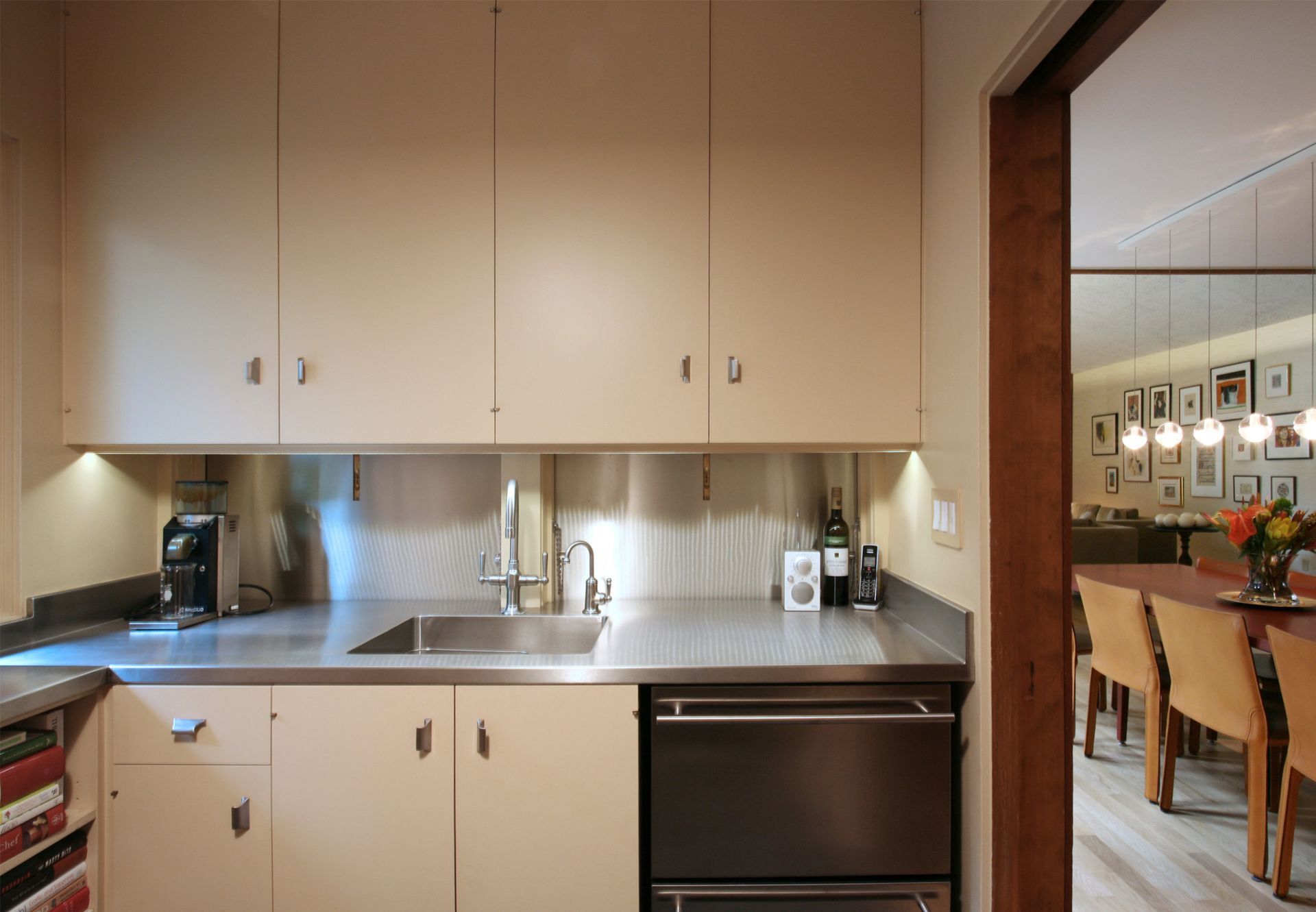
For modern convenience, and if the space allows, we like to add a dishwasher and a sink in the butler’s pantry, as this frees up the main kitchen to be used exclusively for cooking and prep. This also allows for a great division of labor—the cook can cook undisturbed while the rest of the family does the set-up to enjoy the meal.
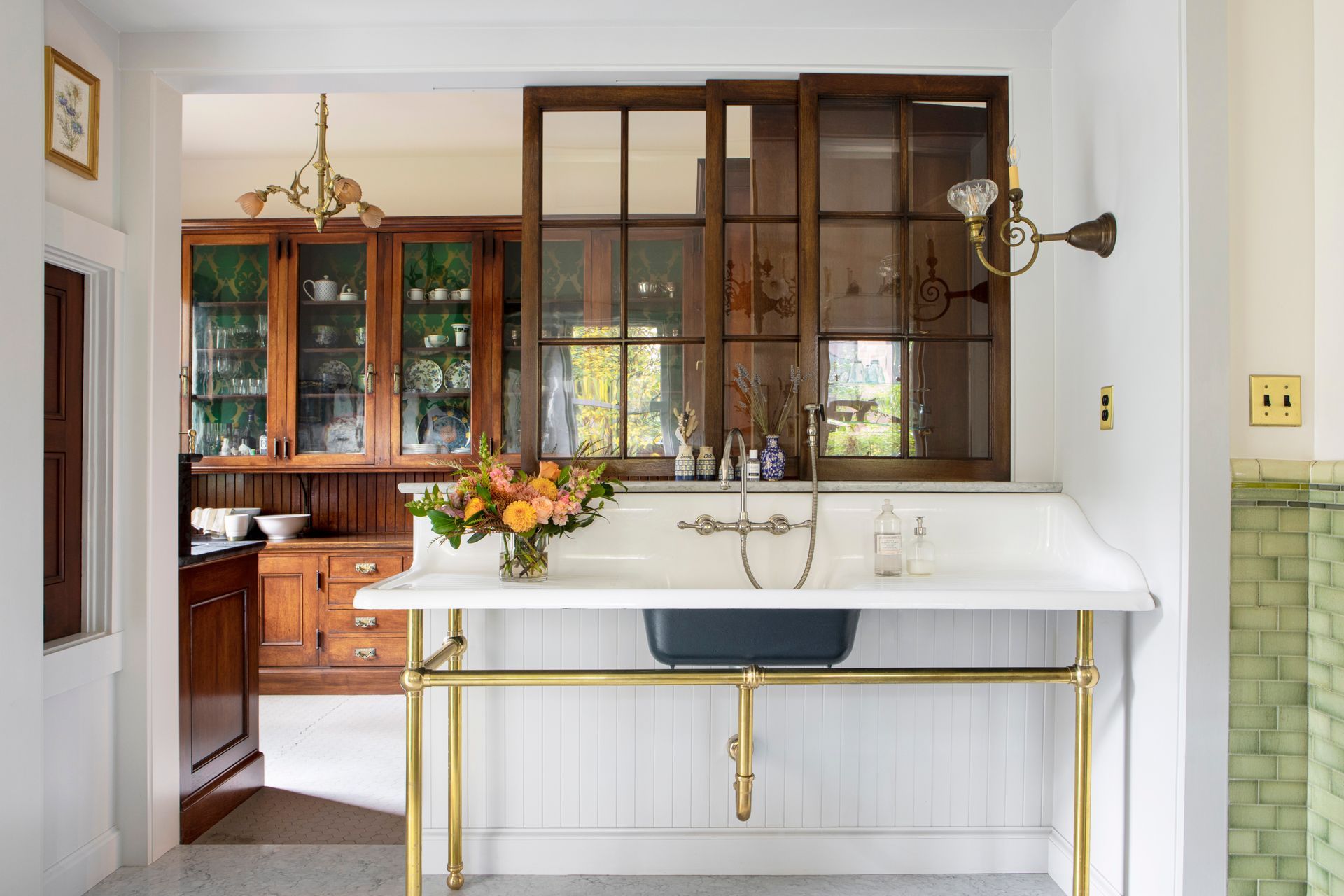
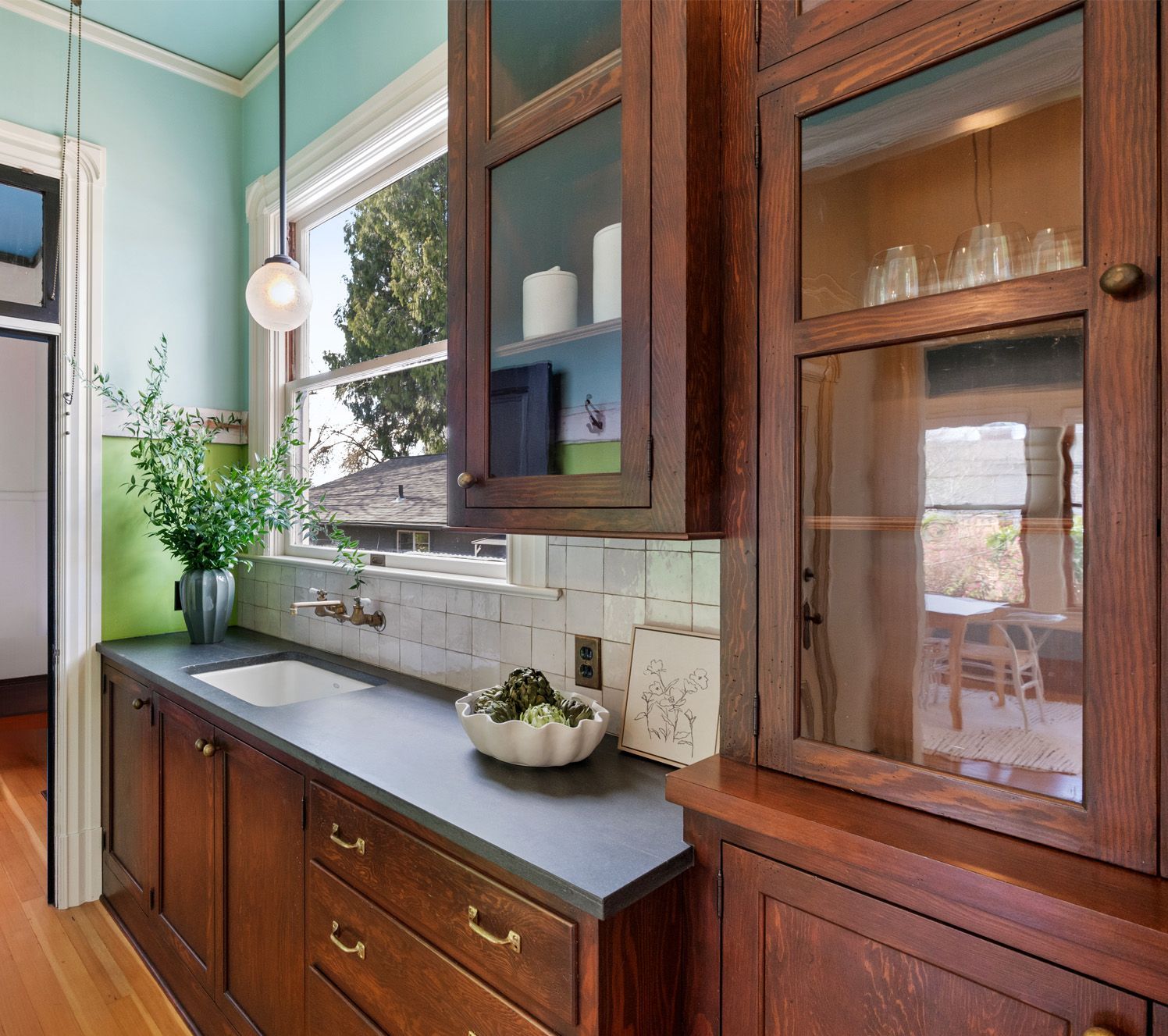
The china room (or butler's pantry) in the Isam White House connects the kitchen and the dining room. A second food storage pantry across the kitchen meant this space could be dedicated to dishes and serving pieces. When restoring the home the current owners added the soapstone sink counter and matching cabinets with a dishwasher. In the original bank of cabinets they added a useful freezer drawer. The green and gold boxing hares wallpaper adds a fun and vibrant touch inside the upper cabinets.
Small Butler's Pantry Design Ideas
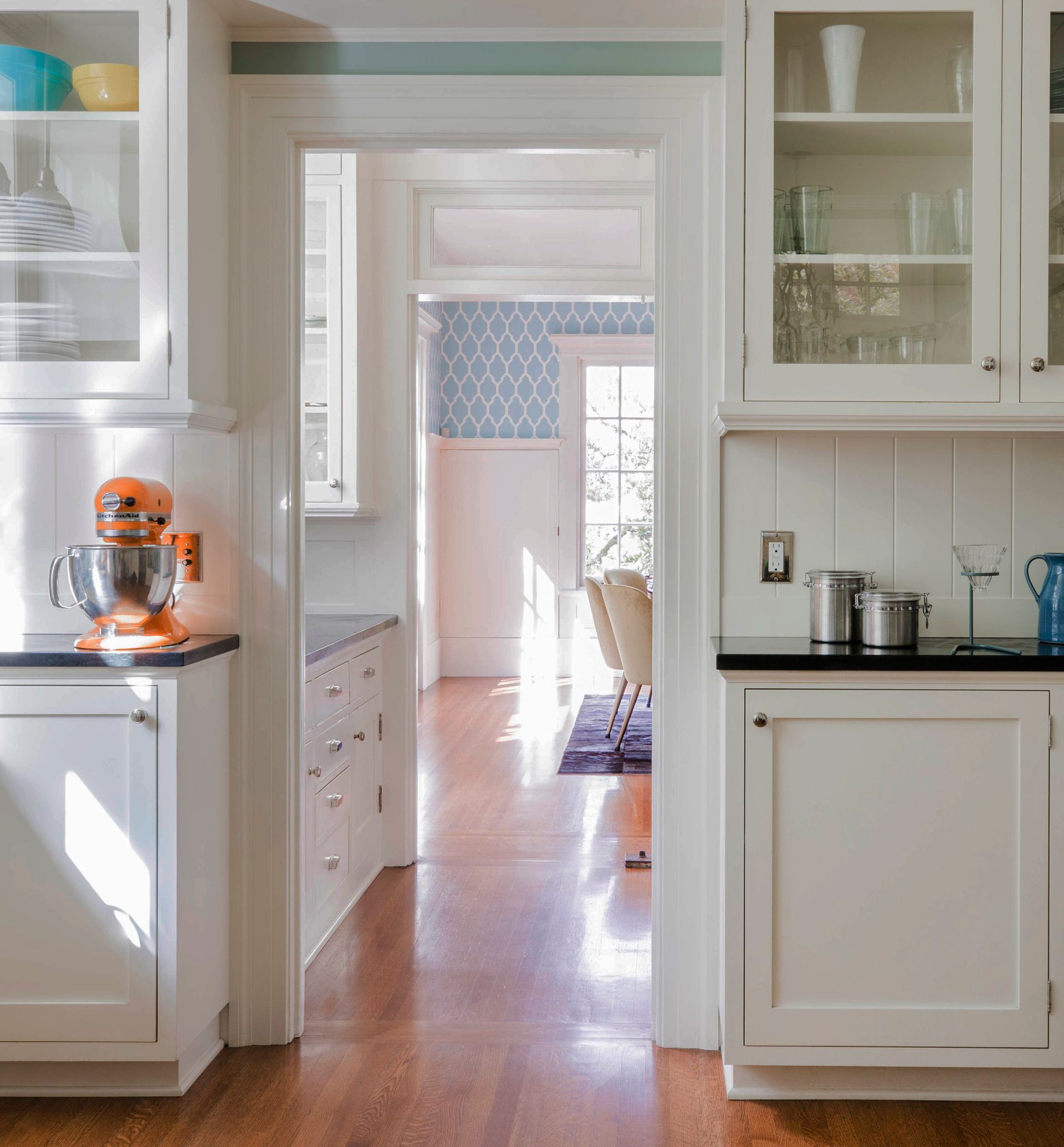
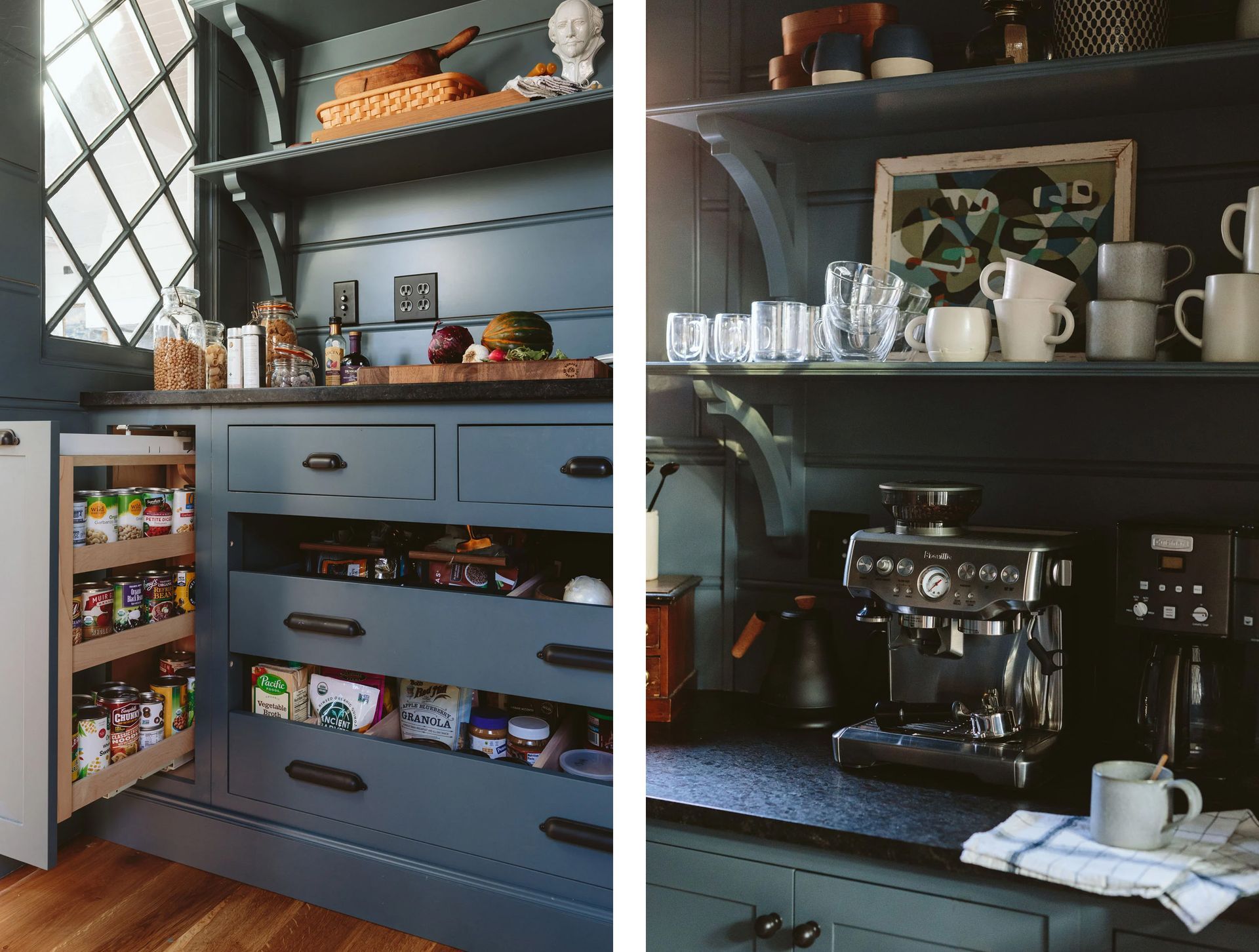
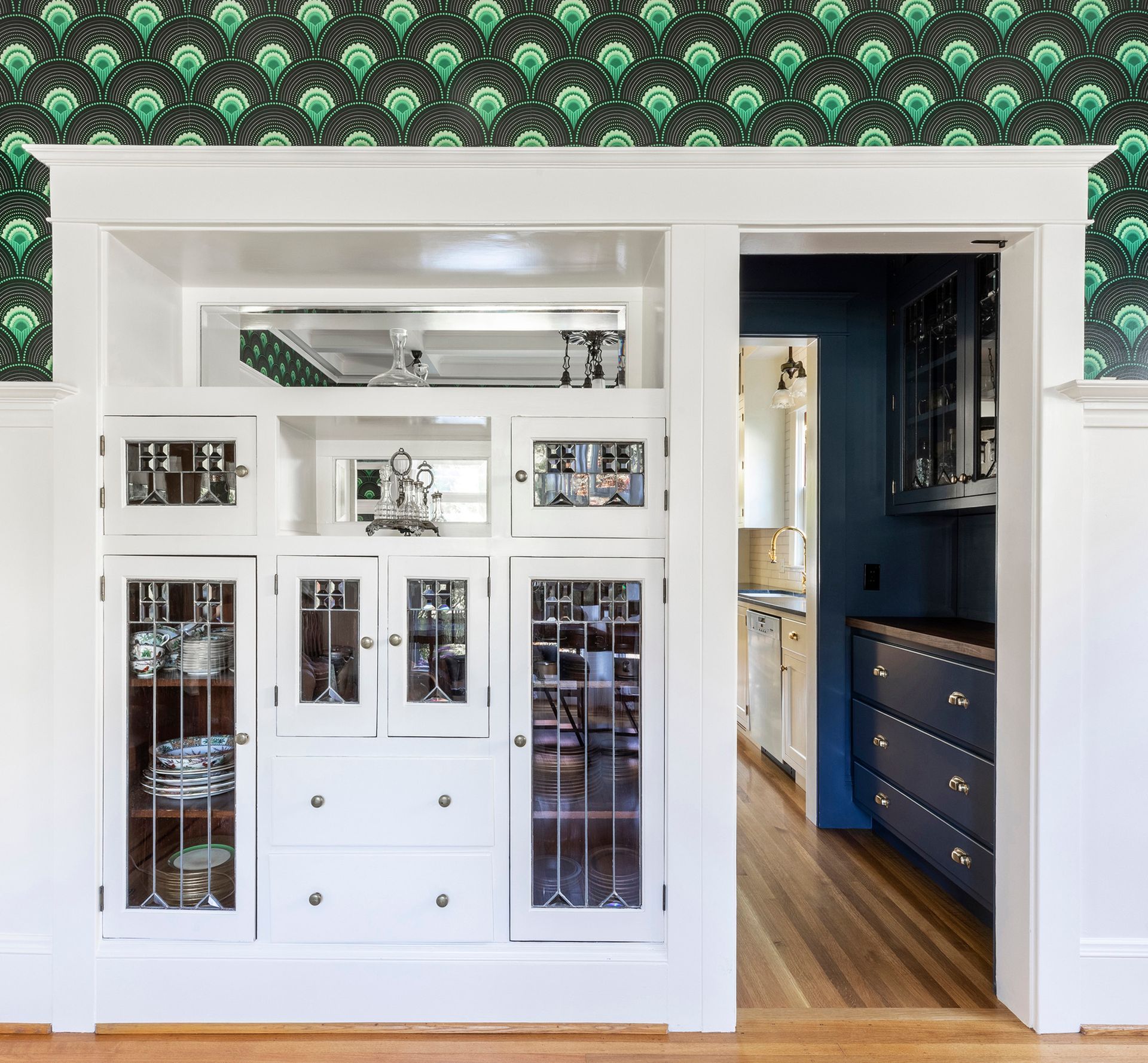
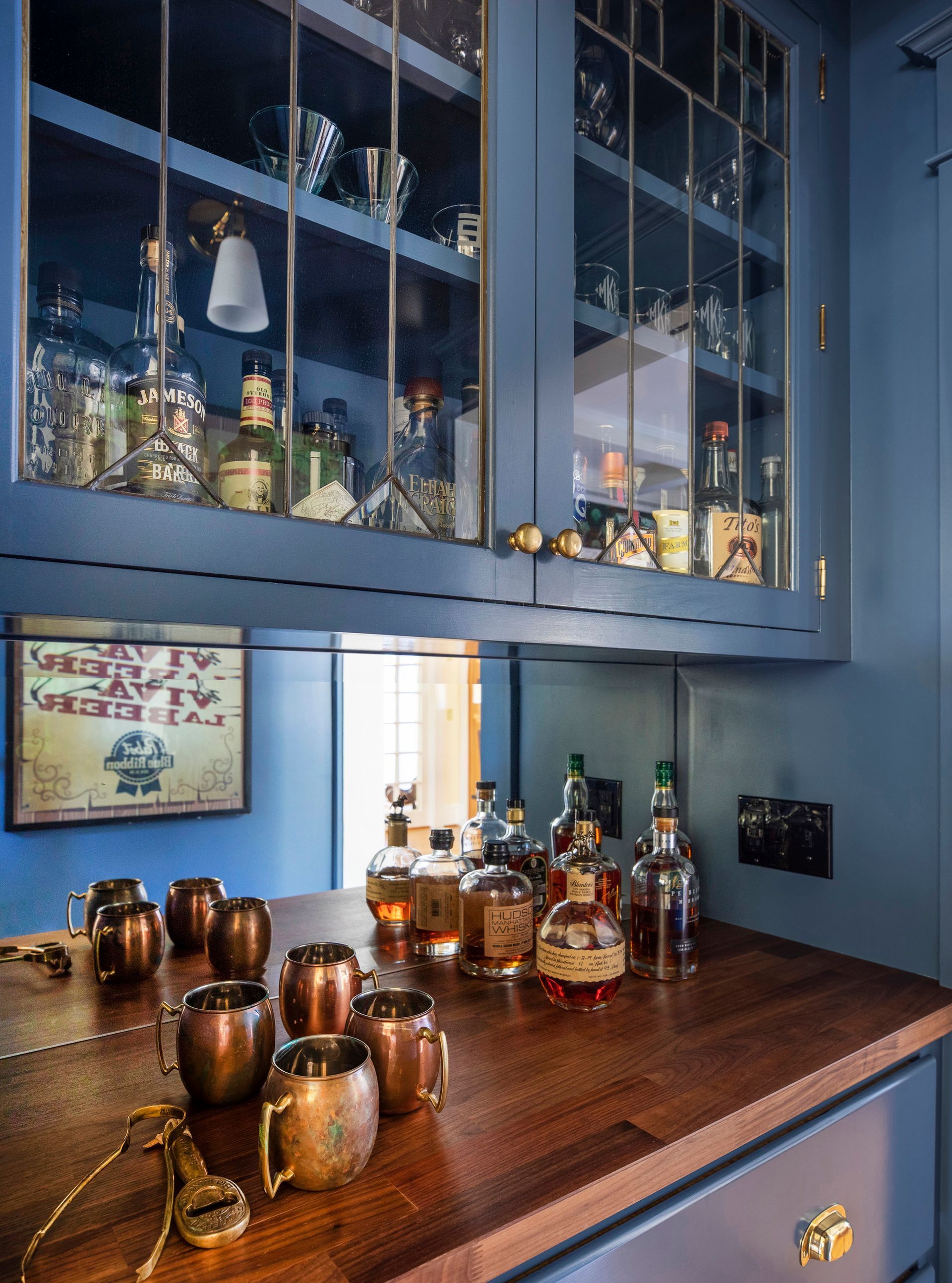
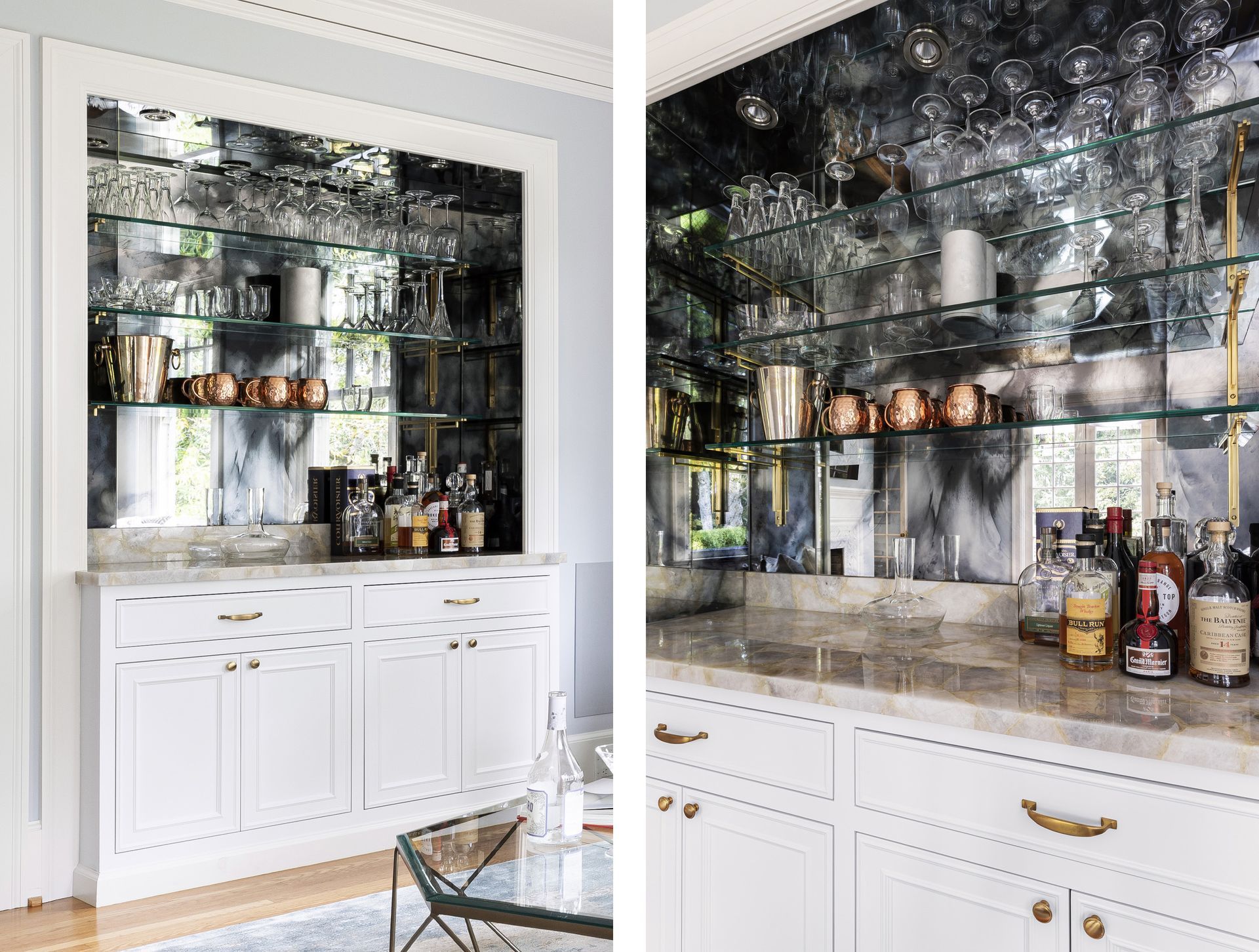
In Portland homes, a small butler’s pantry is more common than a larger one. In a small butler’s pantry, we often dedicate the area to a special purpose. Cocktail bars are popular—so are toaster and coffee bars. It’s a fun twist and frees up kitchen counters. We also encourage the finish palette in the small butler’s pantry to stray from adjacent spaces so we can add an element of drama. Adding wallpaper in the back of an upper butler’s pantry cabinet or on the adjacent walls, using a mirrored tile backsplash, or just having fun with paint can create a stunning little jewel box of a space.
Butler Pantry Layout: Planning Your Space
In some cases, kitchens in older homes have been remodeled during the last 100 years and the spaces have been added onto and opened up to adjacent rooms. Our clients come to Arciform for our expertise in returning the home to its original character and charm. In many cases, our clients want us to add a butler’s pantry to their kitchen, so we sharpen our pencils and consider the pros and cons of different butler’s pantry layouts.
The nature of the butler’s pantry dictates an entry from the kitchen and an exit into the dining room. So, at a minimum, we want one wall for upper and lower cabinets with a counter. If the space allows, creating an L-shaped butler’s pantry layout or even having butler’s pantry cabinetry and counters on both sides is a plus. Unlike a kitchen, you do not need to worry about a work triangle, but because a lot of traffic is directed through the space, you want to be sure you can circumnavigate open drawers or doors swinging into the space.
Any features—like a dishwasher, a prep sink, under-counter refrigeration, lighting within the upper cabinets to display beautiful things, or under-cabinet lighting to brighten the countertop; proper placement of outlets; and maybe even a library ladder to reach the top of your upper pantry cabinets—are fun and functional additions.
The beauty of a butler’s pantry is its versatility. During a party, you can set up a mini bar or a buffet in the space. While it may create a bottleneck, it keeps guests out of the way of the cook. Likewise, for everyday purposes, we’ve freed up kitchens by moving instant-hot makers and coffee makers into the butler’s pantry and creating tea and coffee bars that display beautiful tea containers, coffee tins, collections of teapots, cups, mugs, and the like. Or, for toast lovers, having a toaster bar with a mini fridge for jam and butter can create a great little snack area. It can also simply be the dish zone for your family, with a dishwasher and storage for daily dishes and silverware.
Butler’s Pantry vs Walk-In Pantry: Which Is Right for You?
Now you may be wondering what the difference is between a butler’s pantry and a walk-in pantry. There are quite a few.
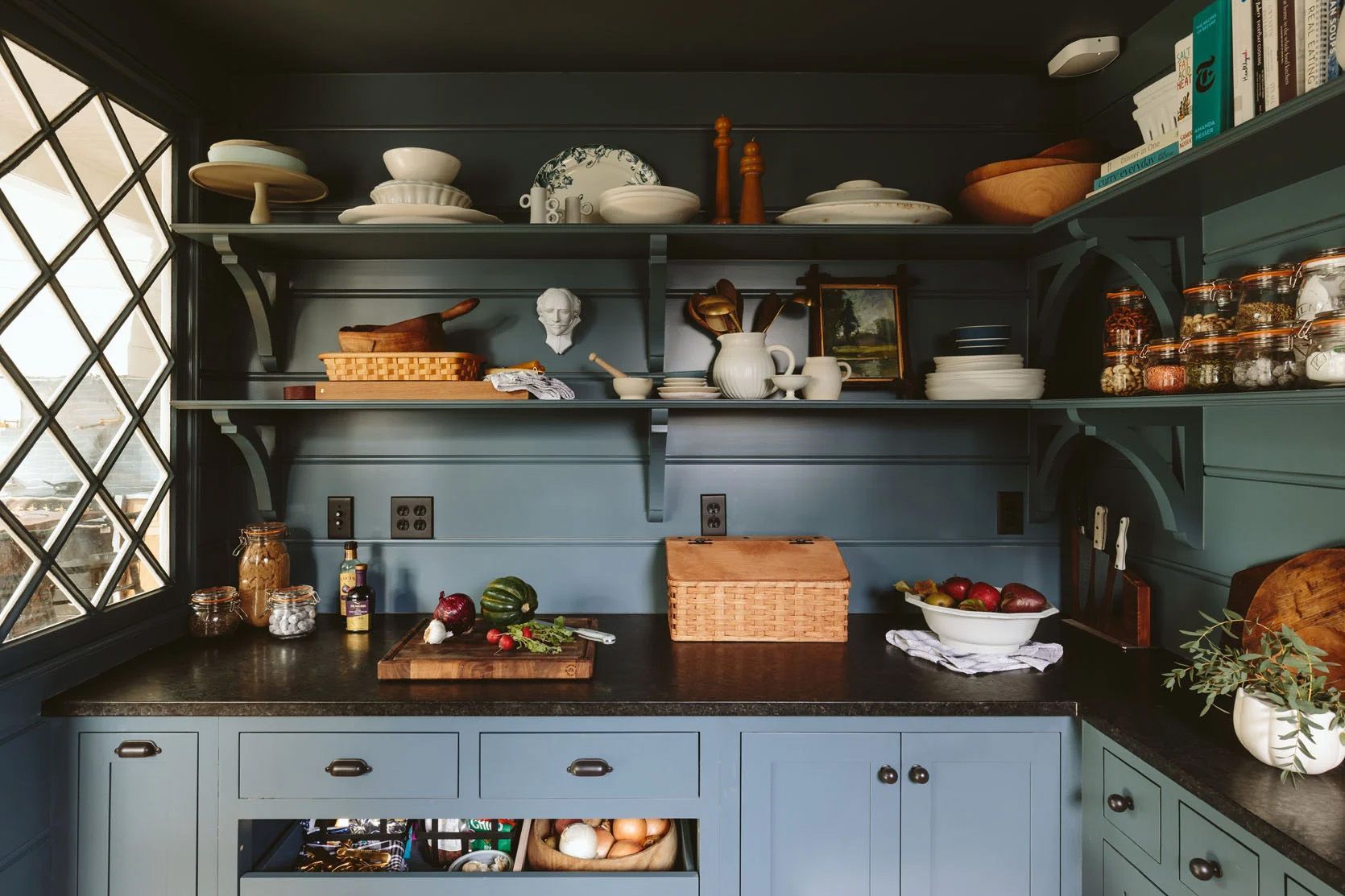
Butler’s pantry cabinetry is always beautiful, with the goal to display. It is second only to the adjacent dining-room buffet cabinet when it comes to the detailing that can enhance built-in cabinetry. It is also visible to diners when doors open and close, so it needs to be aesthetically pleasing. The items stored in a butler’s pantry are serving accoutrements—whereas a regular walk-in pantry is more often the home for food storage, cleaning supplies, small appliances, extra pots and pans, and other utilitarian necessities. Walk-in pantries do not double as a hallway between the dining room and the kitchen but are tucked away to the side and out of sight. For storage, open shelving and hooks may suffice.
Built-in Pantry Cabinets: Seamless Integration for Historic Kitchens
Pantry Cabinets that Match Your Home's Era
Arciform specializes in the period-appropriate remodel of vintage kitchens. In our custom workshop, we build kitchen cabinets that match the original cabinetry in the home. We can squeeze a lot of storage into a small footprint because we custom-tailor cabinetry for both style and function.
Custom built-in pantry cabinetry allows us to design the most effective storage hidden behind charming vintage cabinet doors.
When we design a custom built-in kitchen pantry, we have to be creative with contemporary hardware and details, because old-world hardware didn’t allow for heavy pull-out pantry organization inserts to be attached to doors, and full-inset doors and drawers of pantry cabinets can start misaligning when heavy loads are attached to the panels.
Thanks to Arciform’s talented product designers and craftspeople, we work through all the details that make for great kitchen pantry storage, so our clients can enjoy both the vintage aesthetic and the best pantry organization.
At Arciform, when we consider finishes and details for custom pantry cabinets, we look at practices that were popular many decades ago. We consider cutouts in doors or curtains to allow ventilation for hidden foodstuffs. We look at paint colors that tie into the period kitchen, cabinets that are open to the floor so they can be swept clean, shallow open shelving for easy access, and decorative features like lighting fixtures, hardware, and counter and backsplash options
Custom-Built Pantry Storage Solutions
The sky is the limit when it comes to custom built-in pantries. We can create multiple pantries, each designated for a different purpose:
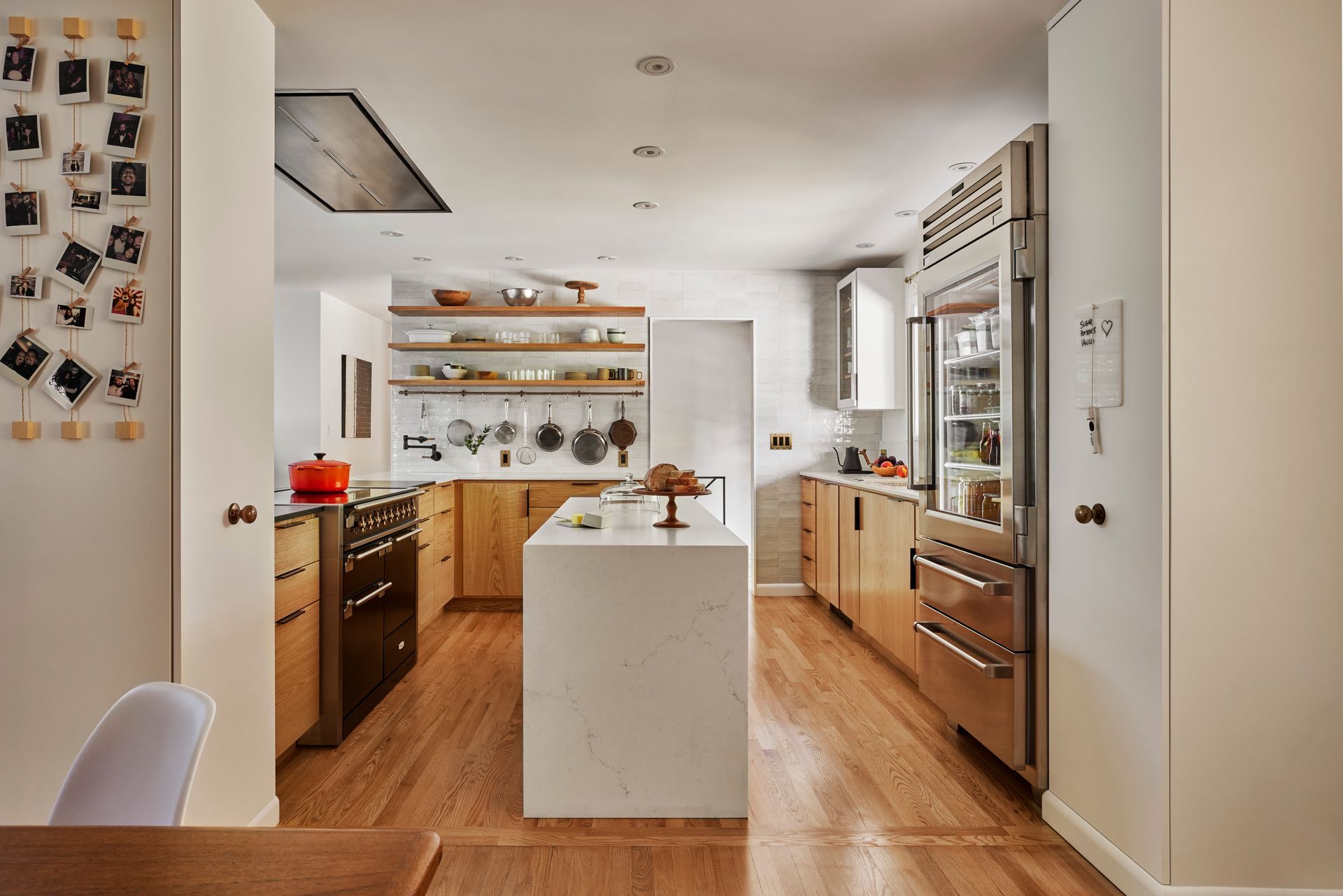
- We can locate the microwave or coffee maker within a custom pantry that hides all the necessary accoutrements behind pantry doors, and we can feature a pull-out counter to help during prep.
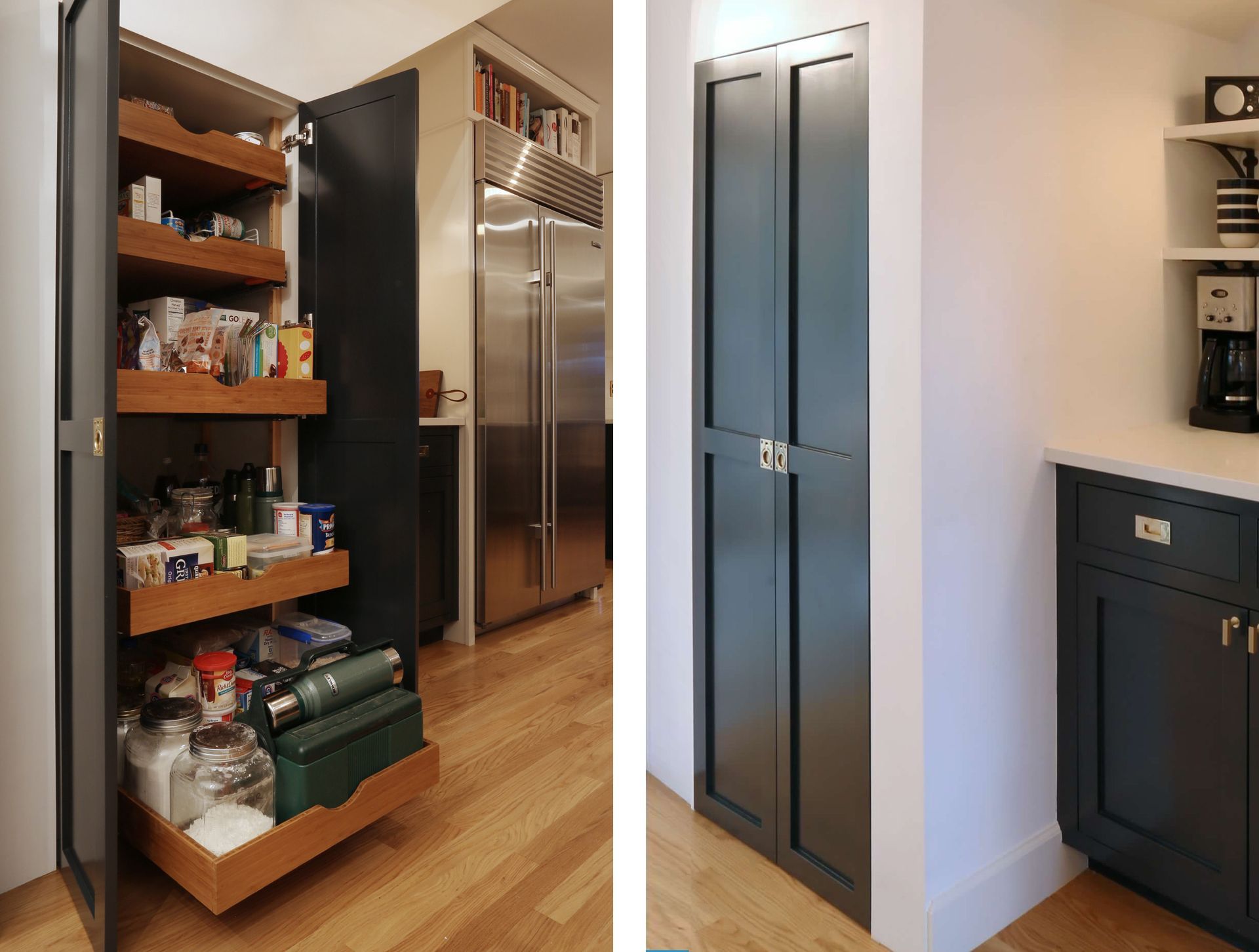
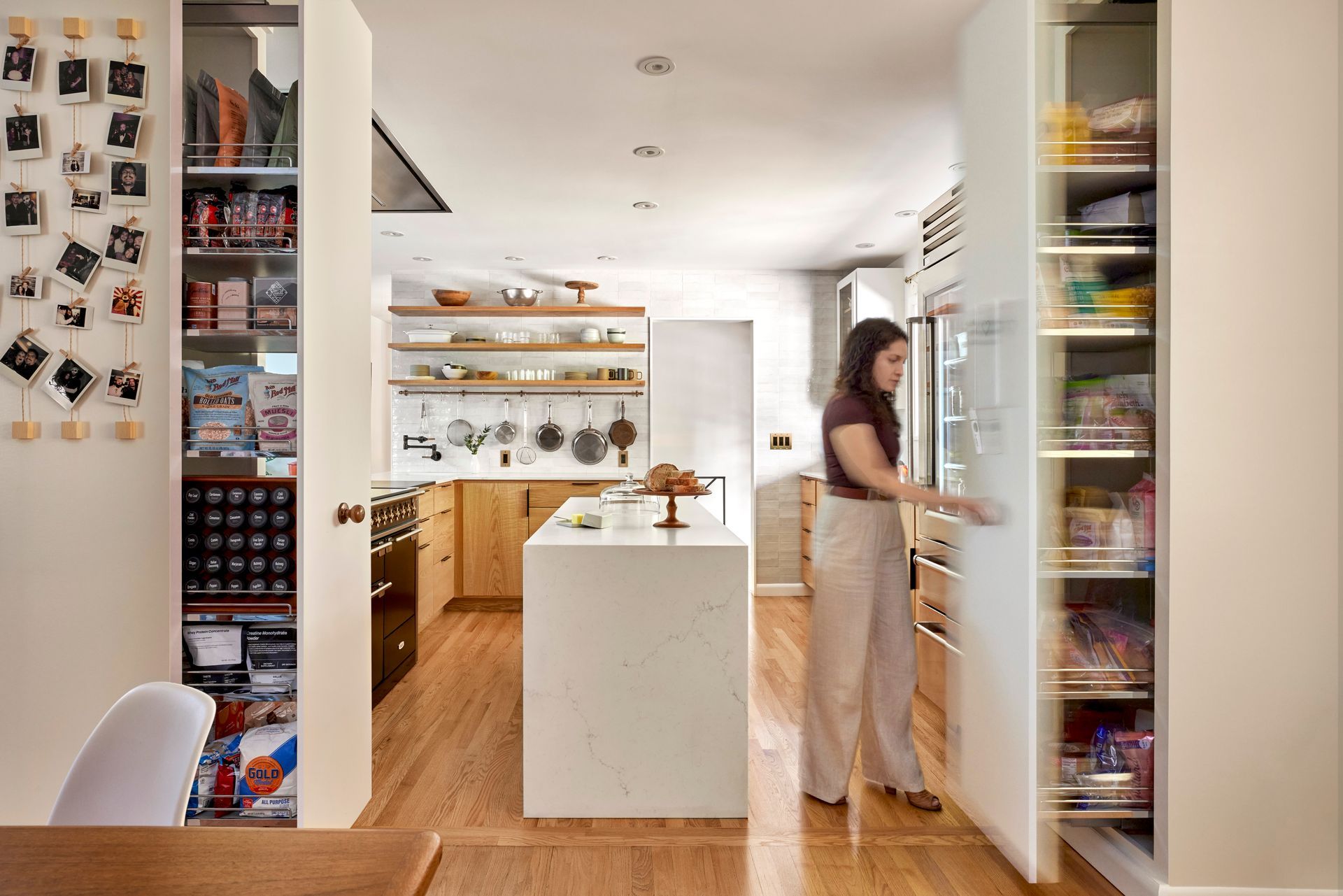
- We can have a pantry cabinet dedicated to food, with holiday-specific ingredients on the top shelves (used once or twice a year), commonly used provisions on pull-out shelves in the center, and snacks and treats on lower shelves, easily reachable by smaller family members.
- Or we can have a pantry cabinet that is home to cleaning supplies, with an outlet and hook for a vacuum cleaner, space for a broom, shelves for soaps and rags, and storage for paper towels.
Of course, one well-designed custom kitchen pantry can accommodate most, if not all, of the above.
Maximizing Small Kitchen Pantry Spaces
When we remodel vintage kitchens, we almost always create custom built-in pantry solutions to provide convenient pantry storage. We advise arranging your storage so that commonly used items stay in the kitchen and less commonly used items live in the basement or garage—each square inch in the kitchen is valuable.
At Arciform, when we consider how to best make use of each nook and cranny, we focus on access. For example, when we design a tall, deep built-in pantry cabinet that fits next to the refrigerator, we add pull-out shelves so we can reach what’s stored in the back.
When utilizing cabinets above a refrigerator, we install a lazy Susan that swivels cereal boxes and bags from back to front.
If there’s only a narrow space for a small pantry, we use it for brooms, cookie sheets, and cutting boards that can be tucked into the space without getting lost.
Converting Small Spaces: Turning Closets and Nooks into Functional Pantries
Small Pantry Ideas for Historic Homes
In many historic Portland homes, kitchens are on the small side, tucked in the back or side of the house. Storage comes at a premium. At Arciform, we consider whether we can create small pantry solutions by carving out space elsewhere in the home.
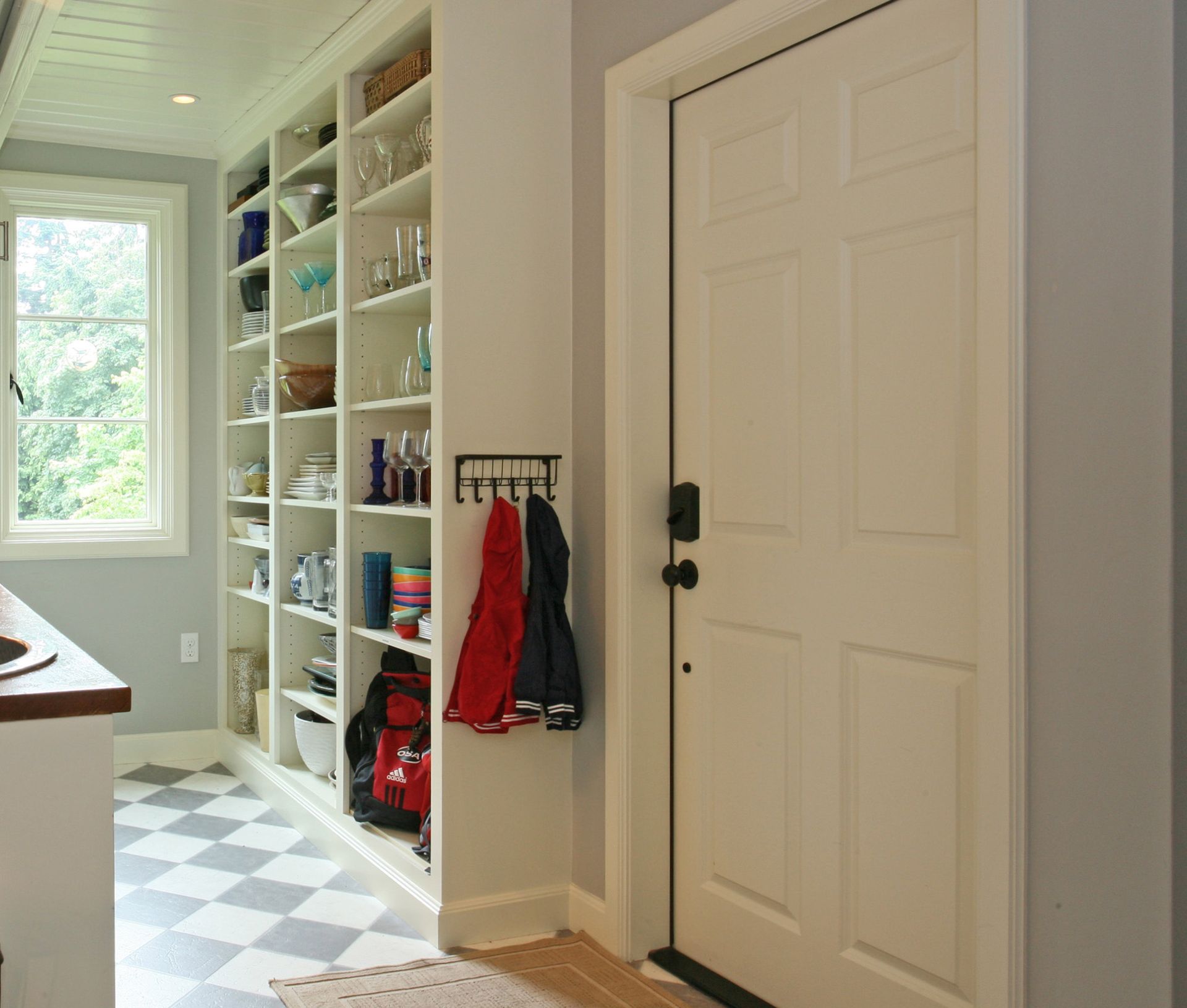
Since many vintage Portland homes have basement stairs leading right into the kitchen, we often designate a space at the bottom of the basement stairs as a flexible pantry. We might create a 3′ × 3′ pantry closet with L-shaped shelving or a bank of pantry shelves along a wall to do the trick beautifully.
Sometimes there is a triangular cavity beneath a staircase that can be tricky to utilize efficiently. We can add pantry storage in an awkward space like that by incorporating pull-out shelves to improve access to hard-to-reach areas.
How to Convert a Closet to a Pantry
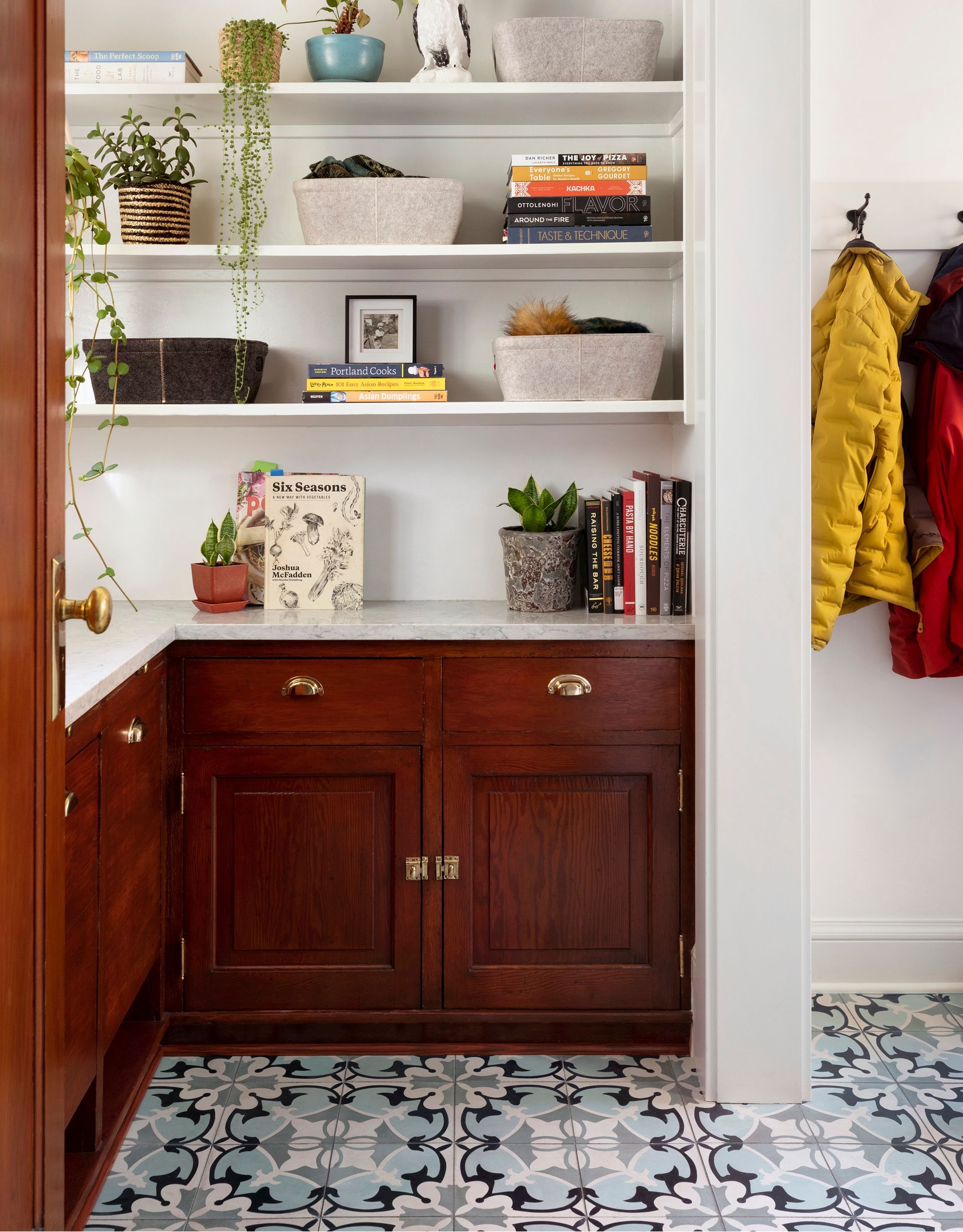
Often, we can find a spot within an entryway to add a beautiful little pantry closet or carve out a section of an existing closet for cleaning supplies, the vacuum, and the broom.
The shallow closets of older homes make great pantries because they allow for reasonably deep shelves that are viewed straight on, without navigating narrow openings or deep cavities.
Another wonderful pantry idea is converting an original recessed ironing board—often found in kitchens of the 1920s and 1930s—into a small niche for herbs, oils, and vinegars.
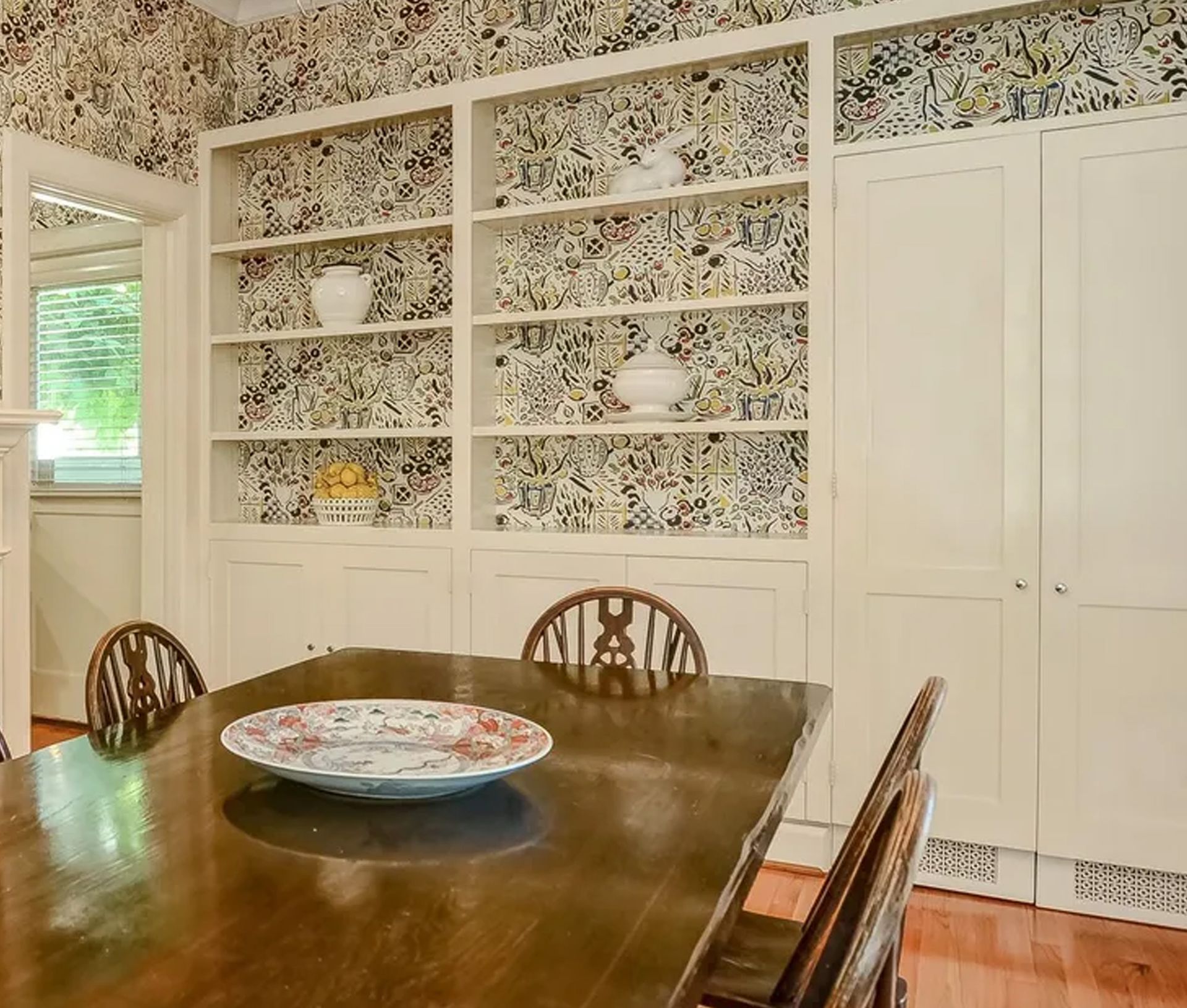
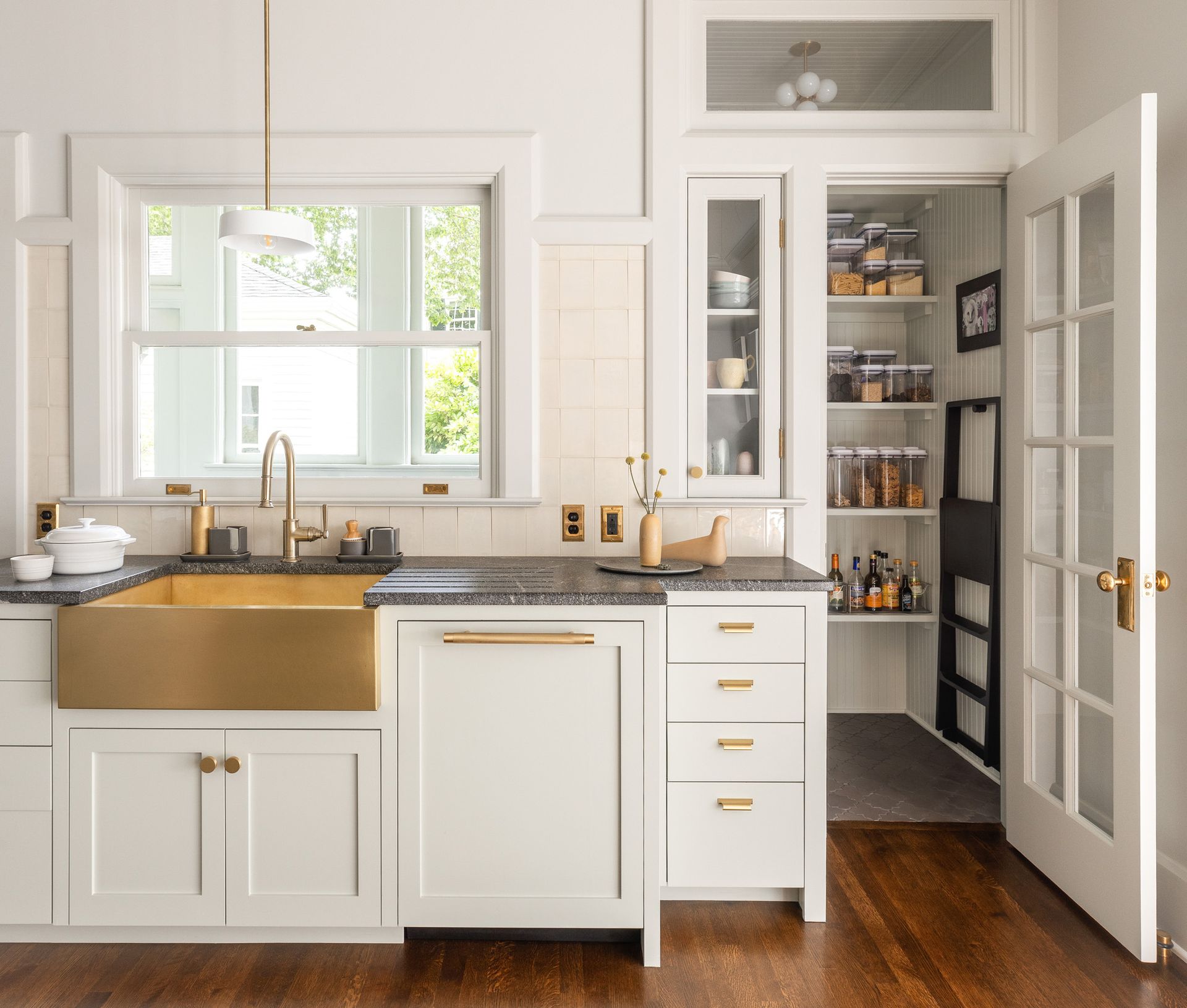
During a whole house remodel of this 1913 Colonial Revival, Arciform absorbed the former breakfast room into the newly expansive kitchen. In doing so, they removed shelving to reveal an original window and transformed a little-used closet into a stylish vintage pantry.
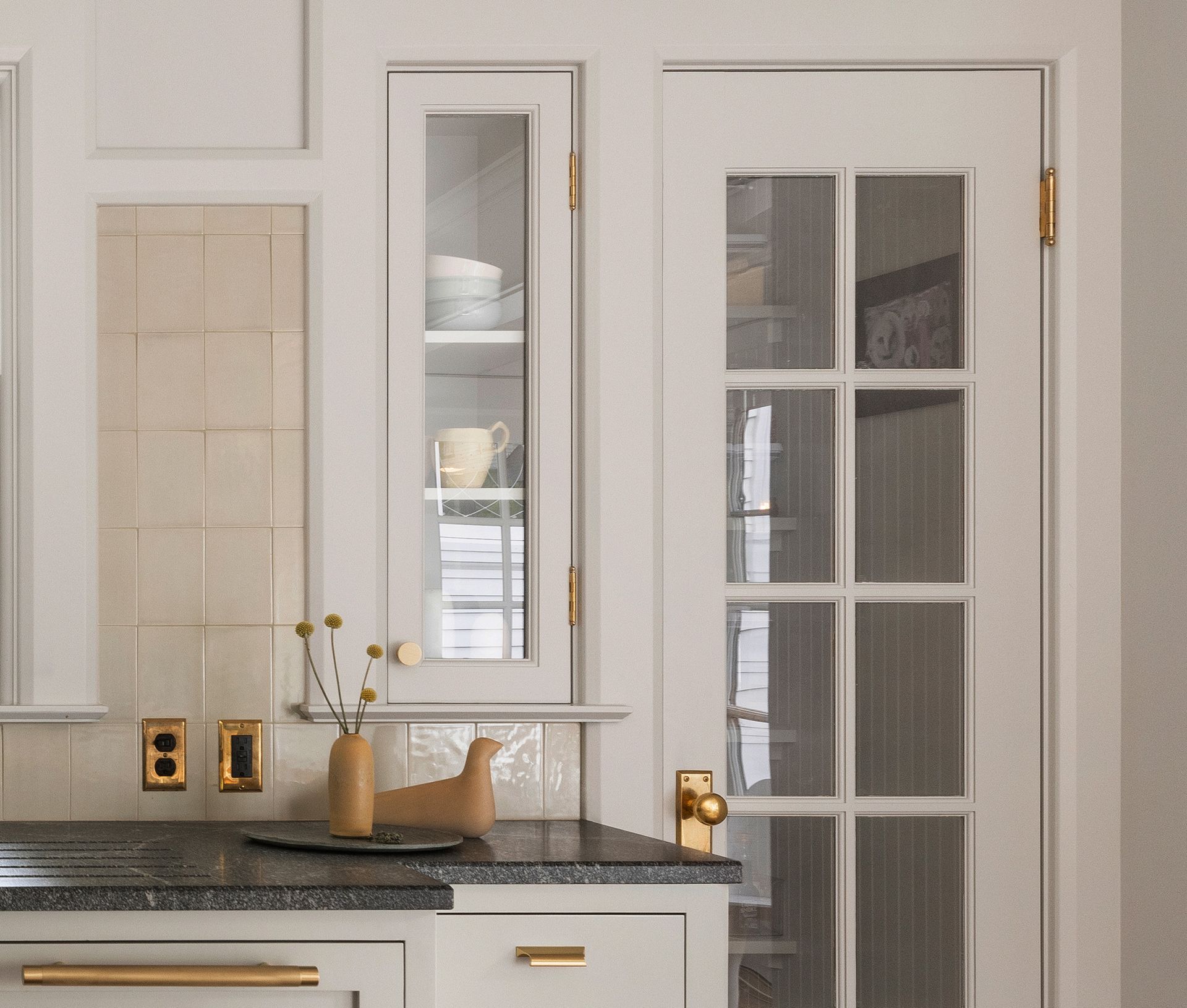
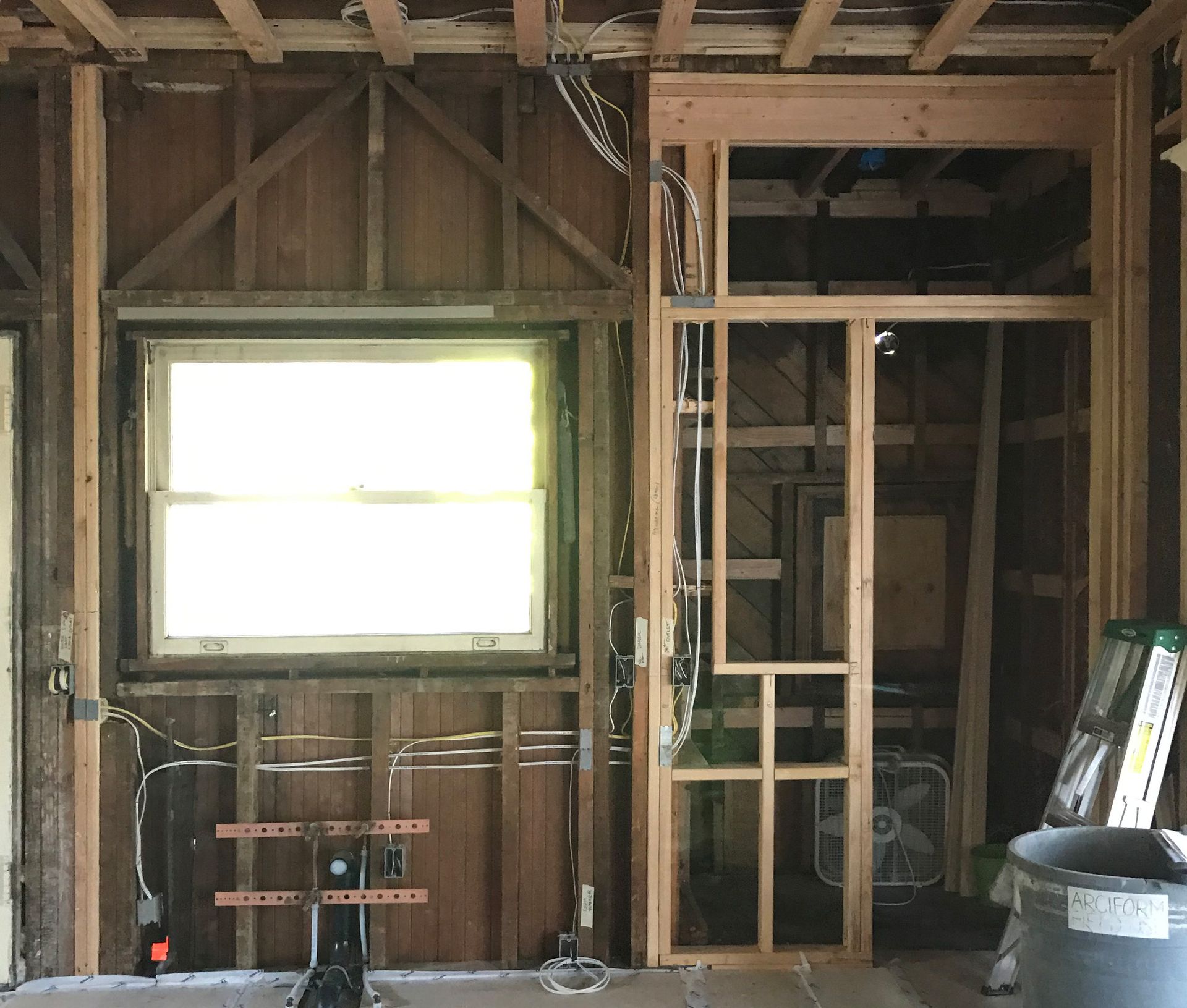
Arciform utilized the space between the studs to create a sweet little cupboard and used a French door to bring light into the pantry, revealing the well-organized contents within.
Pantry Closet Considerations
You get the idea: pantry storage comes in many shapes and sizes. What constitutes a good pantry design is not so much the size but how well we can reach and organize what’s being stored. Shallow shelves show off boxes and cans well; deep shelves are ideal for larger pots, bins, and paper towels. Pull-out shelves help access the backs of cabinets. Attaching shelving to doors makes great small-item storage; hooks are always helpful. At Arciform, we consider who is using the pantry and for what purpose. We’ve designed snack pantries where lower shelves are stocked with treats for children and upper shelves allow adult supervision.
We like to light small pantries with motion-activated lights so the light doesn’t stay on indefinitely if it’s forgotten. We also often provide outlets in pantries to charge small or large vacuum cleaners or to plug in a small appliance.
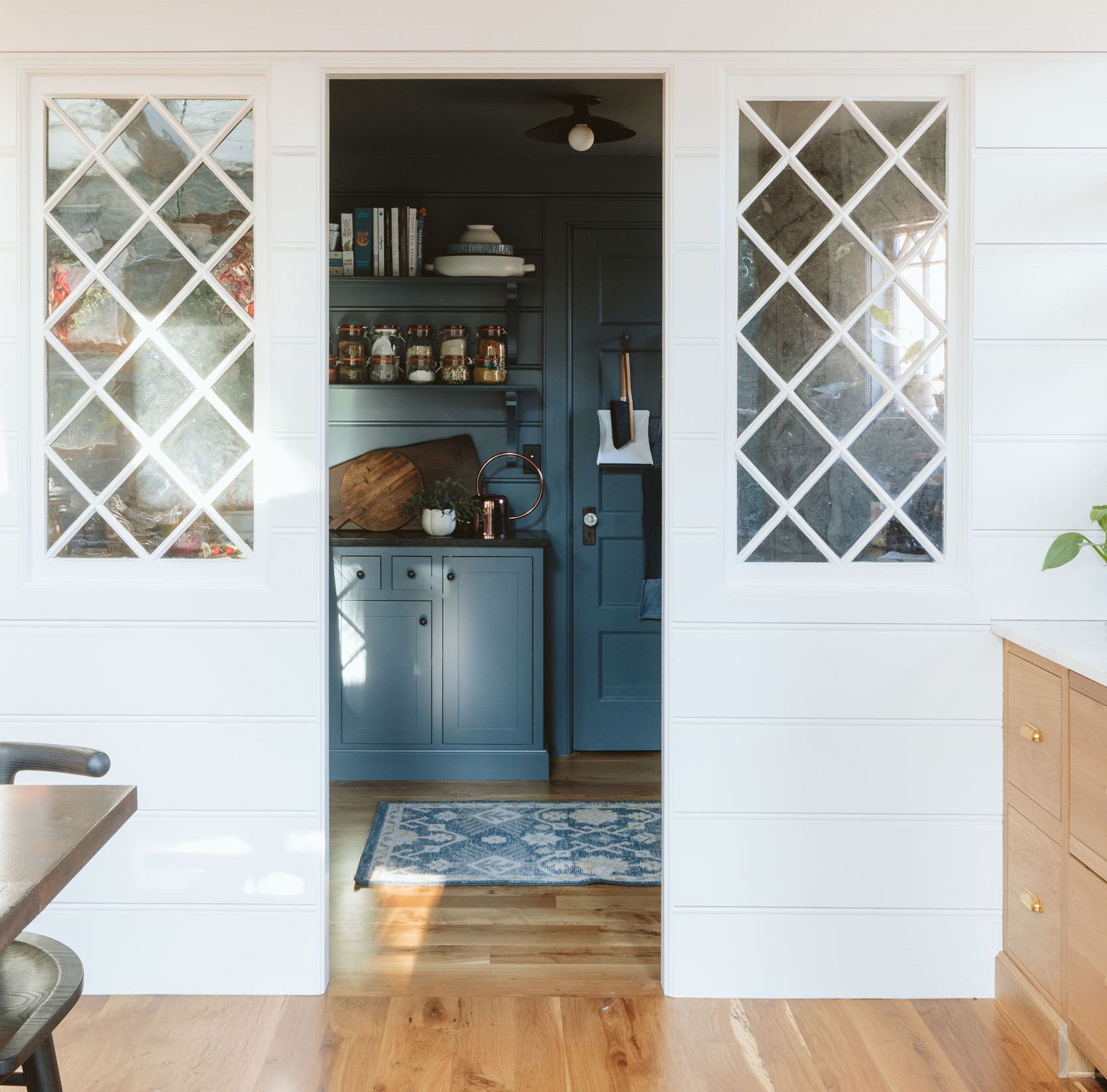
A vintage-inspired design element for pantry closets is a glass-panel door that allows an obscured view into the pantry closet, or a clerestory window above to evoke a vintage pantry-closet feel.
Converting an existing closet, or any existing space, into a pantry is a very cost-effective way to create specific storage. It’s important to weigh the loss of clothes storage against the gain of pantry storage.
And looking at the details of the original built-ins, millwork, or shelving designs that were typical when your home was built helps create a period-appropriate and timeless aesthetic.
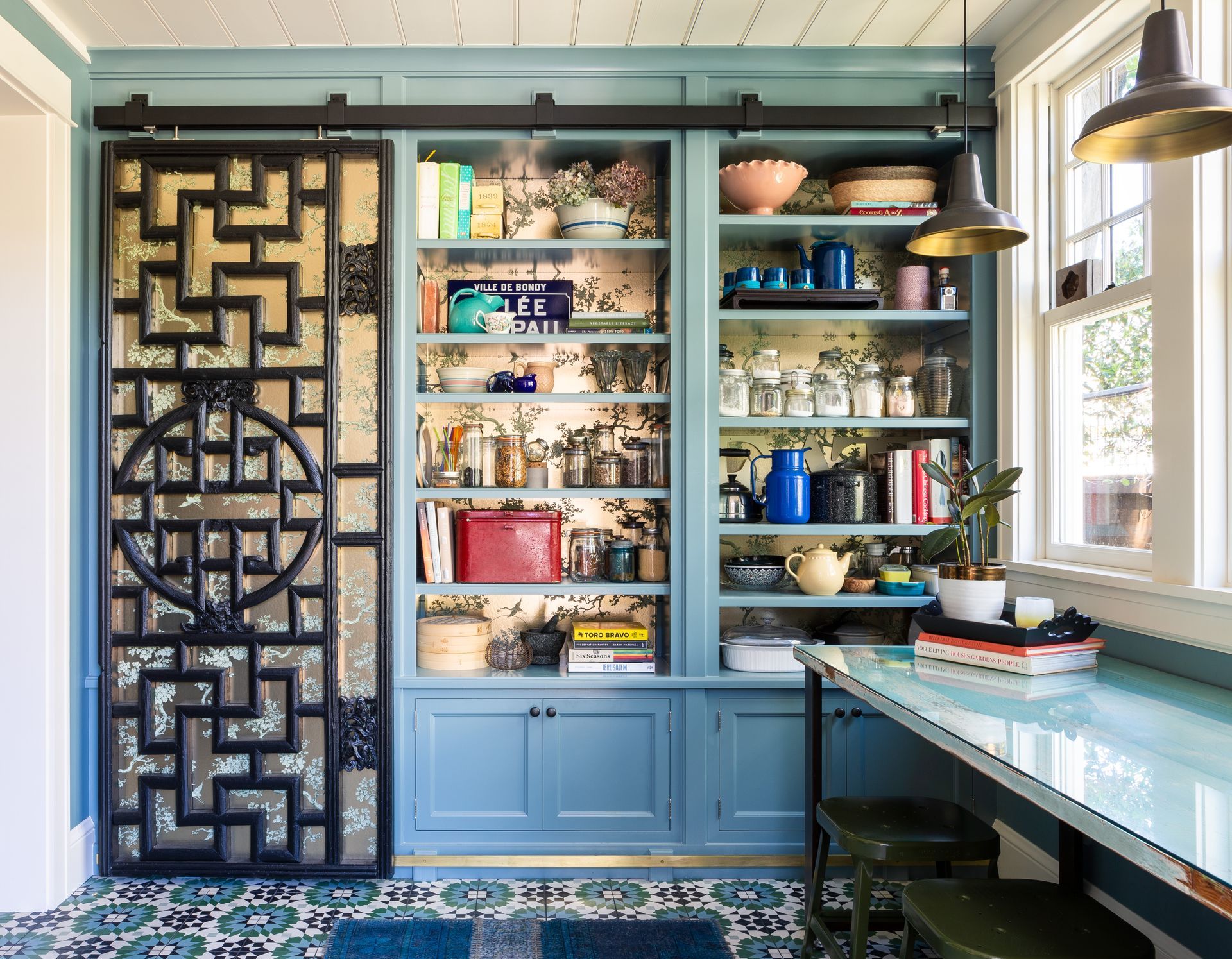
Refreshing Original Pantries: Modern Function Meets Vintage Charm
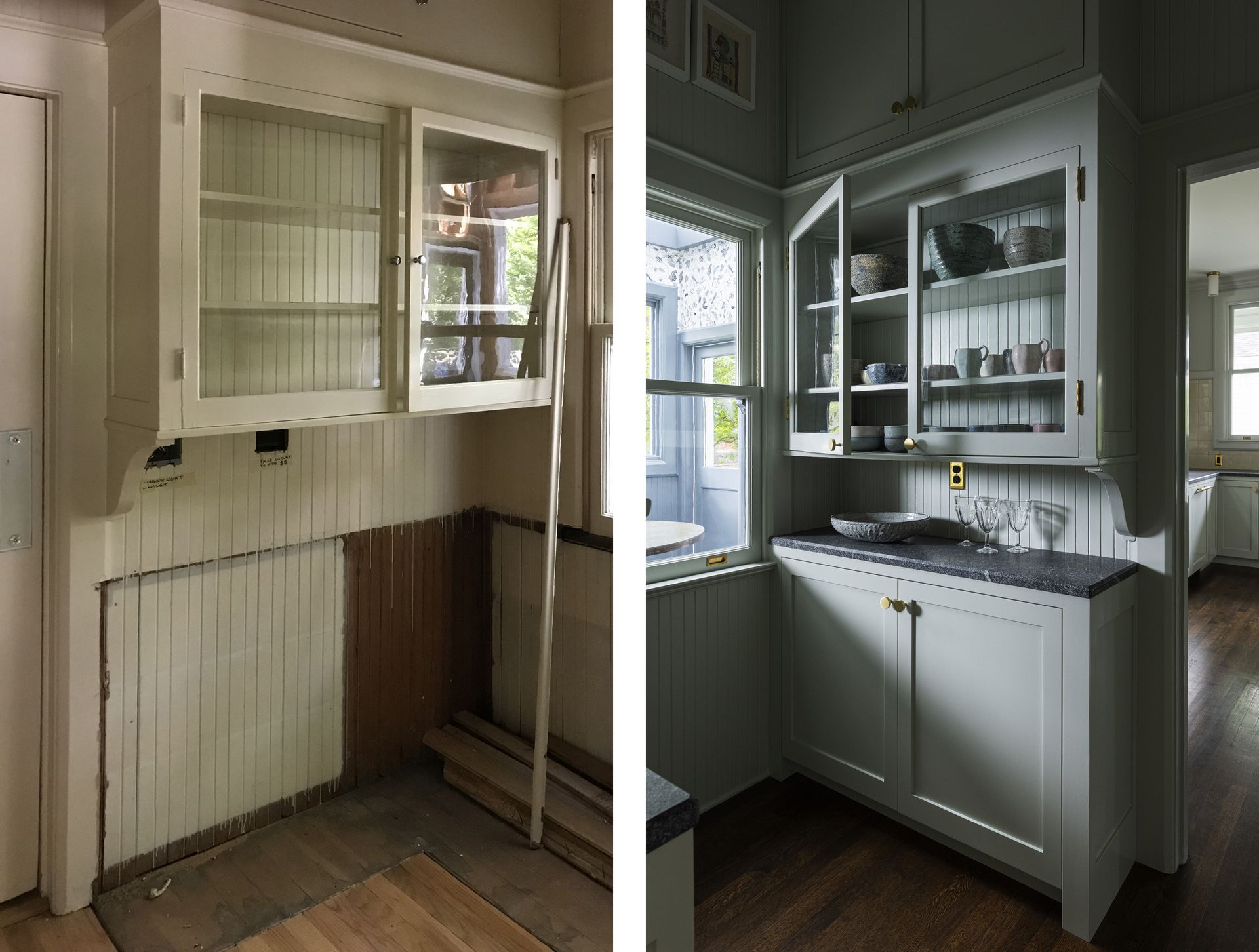
Pantry Renovation Ideas: Coffee Bars and Beverage Stations
When you’re the lucky owner of a pantry that was designed not just for storage but also to be aesthetically pleasing, Arciform helps reinvigorate tired hardware, refresh finishes, and update functionality.
The type of cabinetry popular in the first half of the last century was constructed differently than most cabinetry today. Vintage pantry cabinetry was often built in place. The doors and drawers were fitted and featured decorative hinges that can be tricky to adjust. Leaded glass cabinet doors sparkled in the often-dark spaces. These details can be hard to replicate and alter during a pantry renovation. Arciform’s custom woodshop and craftspeople specialize in those challenges—historic pantry restorations are what we love to do.
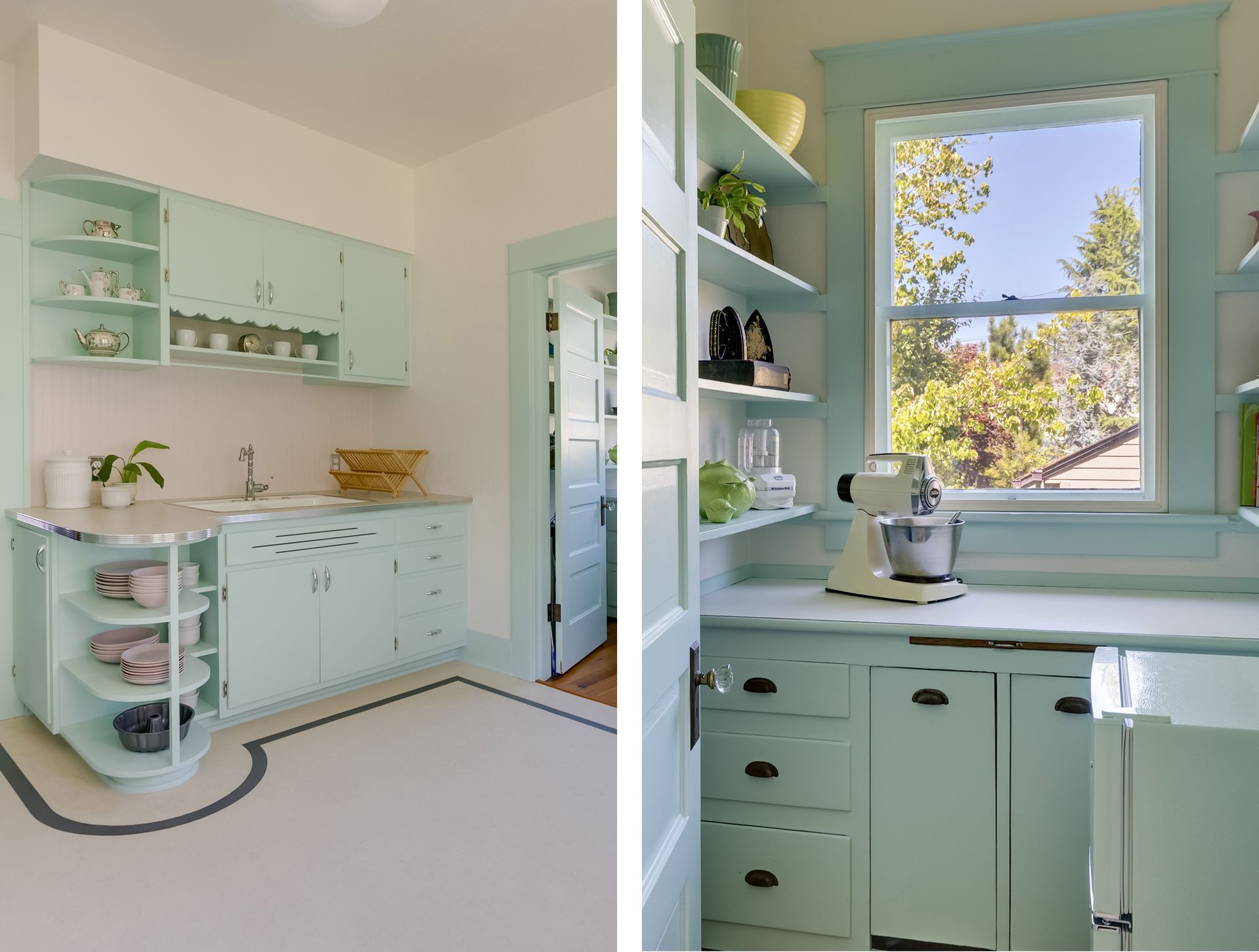
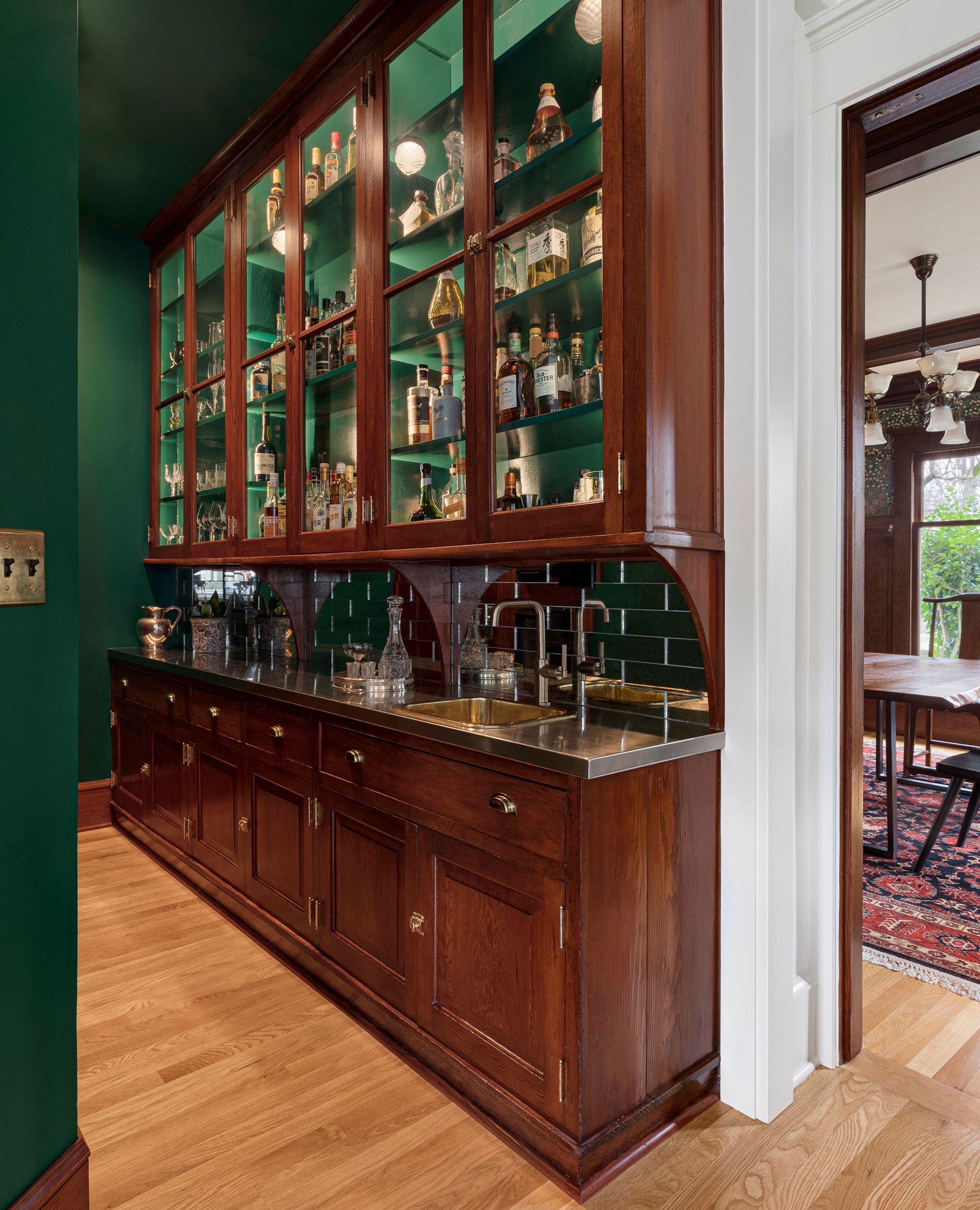
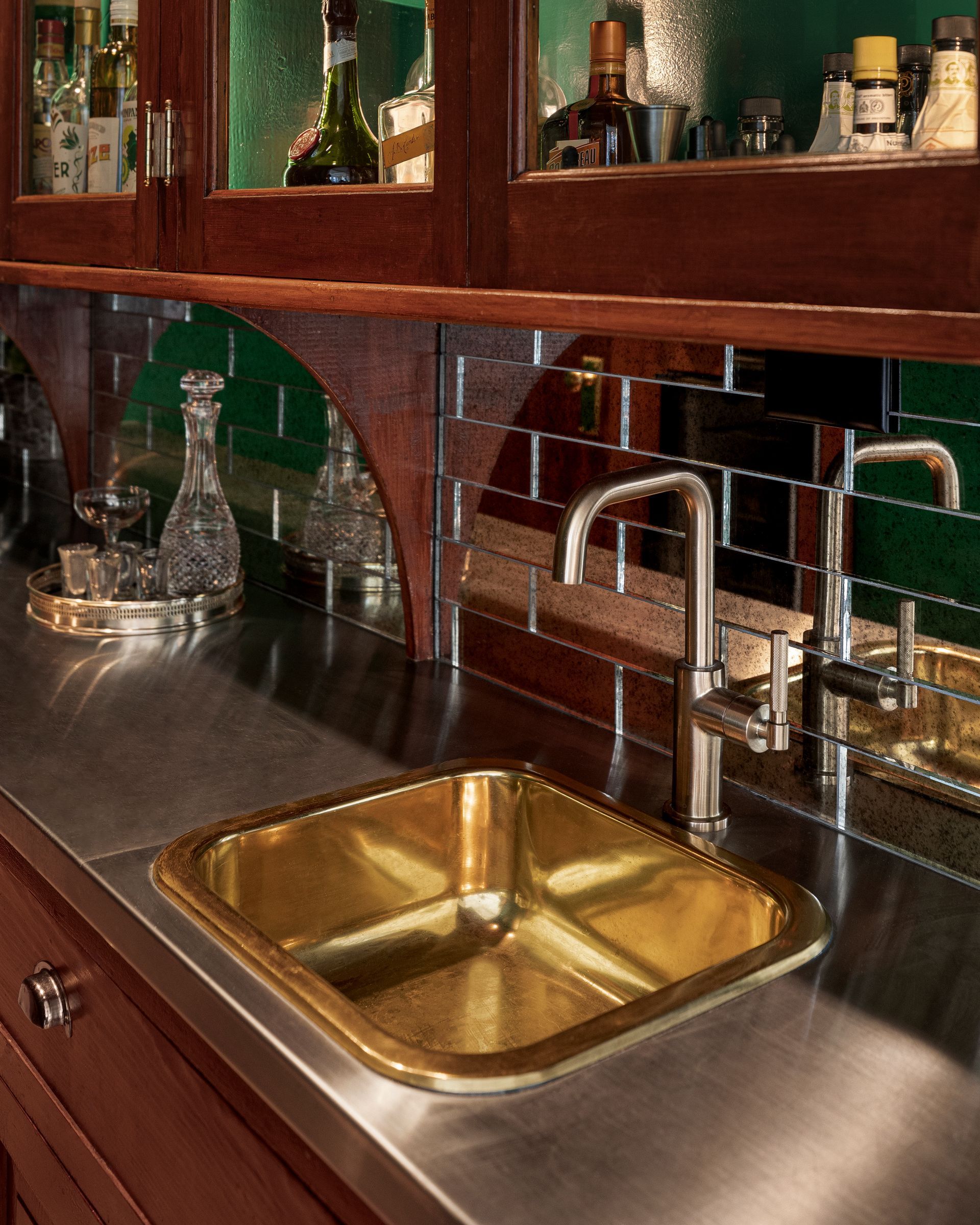
Depending on the era of your home, a vintage pantry can be a craftsman masterpiece, a colonial china room, or a midcentury-modern entertainment hub. If you’d like to keep original pantry cabinets as much as possible, there are simple remodels that add a modern twist. Arciform can create a coffee-bar pantry by adding as little as one outlet. If we want to up the game, we can add a prep sink and faucet—and another fun addition would be a small fridge. The same goes for a toaster pantry or a beverage station.
In some midcentury homes, pantries included fold-down counters that open the pantry to the outside so food, drinks, and serving accoutrements can move directly from where they’re stored to the entertainment area. The only items Arciform typically adds when we find such a treasure are refrigeration or a dishwasher, which we hide behind custom appliance panels to avoid aesthetic impact.
Vintage Pantry Updates for Modern Living
The wood glides of vintage pantry drawers and the ball-tip hinges of vintage pantry doors are charming—but they can be temperamental compared with the soft-closing hinges and modern drawer glides of today. At Arciform, we tune up vintage pantry cabinetry to keep up with its younger cousins.
We also look at how to improve pantry counters. Often, we find original wood counters that have seen many years of use or counters replaced with materials that don’t suit the period of the home. We love adding a bit of drama when replacing counters during pantry renovations. This holds true for backsplash choices as well. We choose materials that were available when the home was built—like mirrored glass for the backsplash, or copper, soapstone, or colorful marble for counters.
Another approach to bringing a vintage pantry into the 21st century is to reference the more casual finishes of the previous century—v-groove paneling for a backsplash, or, if cabinet doors no longer want to stay on their hinges, creating open shelving with metal shelf rails or curtains instead of doors.
Often the vintage pantry is a dark corner of the home, so it’s fun to add LED cabinet lighting strips hidden behind moldings. This illuminates upper cabinets and their contents, and it also lightens the whole pantry space. While we’re on the subject of electrical work, we often install outlet strips below upper cabinets to provide more flexibility for plugging in whatever appliance might fit.
Pantry Remodel: Preserving Character While Adding Function
When starting a pantry renovation, we consider how the space can lighten the load of the main kitchen. A fun way to look at a vintage pantry whose function was storage is to consider it as a space that can house some kitchen activities as well.
If we group items that are used together with the activities they support, we reduce circulation zig-zagging through the kitchen.
In larger vintage pantries, we often find lower marble counters for rolling out dough. If you’re a baker, adding a small oven in the pantry can create a convenient, out-of-the-way baking zone.
In a historic pantry designed to store china, cutlery, serving utensils, platters, and linens, adding a dishwasher and a large sink can move cleaning chores out of the cook’s way.
Adding a wine or beverage fridge, a bar sink, and an ice maker during a pantry remodel can convert a beautiful vintage pantry into a stunning bar where glassware, collected liquors, and local wines can be on display.
Which Pantry Solution is Right for Your Historic Home?
When creating a pantry design for our clients, Arciform starts with the “must-haves, the want-to-haves, and the would-be-nice-to-haves” brainstorm.
We also consider what you want at your fingertips in the kitchen versus what can live in an adjacent space.
And we consider how far away that space may be for the sake of convenience. As we all know, "out of sight" can mean "out of mind," and we’ll pile up more rather than look for what we already have.
We then weigh that feedback against the spaces available in the vintage home. If there’s an existing pantry, how can we make the best use of it? If not, can we find a corner that can be converted into a pantry?
Pantry Design: Budget and Timeline Expectations
Your Arciform team works closely with you to manage the cost implications of the pantry ideas we generate and to make sure you know how much time we’ll spend in your home when carpenters begin the project.
Budgeting for a pantry restoration, a closet-to-pantry conversion, or even a pantry addition varies greatly. Adding a little storage space at the bottom of basement stairs can keep costs low. Converting a bedroom into a large pantry that splits kitchen tasks in half will be at the higher end. The same goes for the time frame—the larger the scope, the longer we’ll be working in your home.
Working with a Design-Build Team for Your Custom Pantry
When you work with Arciform’s design and build teams, you gain the benefit of our experience with space planning and creating solutions that embrace the original architecture of the home.
During the design process, our designers check ideas with our project managers, the product designer from our custom woodshop, and our craftspeople to make sure concepts are realistic. We weigh your investment goals against the condition of your vintage pantry, the trade-offs of a closet-to-pantry conversion, or whether the features of a new custom-built pantry cabinet are executable.
We sharpen our pencils before we start so we eliminate surprises and harness our experience to create the most functional and beautiful pantry storage solutions for you.
In Conclusion
Restoring your original pantry and adding a few features not only preserves a beautiful piece of your home’s history—it’s also cost effective. At Arciform we lean into the beauty of that space when we remodel the adjacent kitchen.
Adding a built-in pantry cabinet within the kitchen brings storage right to your fingertips and can make great use of under-utilized areas.
When the vintage kitchen does not have space to add pantry storage within its footprint, finding spaces for pantry conversions elsewhere in the house can free up space in the kitchen. We’ll weigh this option against the loss of functionality of the space we’re converting.
Arciform's Experience in Portland's Historic Homes
Arciform has specialized in the restoration of homes built prior to the 1970s since 1997. We love what defines Portland’s architectural heritage, and our goal is to give each large and small architectural feature a chance to be around for the next 100 years or more.
At Arciform we learn from the centuries-old traditions that went into creating Portland’s vintage homes and we strive to create new elements of vintage spaces accordingly.
Emphasizing Craftsmanship, Period accuracy, and Modern Functionality
When working on vintage homes and focusing on pantry storage options, at Arciform we surround ourselves with talented craftspeople and creative designers who learn from each other and the homes around us. We are proud of the beautiful craftsmanship, period-appropriate results, and creative ways modern functionality is integrated into Arciform’s remodels.
Kitchen Pantry FAQs
What's the difference between a butler's pantry and a regular pantry?
A butler’s pantry is traditionally located between the kitchen and dining room, used for prep and serving, while a regular pantry focuses on storage.
Can I add a pantry to a small historic kitchen?
Yes — options like built-in cabinets or closet conversions can maximize small spaces without altering your home’s original structure.
How do I design a pantry that matches my home's historic style?
Custom cabinetry, era-appropriate finishes, and hardware that reflect the home’s original details keep the design cohesive.
Do I need permits for a pantry remodel in Portland?
Most pantry remodels don’t require permits unless walls or plumbing are moved — Arciform’s team handles all compliance steps for you.
We can’t wait to show you what’s possible in your space. Bring us your pantry dreams (and your tricky corners), and we’ll design something that works perfectly with your historic home.
See More Stories