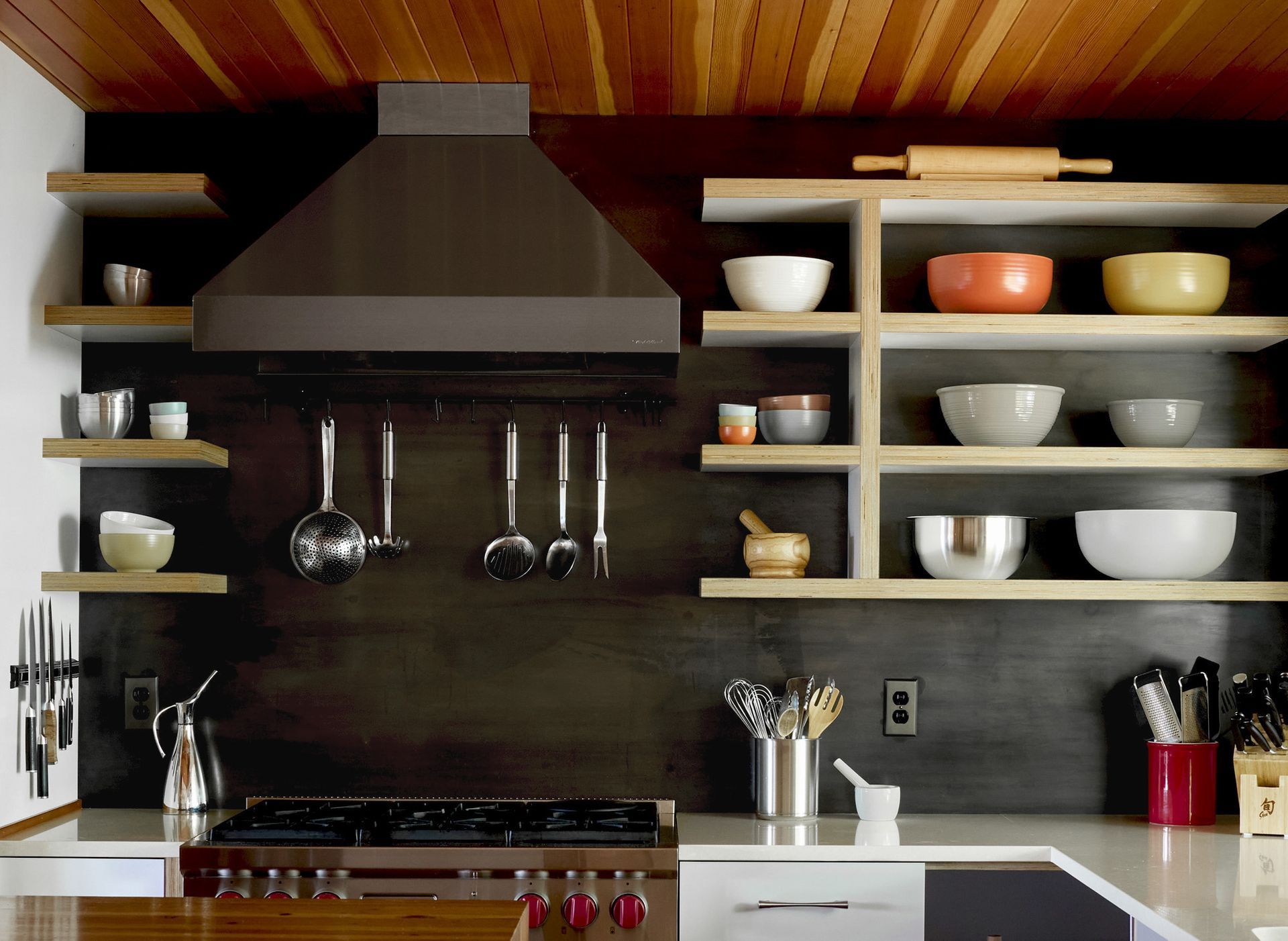
Kitchen design trends tend to circle back around, and open shelving is a good example. Once a defining feature of early, unfitted kitchens, open shelves fell out of favor when wall‑to‑wall cabinetry became standard in the early 20th century. In recent years, they’ve returned in a big way—appearing in kitchens that range from sleek and modern to traditional, cottage‑style, and everything in between.
But popularity alone doesn’t make a design choice right for every home. Open shelving can be beautiful and functional, but it also changes how you use and maintain your kitchen day to day. In this guide, we’ll walk through the honest pros and cons of open kitchen shelving, so you can decide whether it supports the way you live and whether it belongs in your next kitchen remodel.
A Brief History of Open Shelving
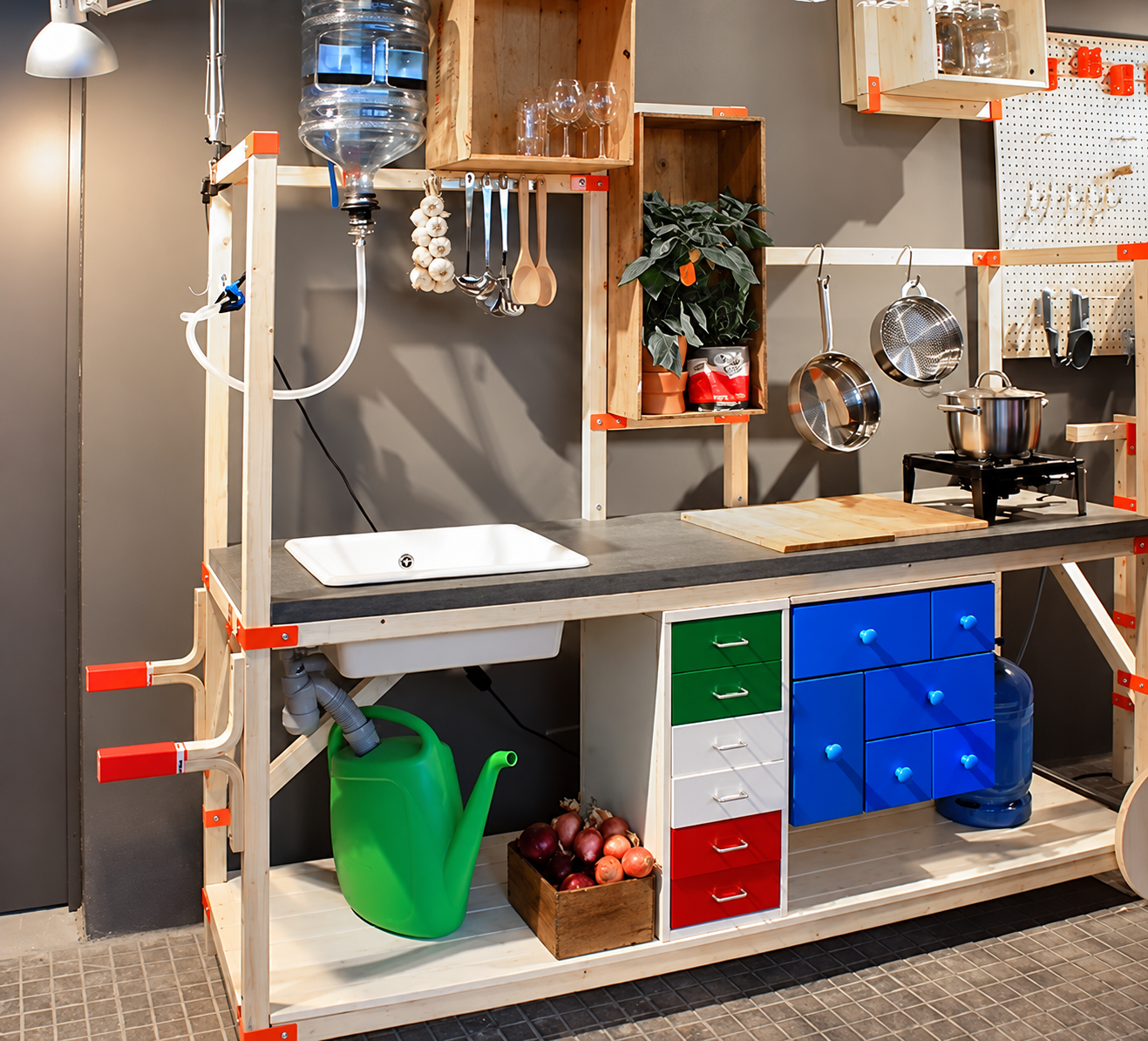
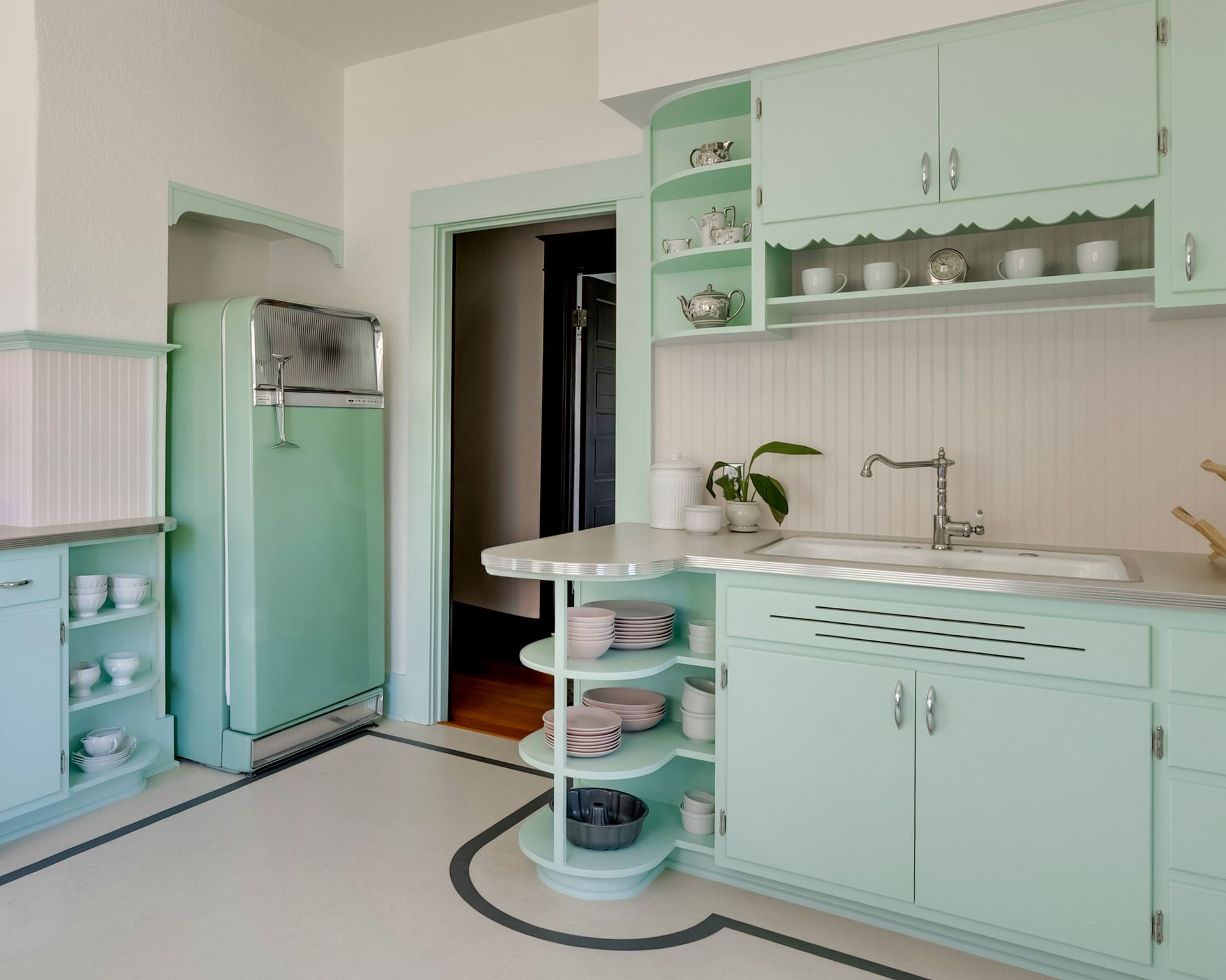
Before fitted cabinetry became the norm, kitchens were made up of freestanding furniture and open storage. Shelves, cupboards, and worktables worked together to support cooking and household tasks. As kitchens evolved to be more compact, efficient, and hygienic, built‑in upper cabinets replaced open shelves almost entirely.
As kitchens have once again become social spaces—places for gathering, entertaining, and spending time—open shelving has re-emerged as a way to visually open up the room and soften the look of built-in cabinetry. For Portland homeowners living in Craftsman bungalows, Victorians, and early Colonial Revival homes, open shelves can feel especially natural—they echo the unfitted, freestanding kitchens these homes originally had.

The Practical Appeal: Convenience and Everyday Use of Open Shelving
One of the most straightforward advantages of open shelving is convenience. Items you use every day—plates, bowls, glasses, or canisters—are right where you need them. There’s no opening and closing cabinet doors, and everything is easy to see and reach.
For many homeowners, this visibility encourages thoughtful organization and reinforces daily routines. When shelves are well planned, they can make cooking and cleanup feel more intuitive.
Making a Kitchen Feel Open and Airy
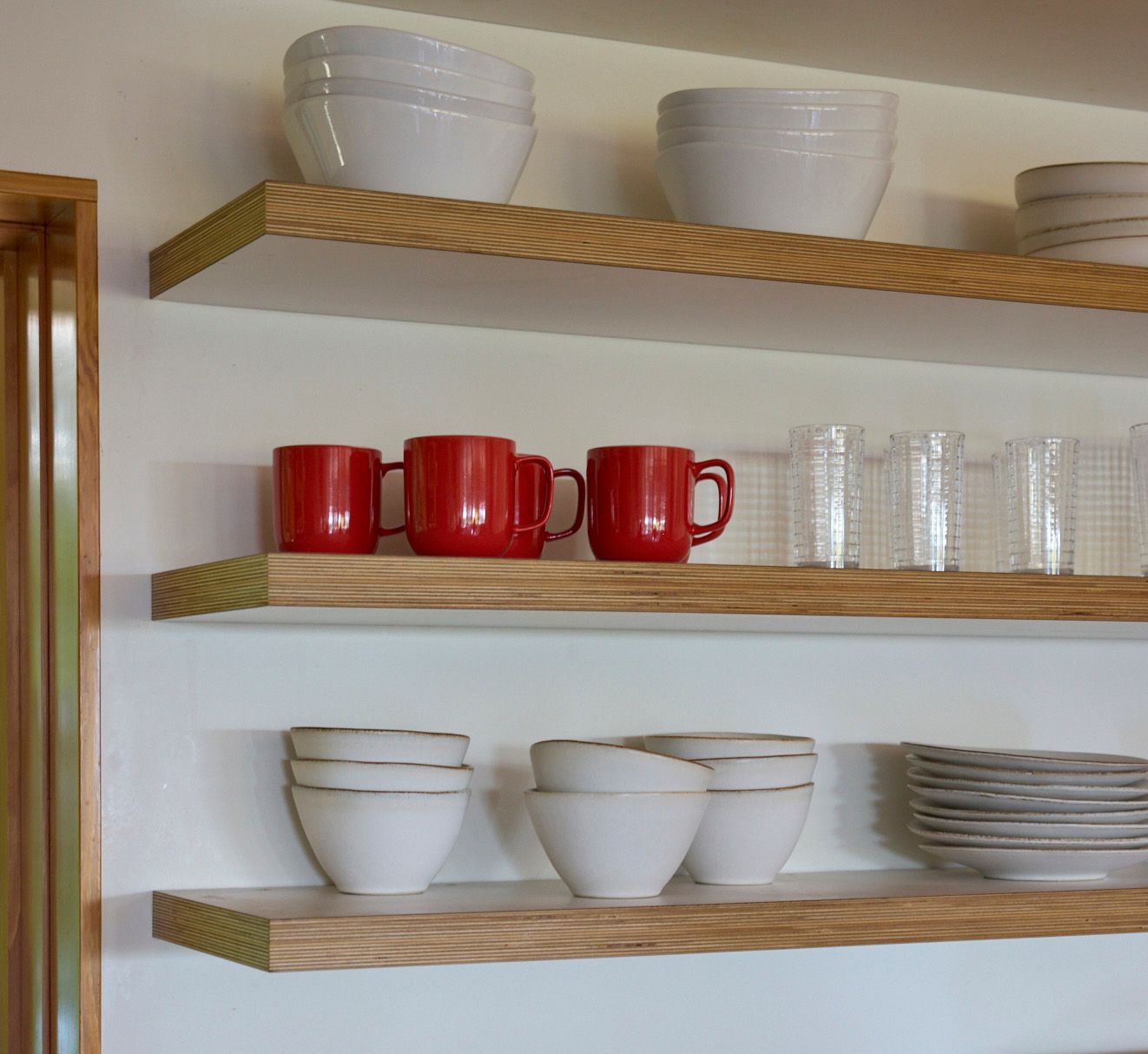
Aesthetic reasons are often what draw people to open shelving in the first place. Removing 12" deep upper cabinets can dramatically change how a kitchen feels. Instead of a wall of doors closing in the space, the full height of the wall becomes part of the design.
Open shelves help kitchens feel lighter, less formal, and more connected to adjacent rooms, especially in older Portland homes where natural light and original architectural details are worth preserving.
Creating a Beautiful Backdrop
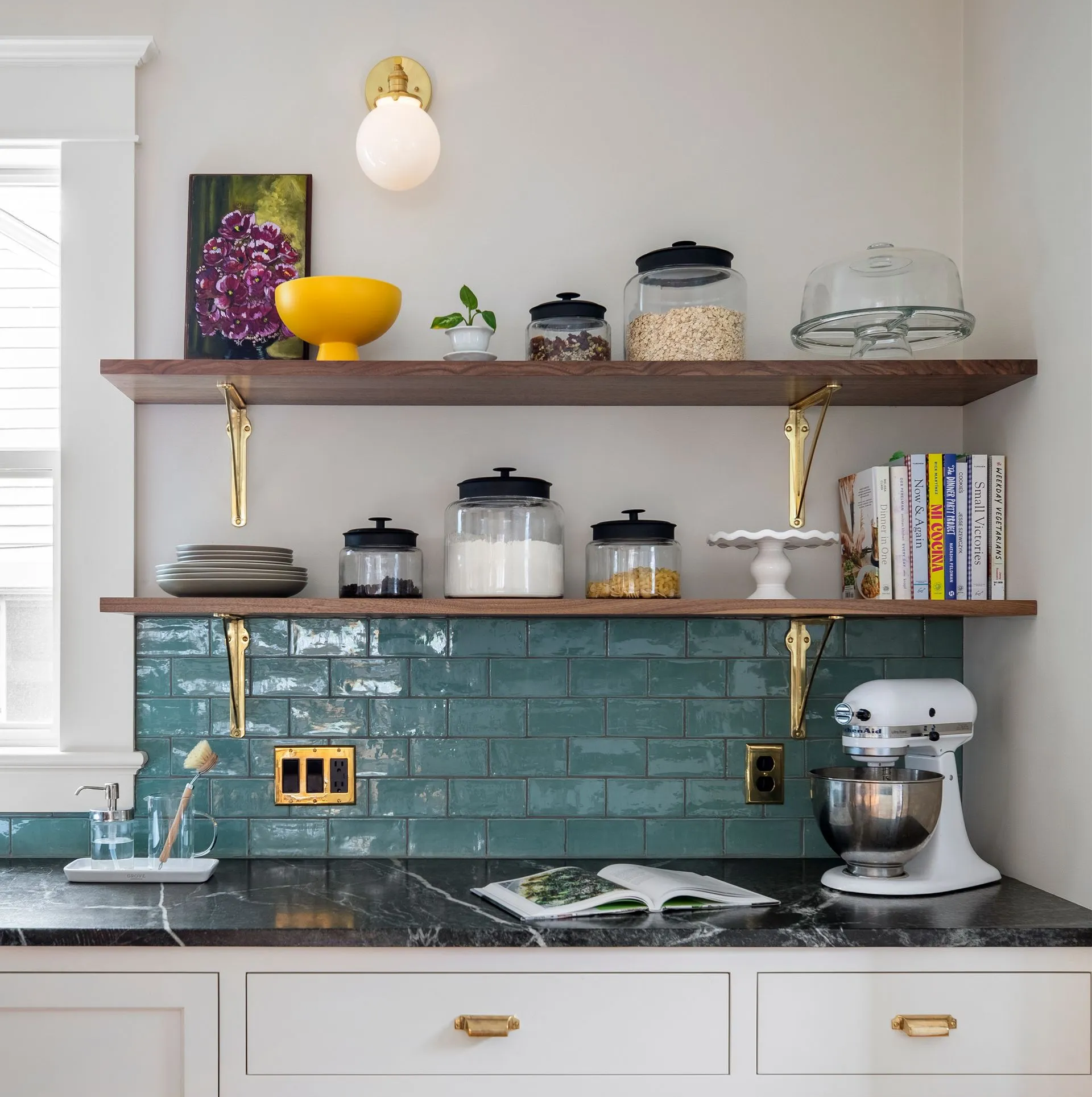
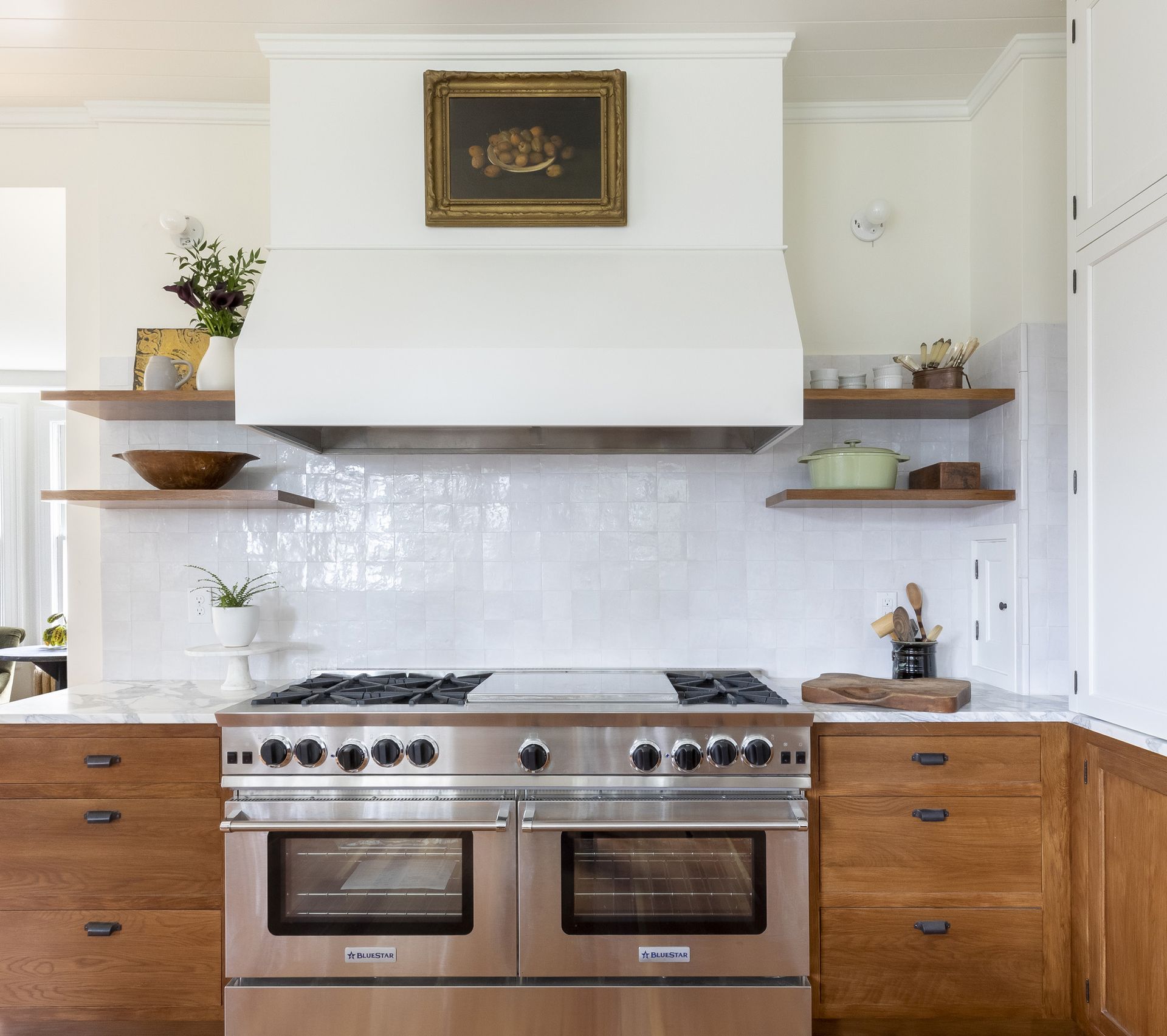
Open shelving allows the wall behind it to shine. Extending tile backsplashes all the way up, introducing paneling or beadboard, or even using wallpaper can add depth and personality that might otherwise be hidden.
Rather than acting as a purely functional surface, the wall becomes a backdrop that contributes to the overall character of the kitchen.
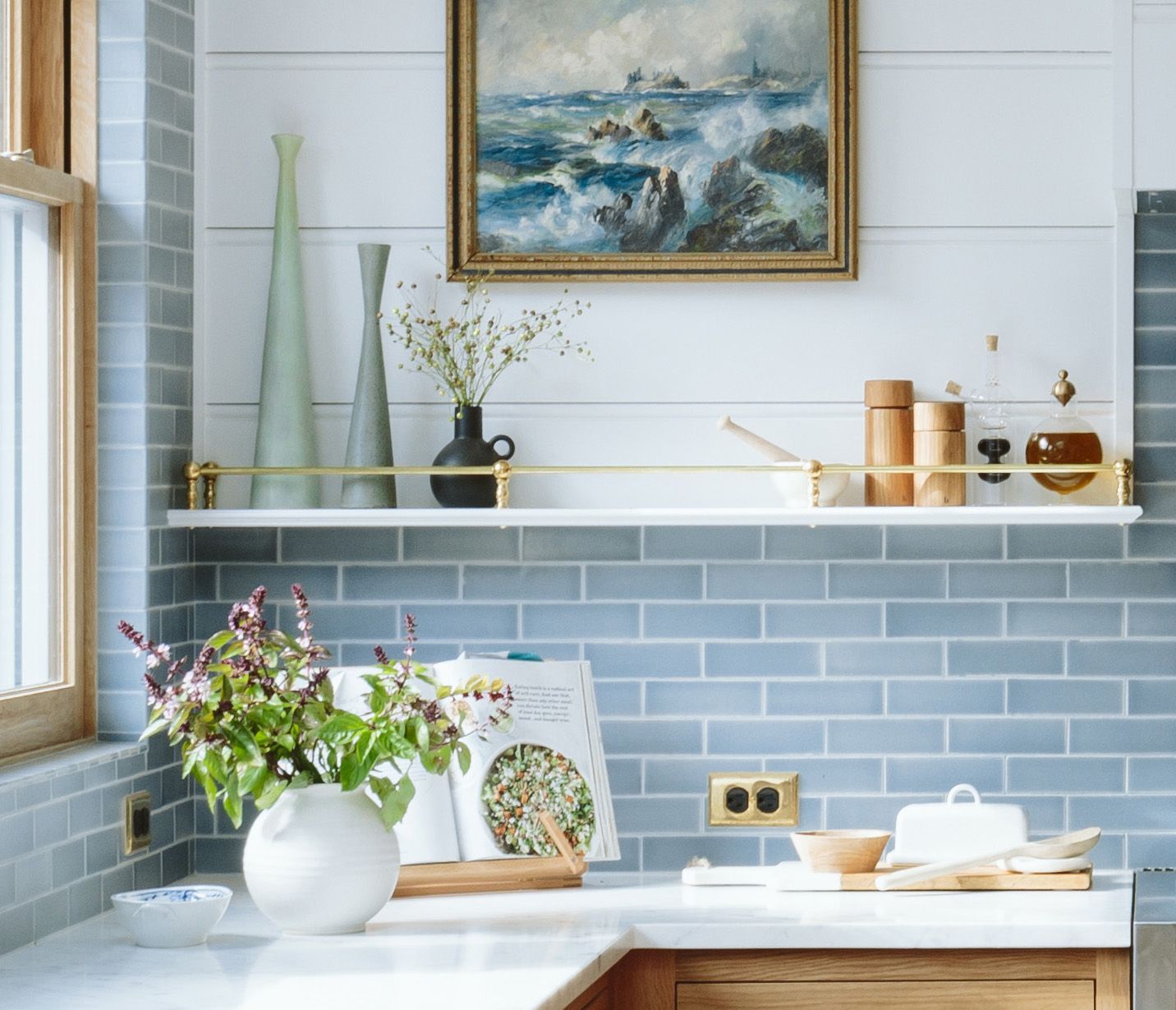
Displaying What You Love
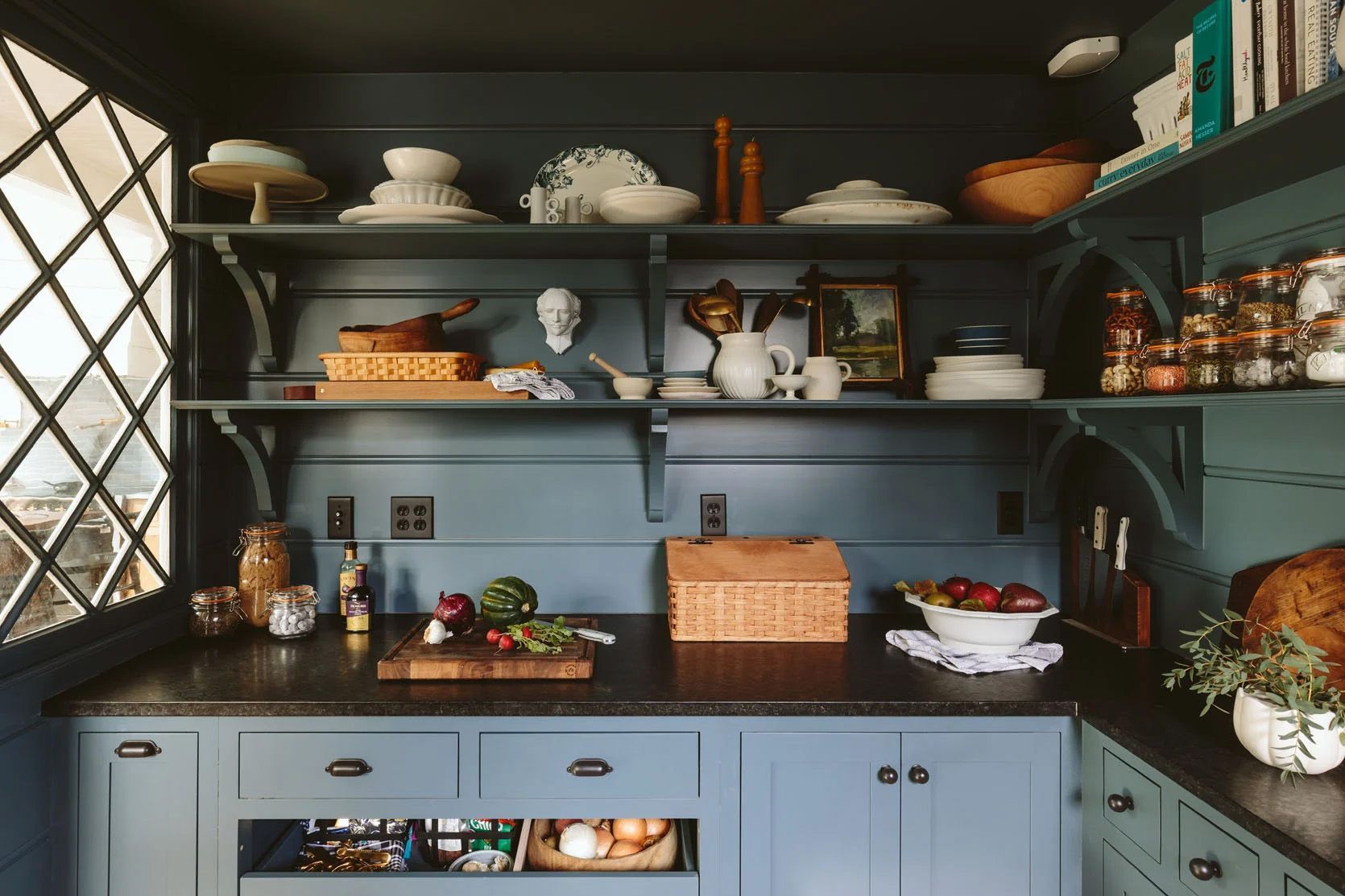
With open shelving, storage becomes part of the visual story. Instead of hiding dishes and glassware, you have the opportunity to curate collections you genuinely enjoy using and seeing every day. In our work on Emily Henderson’s Portland farmhouse, the pantry shelves became a destination for serving pieces, cookbooks, and decorative items—functional and personal at the same time.
Shelves don’t have to be limited to utilitarian items. A vase of flowers, a favorite platter, artwork, plants, or even a small lamp or candlestick can help the kitchen feel more like a living space and less like a purely functional workspace.
What Materials and Brackets Work Best for Open Kitchen Shelves?
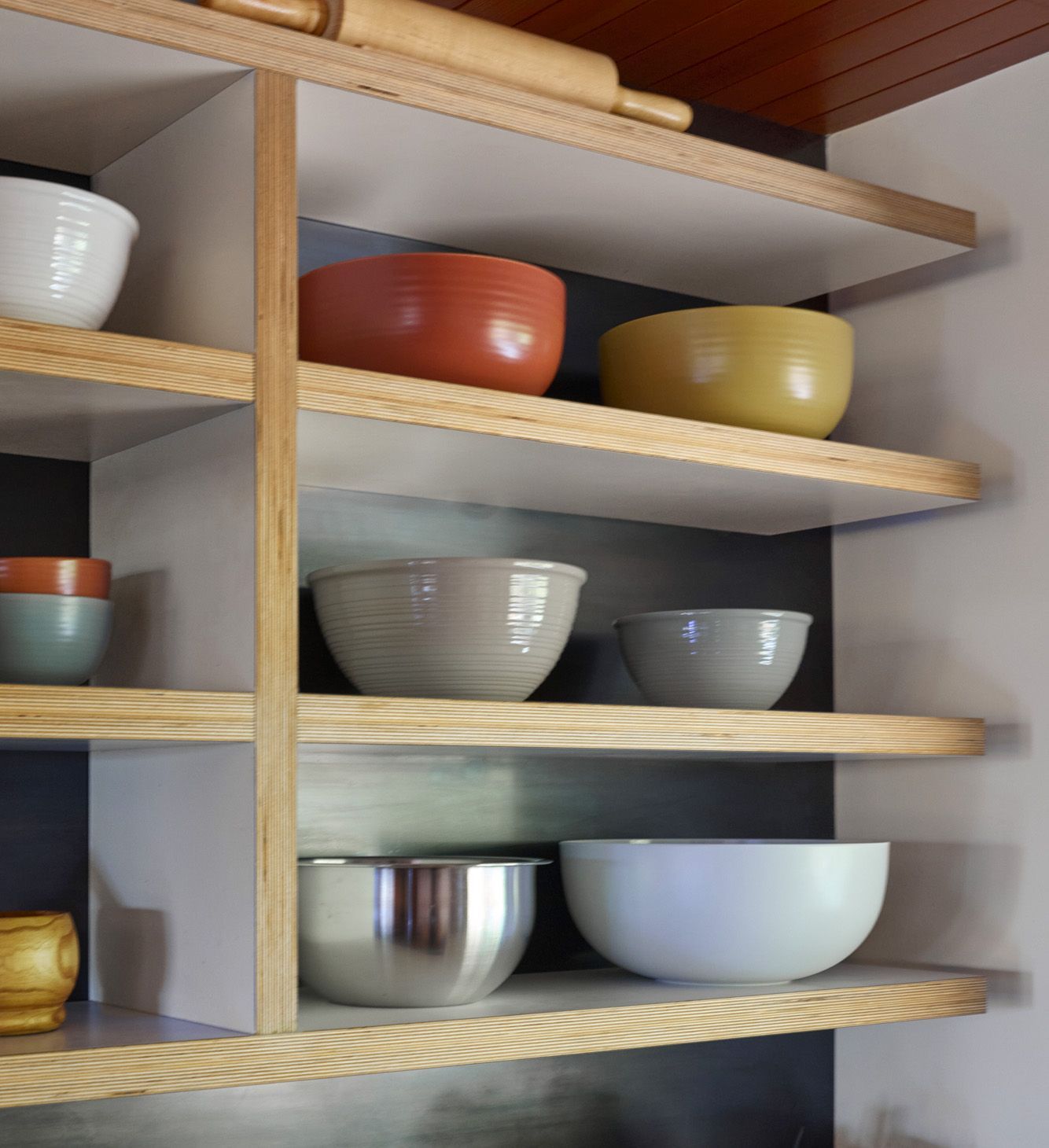
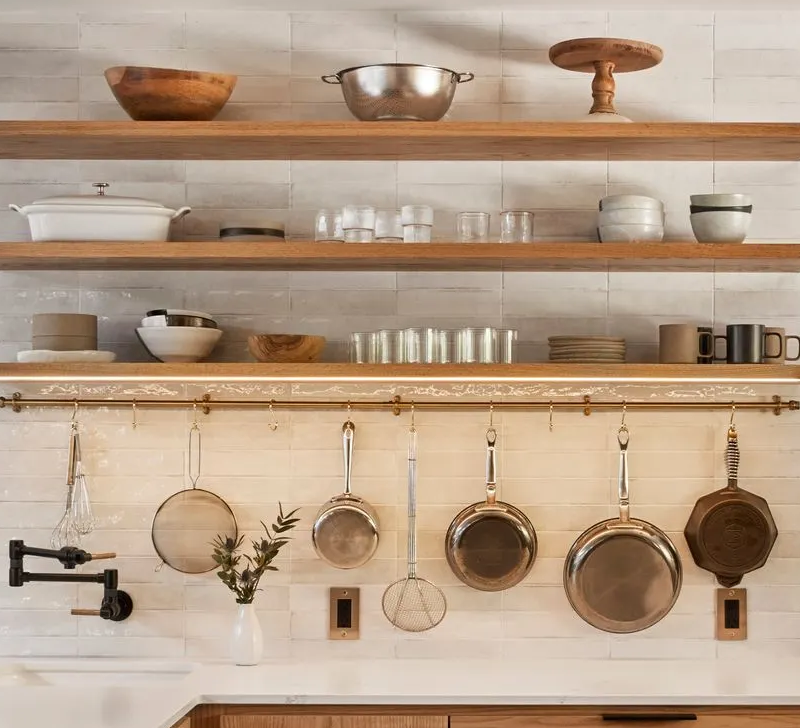
The shelves themselves can add architectural interest. Wood, glass, stone, and even exposed-edge plywood each bring a distinct look and feel. Shelf thickness, edge profiles, and proportions all contribute to the design. In our Portland woodshop, we build custom shelving tailored to each project—whether that’s rustic reclaimed fir for a 1920s bungalow or sleek walnut for a mid-century modern home. Our kitchen remodel page has more on how we approach custom cabinetry and shelving.
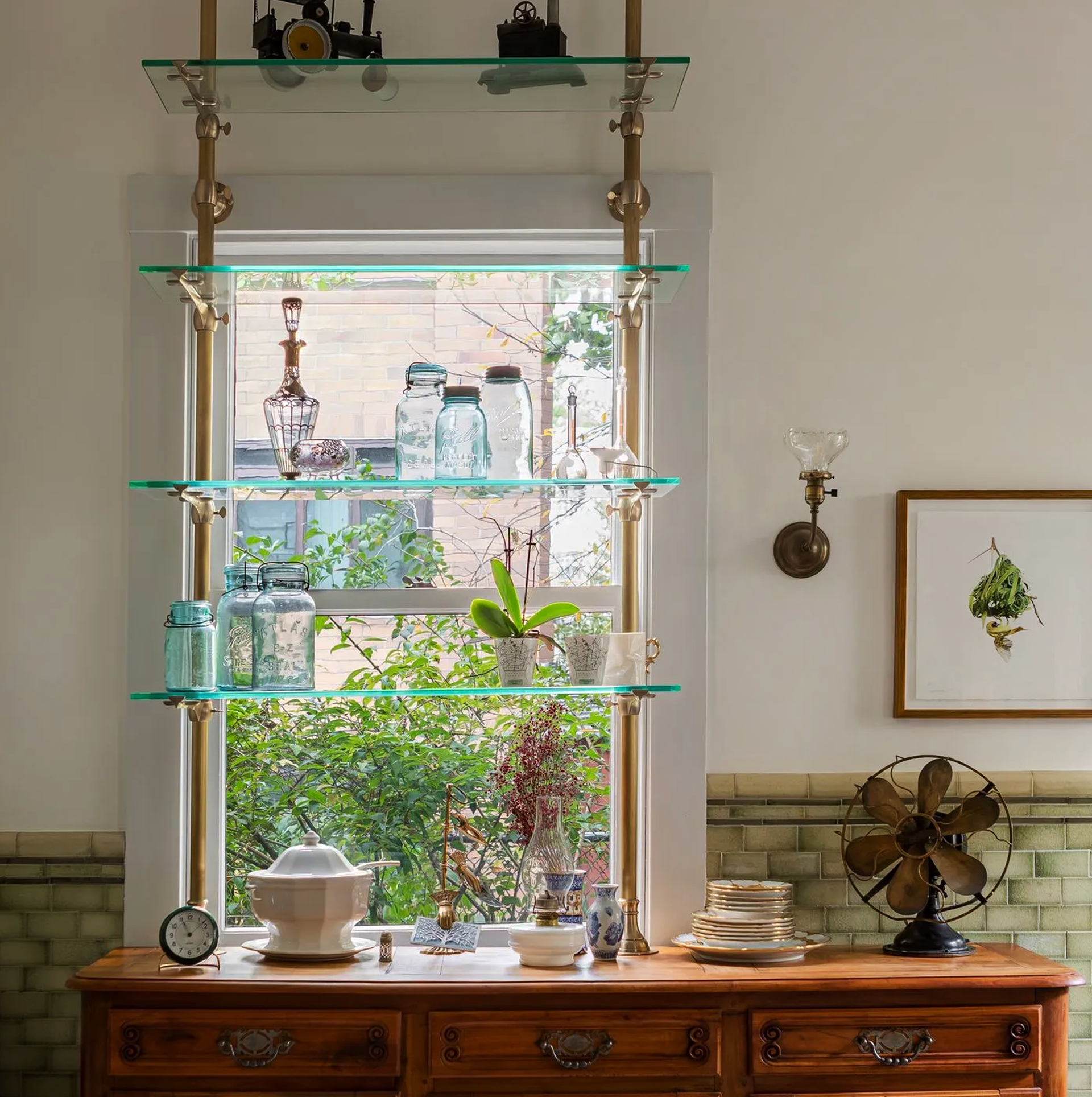
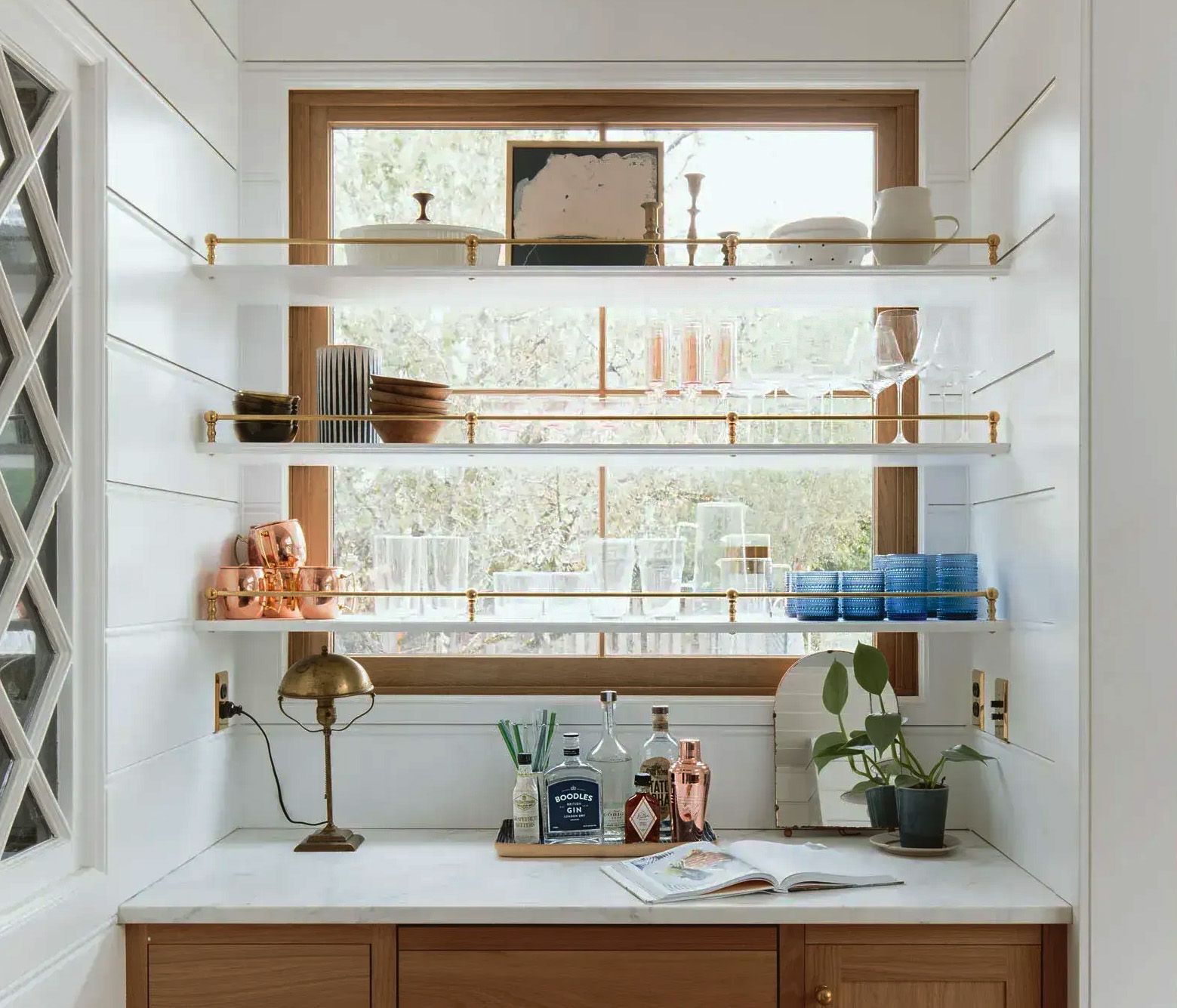
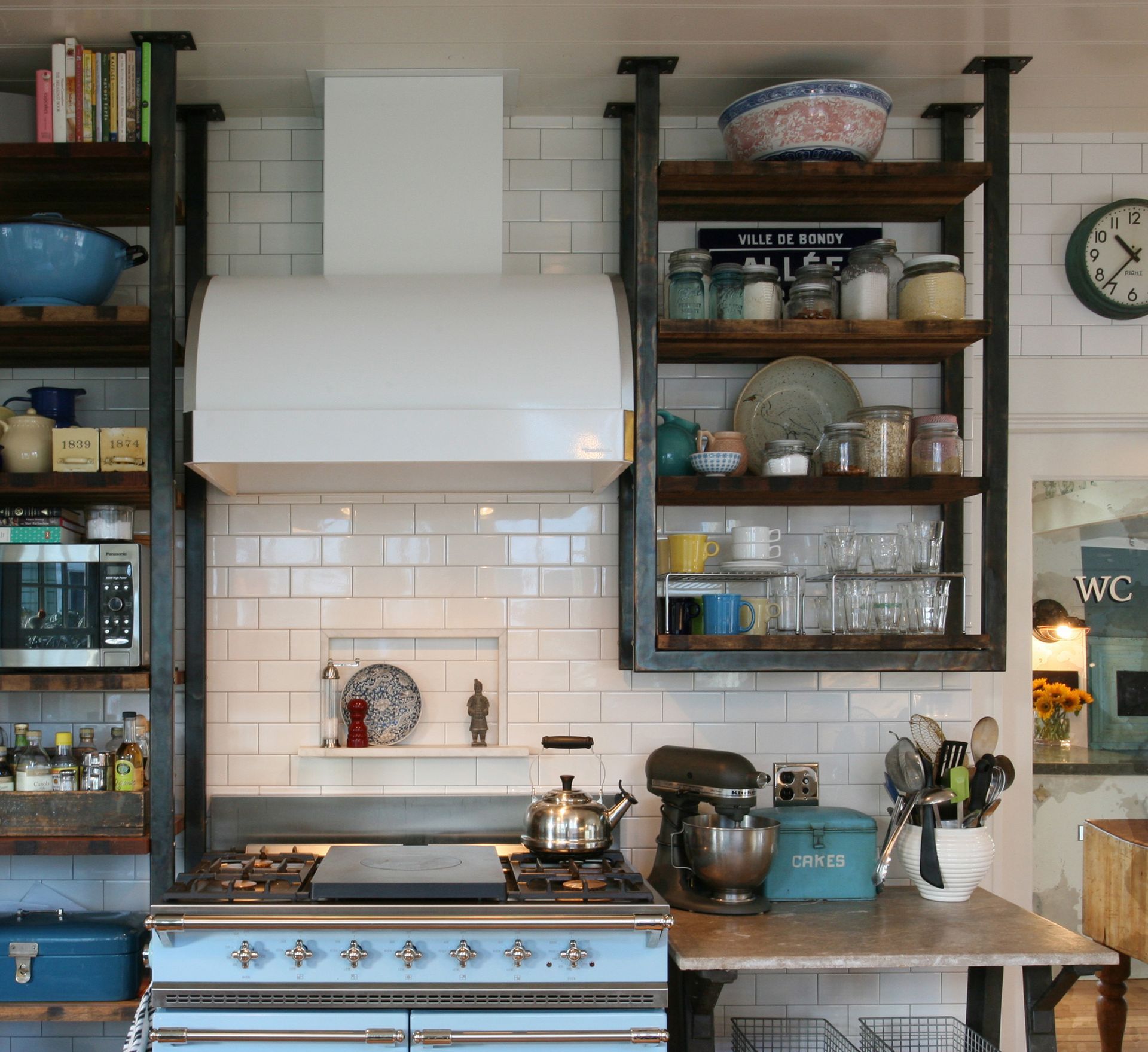
Brackets offer another layer of expression. Ornate brass brackets can lean traditional or Victorian, while rugged iron supports feel rustic and grounded. For a more contemporary look, floating shelves with concealed supports create clean, uninterrupted lines.
Creative Ways to Style and Light Open Kitchen Shelves
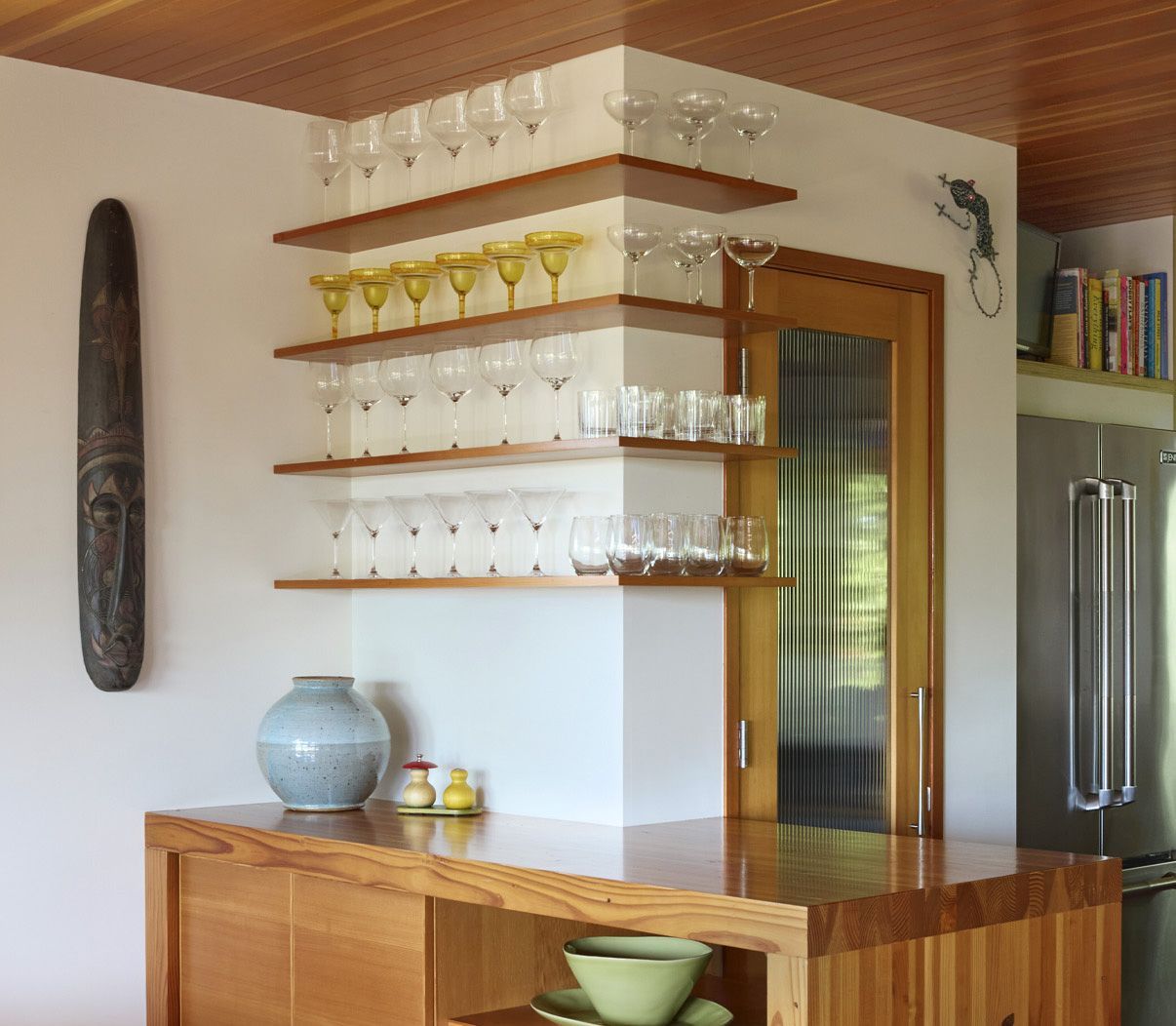
There are many ways to interpret open shelving beyond simple wood planks on a wall. French bistro‑style shelving, often made of brass tubing and glass, adds a classic European touch. Glass shelves placed in front of windows allow light to pass through while showcasing translucent objects.
Integrated undershelf lighting is another thoughtful detail. It provides soft task lighting, highlights displayed items, and adds warmth and depth to the kitchen, especially in the evening.
Does Open Shelving Get Dusty? What to Expect Day to Day
While open shelving has many advantages, it’s important to consider what daily life with it actually looks like.
Dust is the most common concern. Open shelves require regular upkeep to keep dishes and objects clean and ready for use. Items stored behind cabinet doors are naturally protected.
Open shelving also asks for a certain level of discipline. Everything on display contributes to the overall look of the kitchen. Too many items, mismatched dishes, or clutter can quickly undermine the sense of openness that shelves are meant to create.
Storage capacity is another consideration. Open shelves don’t offer the same volume as standard 12‑inch‑deep upper cabinets, which means being selective about what lives there. Because of this, open shelving tends to work best when it’s paired with additional concealed storage, such as a built-in pantry, a butler’s pantry, or generous lower cabinetry.
Is Open Shelving Right for Your Kitchen?
Deciding whether to include open shelving starts with understanding your priorities. Do you value maximum storage, or does an open, airy feel matter more? Are the items you’d want on display things you use often and enjoy seeing every day?
Thoughtful planning is the difference between shelves that delight you for years and shelves that frustrate you within months. When designed with intention and balanced with the right mix of cabinetry and pantry storage, open shelving can be both practical and beautiful.
Working with a kitchen designer who understands older homes, and who is comfortable designing both fitted and unfitted elements, can help you evaluate how open shelving fits your space and your lifestyle. A well-planned kitchen—like a thoughtfully designed kitchen island or a kitchen fireplace—is one that feels good to work in and brings daily enjoyment to the people who use it..
Ready to Design a Kitchen with Open Shevling that Actually Works?
At Arciform, we design kitchens for Portland’s historic and vintage homes—spaces where open shelving, custom cabinetry, and concealed storage all work together. Since 1997, we’ve helped homeowners across the city create kitchens that honor their home’s character while making daily life easier and more enjoyable.
Our complimentary kitchen design consultation is a chance to talk through your kitchen’s potential with a designer who knows older homes inside and out. Whether you’re drawn to open shelving, leaning toward closed cabinetry, or want a blend of both—we’ll help you find the right approach for your home and your life.
See More Stories